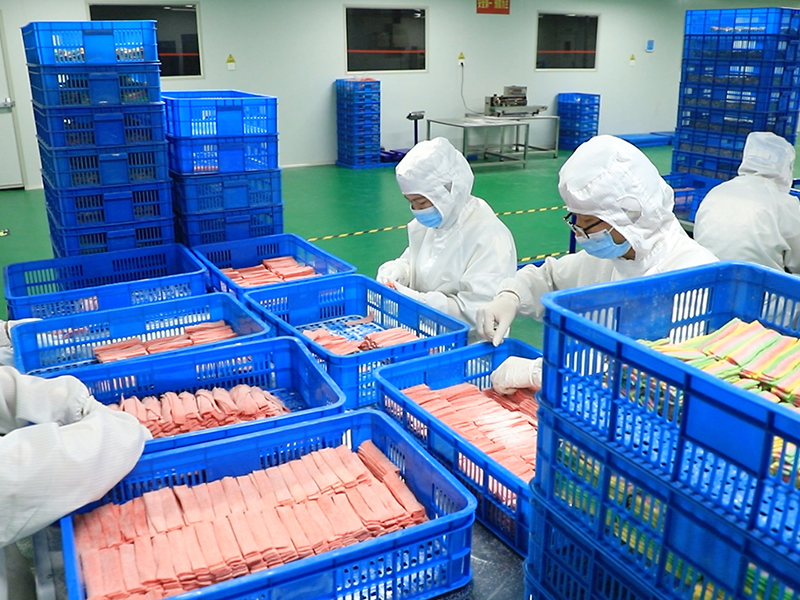
Candy heart shapes have become a classic staple for expressing love, especially on Valentine’s Day, functioning not only as a cultural symbol but also as a reliable seasonal product for retailers and distributors due to their predictable demand, ease of stocking, and consistent sell-through.
Most Americans (91%) celebrate Valentine’s Day with chocolate and candy—either for themselves or a significant other—making seasonal heart-themed sweets a dependable category for retailers and distributors. Beyond the cultural appeal, they also offer strong seasonal sell-through and operational simplicity, making them a reliable SKU for Valentine assortments.
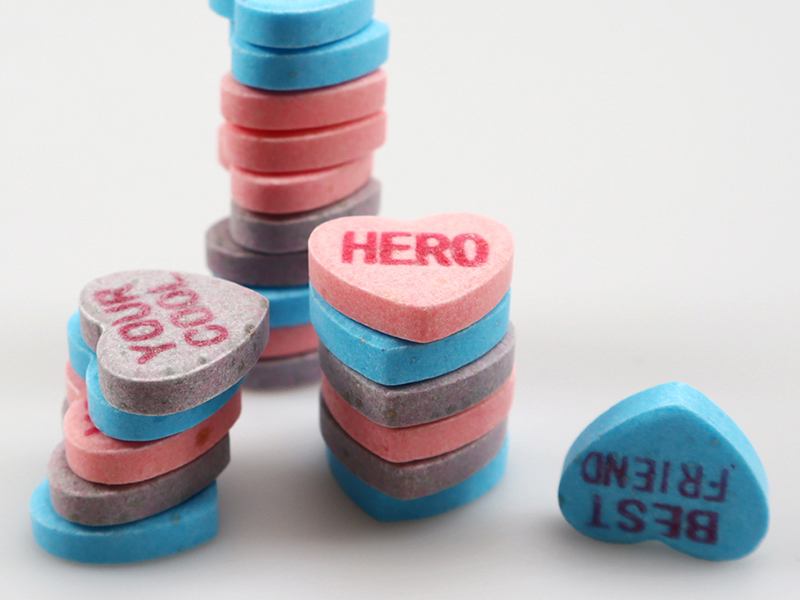
Before luxury chocolates and themed gift collections dominated the market, candy hearts provided a simple, recognizable product that retailers could count on each February. Their small size, bulk-friendly packaging, and a standardized design make them easy to forecast, ship, and display, reducing the overall operational complexity for seasonal planning.
For businesses, candy hearts are more than just a festive treat; they’re a strategic seasonal category that helps maintain consistent sales, optimize inventory, and anchor Valentine’s Day assortments all across multiple retail channels.
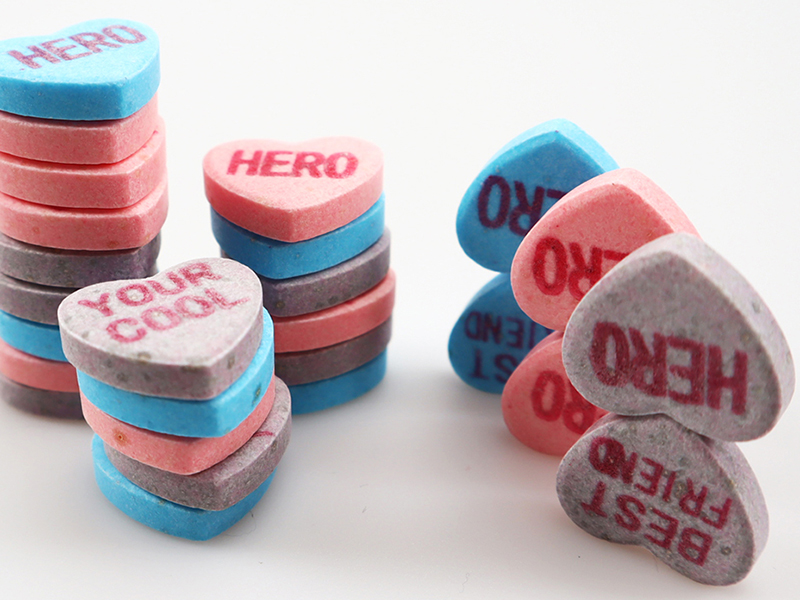
What Are Candy Hearts?
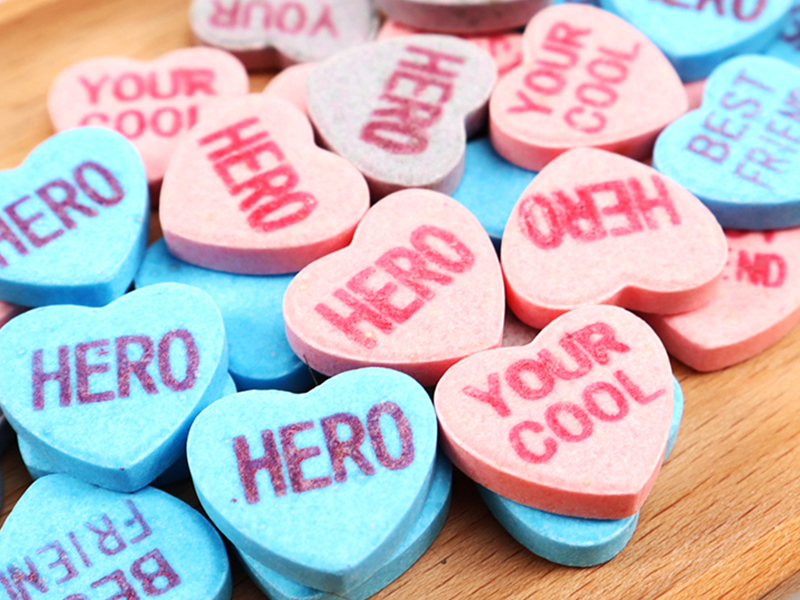
Candy hearts are small, pastel-colored sugar candies, each of them featuring short printed messages such as “Love You” or “Be Mine.” While their design prioritizes symbolism and messaging, the format also offers operational and commercial advantages for retailers and distributors.
1. Key B2B Considerations
- Standard size and shape: Uniform dimensions simplify bulk packaging, shelf placement, and inventory management.
- Shelf-stable and durable: Long shelf life and low fragility diminish spoil risk and shipping losses.
- Predictable seasonal appeal: Yearly demand patterns make candy hearts ideal for forecasting and supply planning, especially for Valentine’s Day assortment.
- Bulk-friendly packaging: Candy hearts can be sold in classroom-sized packs, multi-unit bundles, or retailer-specific formats, allowing flexible merchandising strategies.
Together, these traits make candy hearts one of the lowest-risk, easiest-to-plan seasonal SKUs for Valentine assortments.
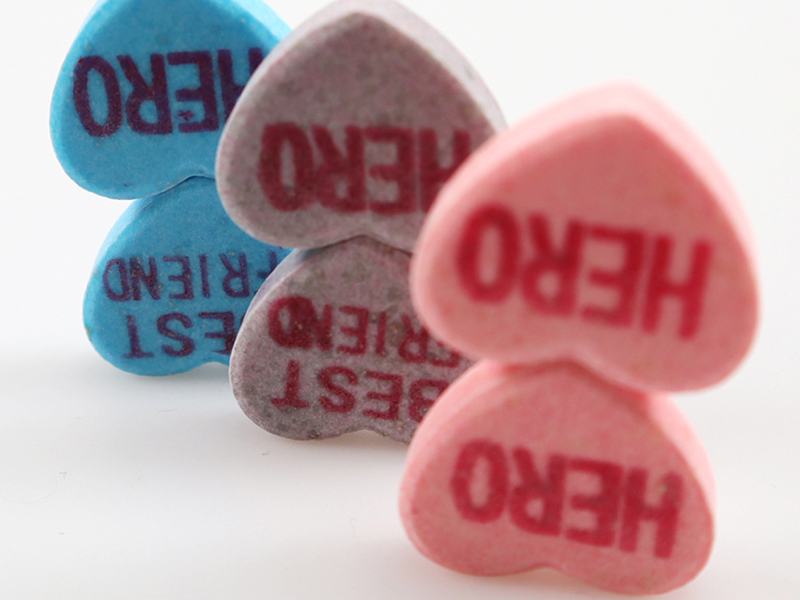
2. How Candy Hearts Differ From Other Valentine’s Day Candies
Unlike the typical premium chocolates or trend-driven candies, candy hearts are:
- Light and inexpensive, making them best suited for high-volume, low-risk SKUs.
- Primarily symbolic rather than indulgent, supporting predictable demand across age groups and occasions.
- Easy to combine with other seasonal products, such as gummies or chocolate assortments, to anchor retail displays efficiently.
How Candy Hearts Became Valentine’s Day Candy
Candy hearts are rooted in the broader tradition of message candies, which predates modern Valentine’s Day. In the 19th century, exchanging notes and symbolic tokens was a common way to express love. And during that time, multiple confectioners started experimenting with edible versions of such messages, knowing that short phrases printed on sweets could deliver the emotional impact of a written note—at a lower cost and at much larger scale.
In the mid-1800s, the Chase brothers helped mechanize and popularize message candies—Oliver Chase’s lozenge production innovations (1840s) and Daniel Chase’s vegetable-dye printing method (1866) made short phrases on sweets scalable.
By the early 1900s, the format shifted into the heart-shaped, pastel “Sweethearts” style that became closely tied to Valentine’s Day seasonal merchandising.

1. Alignment With Valentine’s Day Traditions
As Valentine’s Day is celebrated all across the globe, candy hearts fit perfectly into the existing customs. They pair naturally with greeting cards, classroom exchanges, and small everyday gifting moments.
Unlike the chocolates, which are typically associated with romance, candy hearts work across multiple social contexts: romantic, friendly, and playful, making them best suited for a wide audience.
2. Standardization as a Seasonal Product
Over time, manufacturers started producing candy hearts specifically for Valentine’s Day, locking them into the seasonal calendar. Their predictable demand made them easy to plan, manufacture, and distribute at a certain scale.
Once standardized, candy hearts are a more reliable component of Valentine’s Day assortment, appearing in stores year after year without ever needing reinvention.

Why the Candy Heart Shapes Became So Important
Candy heart shapes benefit from instant visual recognition, a trait with strong commercial value for retailers and distributors. Their heart shape, pastel colors, and printed messages stay unchanged for years, which means they need minimal marketing assistance to convey their sole purpose.
B2B Advantages
- Shelf Impact: Candy hearts are instantly identifiable on shelves or displays, helping retailers attract buyers without being dependent on heavy promotional campaigns.
- Consistent consumer expectations: Shoppers know the product instantly, which reduces decision fatigue and supports repeat purchases even after years.
From Tradition to Category: Valentine’s Day Heart Candy
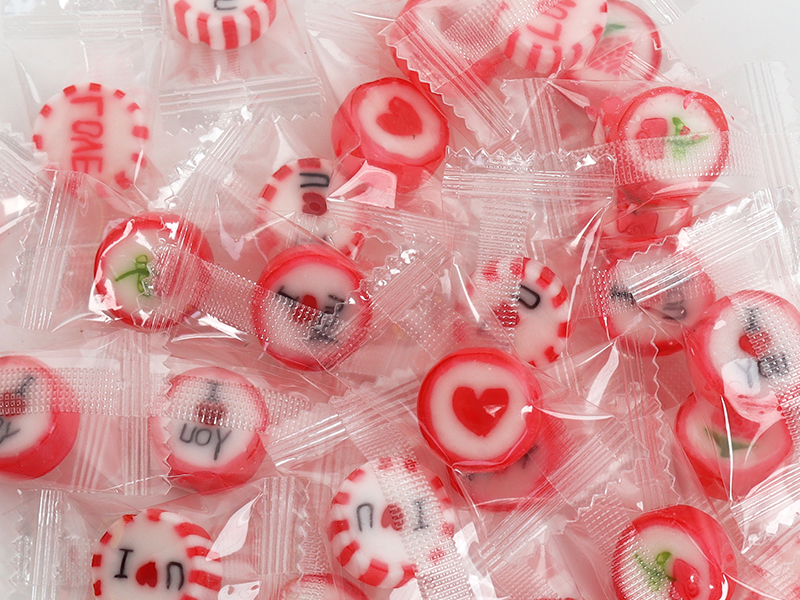
As a classic confectionery item, Valentine’s Day heart candy has become a common and expected part of the Valentine’s Day experience. It is through a focused and consistent use of established methods that candy hearts have continued their long-term relevance and have remained culturally significant.
1. Why Valentine’s Day Heart Candy Became a Ritualized Purchase
Valentine’s Day heart candy is often purchased because the season calls for it, rather than because shoppers actively compare alternatives. This ritualized behavior reinforces the holiday itself, creating a long chain of expectation and repetition. Ritualization benefits the category in multiple ways:
- Year after year, demand is consistent for retailers.
- Clients can forecast their sales with a high degree of certainty.
- Seasonally recognized in an instant, shoppers will find everything they want without the need to search.
- Every generation, children, teenagers, and adults will engage in the same tradition, generating demand across generations.
- High-volume purchases will be favored due to the ease of gift-giving in bulk through classroom and social exchanges.
By becoming a major part of a seasonal ritual, candy hearts reduce decision-making stress for consumers while simultaneously anchoring retailers’ Valentine’s assortments.
2. Commercial Durability Through Function
Candy hearts last because they play a clear seasonal role: a fast, recognizable Valentine gesture that works for bulk sharing and small add-on gifting. Their simplicity makes them easy to slot alongside chocolate boxes, gummies, and novelty items without needing new storytelling each year.
Candy Hearts vs Other Valentine’s Day Candies
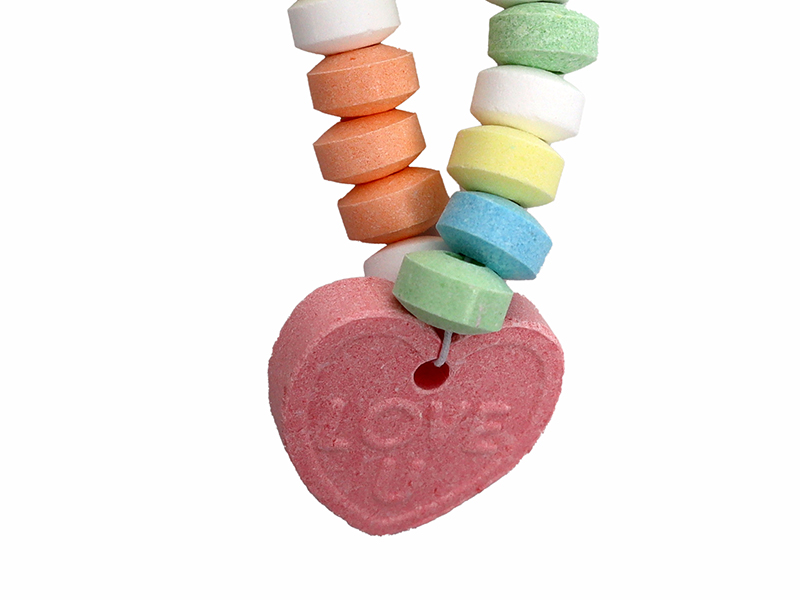
Candy hearts have secured their spot in the Valentine’s Day confectionery market. Unlike chocolates, their appeal is more symbolic than indulgent, which gives them predictability and versatility. While the chocolates are usually expressed in romantic gestures, candy hearts operate as a universal, low-effort form of expression that is suitable for children and adults.
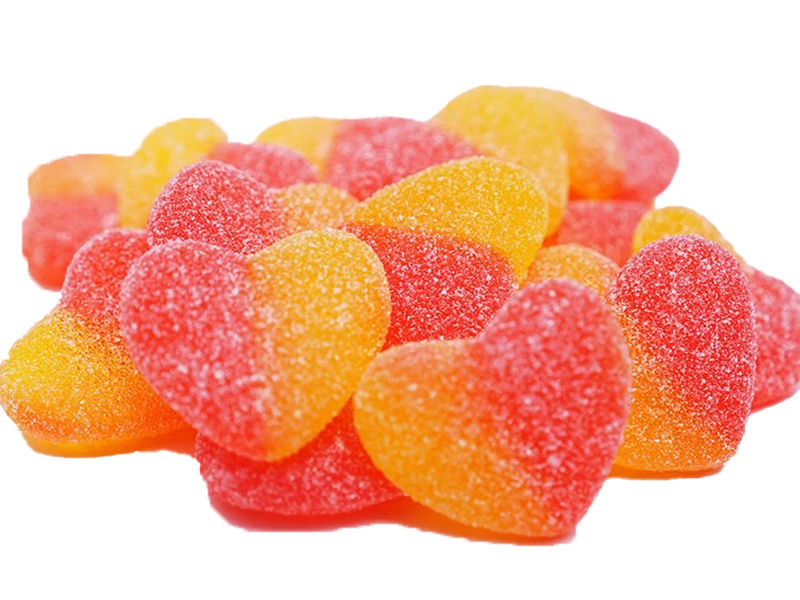
Gummy or shaped novelty candies, by contrast, rely on trend-driven interest and seasonal creativity, which can fluctuate annually and create uneven demand. Candy hearts, with their consistent design and messaging, provide a reliable option that anchors seasonal assortments.
Just because of their simplicity, they can also be easily stocked, shipped, and displayed by retailers. Candy hearts lend themselves to easy stocking and shipping primarily due to their compact, shelf-stable, uniform characteristics.
Chocolates, and especially those that are filled or premium, generally require climate-controlled storage and careful merchandising to avoid damage.
In order to generate interest, trendy novelty candies typically require significant marketing support in order to justify seasonal space. Unlike trendy candies, candy hearts promote themselves; they are easily recognized by consumers, thereby contributing to the Valentine’s Day environment without the need for further marketing.
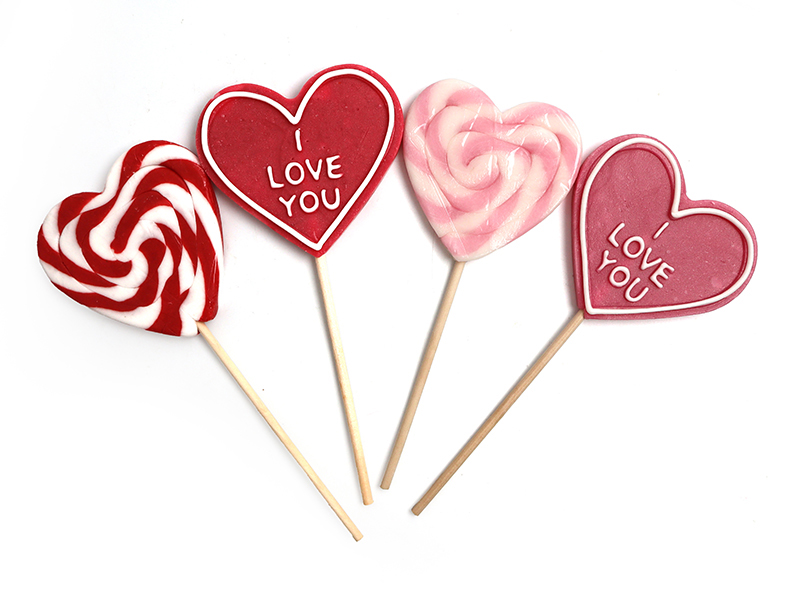
Are Candy Hearts Still Relevant Today?
Despite changes in the gifting habits and confectionery trends, candy hearts have remained relevant. Modern Valentine’s Day consumers still find it good for the quick, familiar, and visually communicative gifts, especially in environments like classrooms, offices, or social gatherings.
Even as the market has expanded to include artisanal chocolates, vegan candies, and experiential gifts, candy hearts continue to perform because they continue to satisfy a specific need that is straightforward: a symbolic gesture.

Candy hearts also adapt gently to modern requirements. The innovations in packaging, the changing of flavors in different seasons, and the availability of bigger packs for assorted flavors together allow the product to adjust to the new consumer preferences without changing its basic form.
Retailers and distributors see the product’s attractiveness to consumers to a greater extent because of these little changes, but at the same time, they recognize the candy’s core consumer base.
Therefore, the product still has the strength of being both culturally and commercially viable, attracting many generations at once, and needing very little educating or marketing for the seasonal engagement to happen.
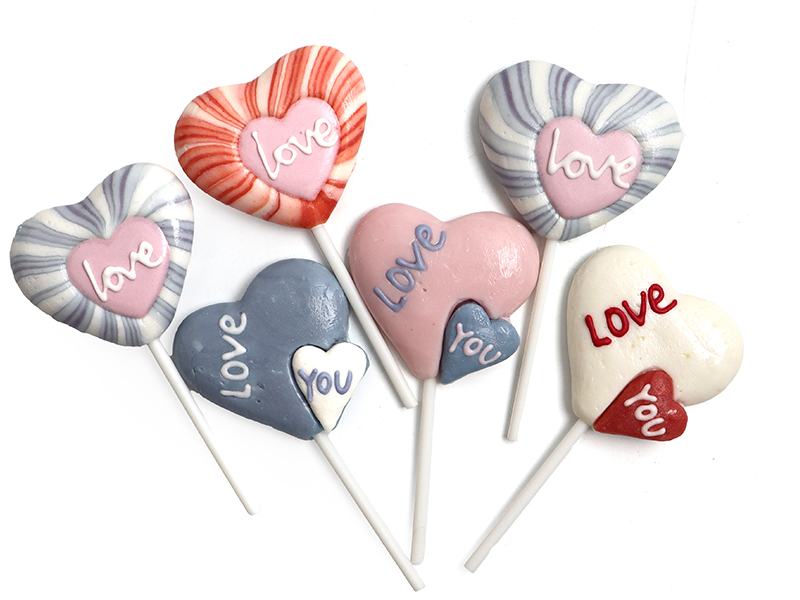
Eventually, heart-shaped candy occupies a space where function, tradition, and emotional clarity converge.
Unlike other Valentine’s candies that must compete on flavor innovation or novelty, candy hearts succeed because they perform a specific seasonal role consistently and efficiently, ensuring that they remain a staple of Valentine’s Day assortments worldwide.
FAQ: Candy Hearts and Valentine’s Day
1. What Are Candy Hearts Made Of?
Candy hearts are primarily made from sugar, corn syrup, and dextrose, combined with small amounts of acidulants, flavoring, and coloring. Their simplicity allows for long shelf life, stable printing of messages, and a consistent texture.
2. Why Are Candy Hearts Associated With Valentine’s Day?
The bond is established through the early adoption of Valentine cards and the custom of giving loving notes.
The love expressions printed on candy hearts are similar to the ones usually written in cards, thus making them a symbolic Valentine’s Day communication. Their limited-time production and constant availability in shops create this linkage every year.
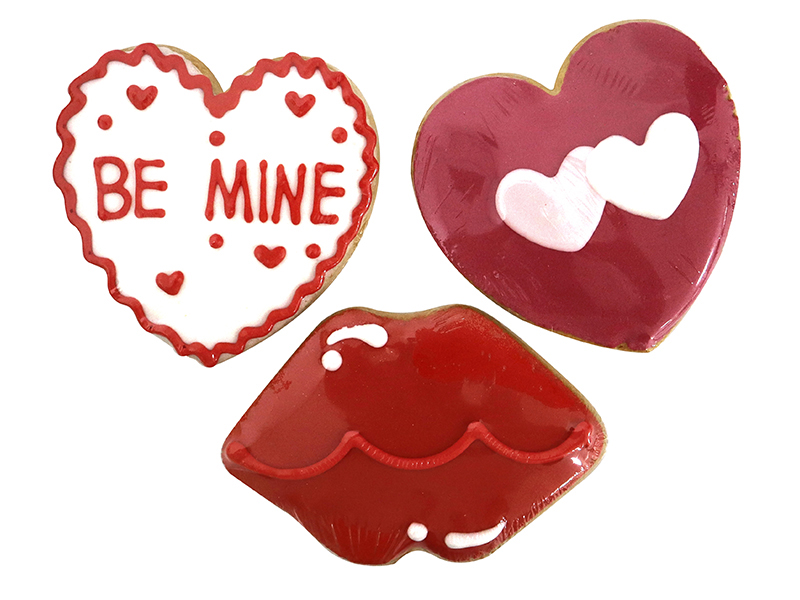
3. What Does the Candy Heart Shape Symbolize?
The heart form has become an icon of love, closeness, and tenderness all over the world. With the use of this shape, the candy can reveal feelings without complicated texts.
‘The combination of shape, color, and printed message makes the meaning instantly clear, guarantees understanding and reduces decision-making effort to the minimum, thus making it very easy and very effective, chosen for both those who give and those who just take part in the holiday out of goodwill.
4. Are Candy Hearts Still Popular Today?
Yes—despite the growth of premium chocolates, candy hearts continue to hold a reliable niche in Valentine’s Day assortments thanks to their affordability, symbolism, and bulk-gifting use cases.
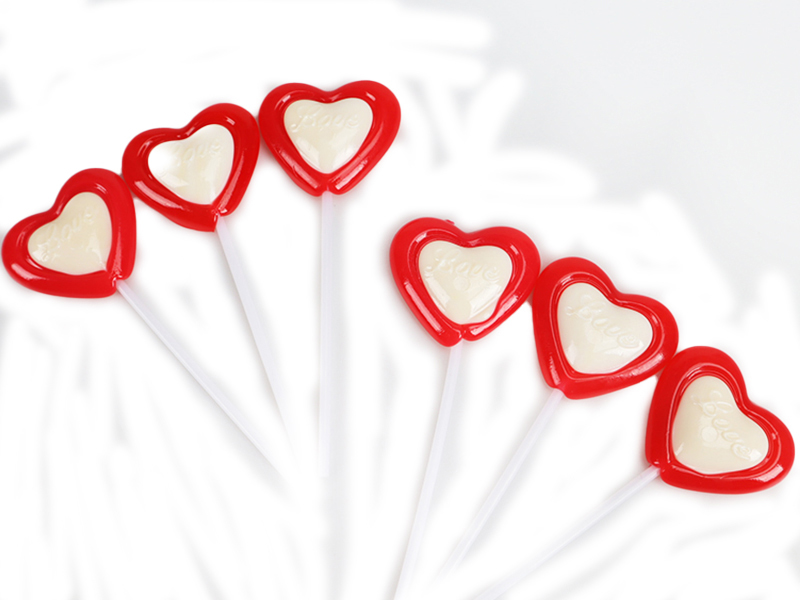
Conclusion
Valentine’s Day candy hearts continue to deliver strong commercial value across seasonal retail channels when supported by consistent quality, standardized formats, and packaging aligned with Valentine’s Day merchandising.
Their predictable demand, long shelf stability, and universal symbolism make them a dependable category for retailers, distributors, and brand owners planning seasonal assortments.
Contact MPS to boost your candy business
For businesses looking to strengthen or expand their candy heart shape confectionery portfolios, working with experienced manufacturing or distribution partners who understand seasonal planning, volume requirements, compliance standards, and packaging customization can significantly reduce operational risk.
When positioned correctly, candy hearts function not just as a nostalgic product, but as a scalable, repeatable seasonal SKU that supports broader growth and category stability.