Marshmallows are one of those rare sweets that feel “simple” until you try to manufacture them consistently. They look soft and effortless—like edible clouds—but producing stable texture, clean shapes, and reliable shelf performance is anything but casual.
In global retail, the marshmallow category has been quietly evolving. Beyond classic cubes and twists, buyers increasingly look for extruded marshmallow candy: marshmallows made through a continuous extrusion process that allows consistent shapes, sizes, colors, and stripes—ideal for bulk supply, private label programs, and bakery-friendly mixes.
If you’re an importer, distributor, or retail brand, this guide will help you understand what extruded marshmallow is, what shapes it can realistically achieve, why it’s popular, and how to source it effectively.

What Is Extruded Marshmallow Candy?
Extruded marshmallow candy is marshmallow that is formed through a continuous extrusion process—meaning the aerated marshmallow mass is pushed through a shaping die, then cut into uniform pieces.
This method differs from “molded/deposited” confectionery. Extrusion is designed for:
- high efficiency
- stable uniformity
- repeatable shapes
- large-scale output
A key point: extruded marshmallow is not meant for highly complex 3D sculptures. Instead, it excels at clean, consistent shapes that can be produced at speed.
What Shapes Can Extruded Marshmallows Realistically Make?
Extrusion can create surprisingly attractive forms—but within practical limits. Think “clean and repeatable,” not “ultra-detailed.”
Common extruded marshmallow formats include:
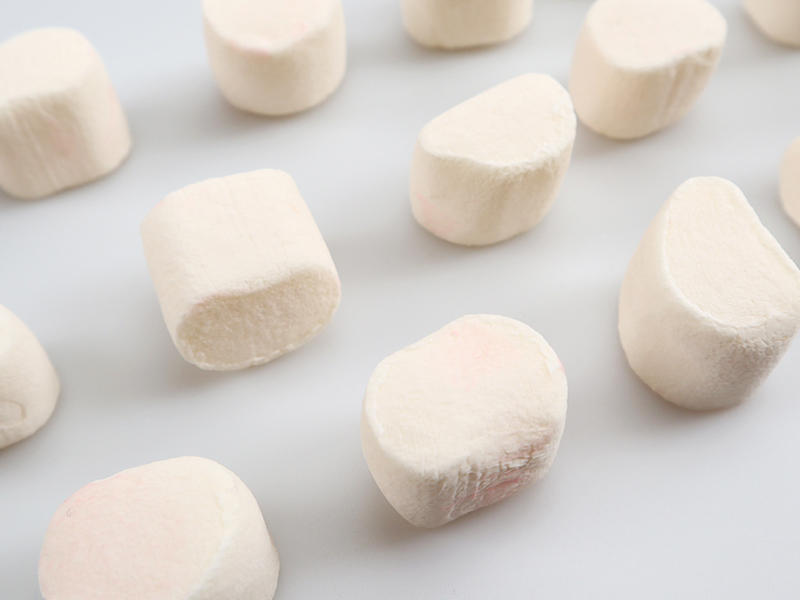
- pillow shapes (soft rectangles, rounded edges)
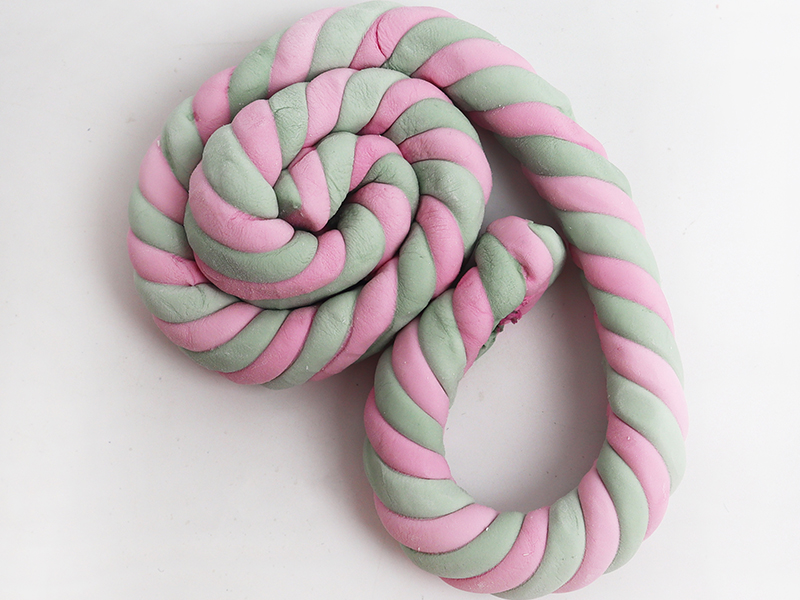
- twists / ropes (single-color or multi-color)
- striped pieces (two-tone or multi-tone)
- mini bits (for mixes and toppings)
- simple embossed patterns (basic ridges, waves, or flower-like outlines depending on die design)
These shapes are very popular in mixed assortments because they look colorful, consistent, and easy to pack.
Why Extruded Marshmallow Is Popular in Global Markets
Extruded marshmallow candy performs well commercially for three main reasons: stability, versatility, and packaging friendliness. For importers, distributors, and private-label brands, these advantages make it easier to manage both retail presentation and long-term product programs across different markets.
1. Stable, Uniform Pieces (Retailers Love This)
One of the biggest advantages of extruded marshmallow is consistency. Because the product is made in a continuous process, the pieces are usually more uniform in size, shape, and appearance. For retailers, that means more predictable bag fill, cleaner shelf presentation, and a more professional-looking finished product.
It also helps reduce complaints related to uneven product size or inconsistent pack appearance, which can be important for private-label and export programs.
2. Strong Use-Case Coverage
Extruded marshmallows work well across a wide range of applications, which gives buyers more flexibility when developing product lines. They can be sold as snack candy in mixed bags, used as toppings for hot chocolate, added as dessert garnish, included in bakery decoration mixes, or supplied for cereal and ice cream toppings.
This broad usage makes the format attractive because it is not limited to just one sales channel or one type of consumer demand.
3. Easy to Customize Without Changing the Whole System
Another reason extruded marshmallow is popular is that it can be customized quite efficiently. Manufacturers can adjust colors, stripe patterns, piece size, mix ratios, and packaging formats without completely changing the production concept.
That makes it especially useful for private-label programs, where buyers often want a product that feels different in the market without requiring a totally new manufacturing setup. In commercial terms, this means more flexibility, faster development, and a more practical path for seasonal, promotional, or customer-specific projects.
That is why extruded marshmallow remains a strong product format in global markets. It offers a combination of manufacturing efficiency, retail friendliness, and customization potential that works well for both standard product lines and OEM development.
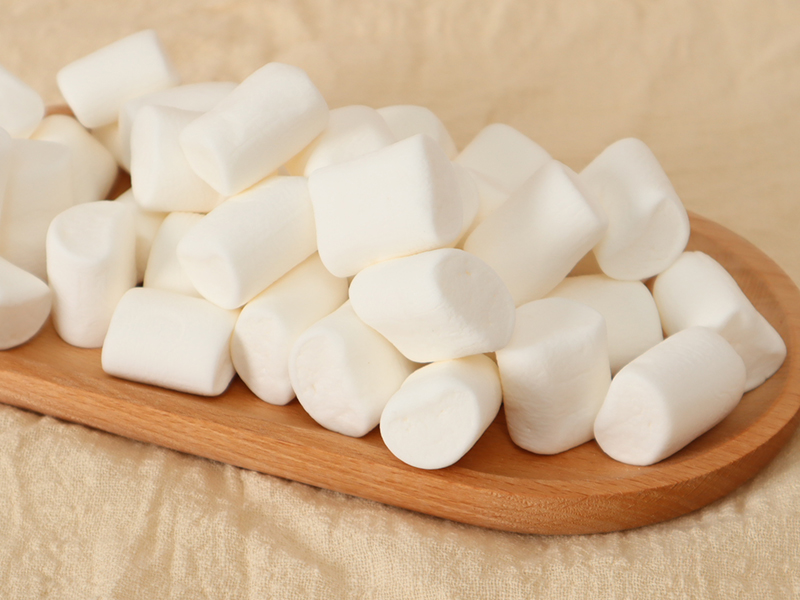
How Marshmallow Candy Is Made
Marshmallow is a whipped, aerated confection. Its soft and fluffy texture comes from introducing air into a stabilized sugar system, creating a light foam structure rather than a dense candy mass.
At a high level, production begins with preparing a sugar and glucose syrup base. This provides the sweetness, body, and structure needed for the final product. In many formulations, gelatin is then added to help stabilize the foam and give the marshmallow its soft, elastic bite.
The mixture is then whipped and aerated, which is the key step that creates the familiar fluffy texture. Air is incorporated into the syrup under controlled conditions, turning the liquid base into a stable foam.
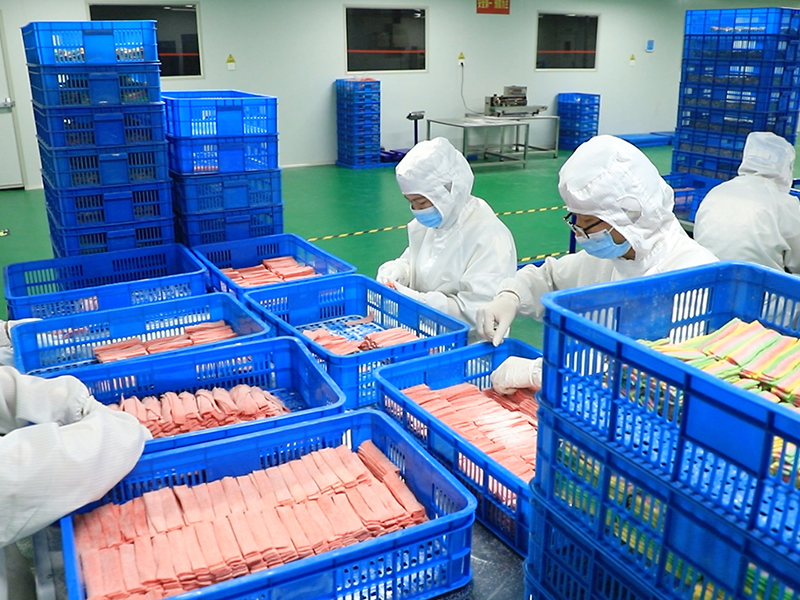
Once the desired texture is reached, the marshmallow mass is formed into shape, often through extrusion. The continuous rope is then cut into the required size and sent through a conditioning stage so the texture can become more stable before packing.
Finally, the product is packed and sealed to protect softness and appearance during storage and transport.

Common Product Styles for Extruded Marshmallow Candy
Buyers typically request extruded marshmallows in a few stable, commercially proven styles. These formats are popular because they are easy to merchandise, easy to customize, and suitable for a wide range of retail and food-use applications.
- Multi-color mixes are one of the most common options for retail bags. They create a brighter visual effect, help the product stand out on shelf, and are especially suitable for children’s candy assortments and impulse-friendly packaging.
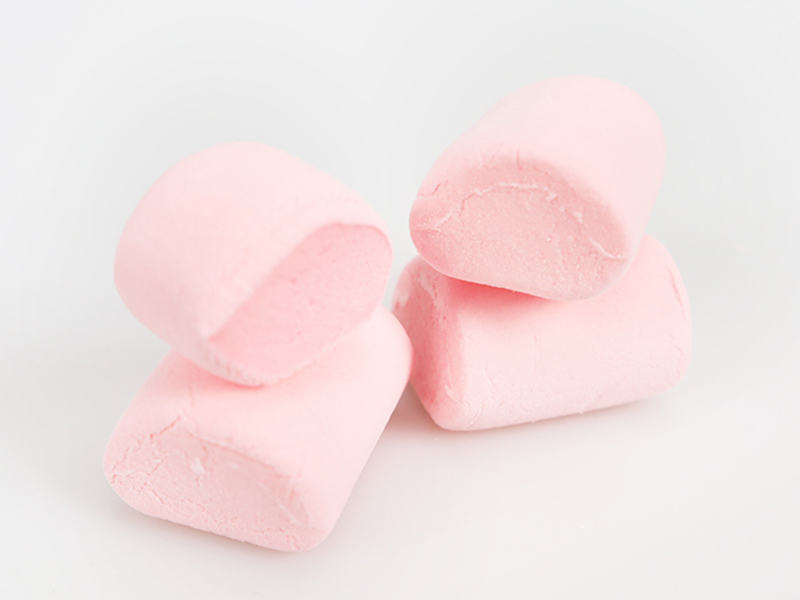
- Pastel assortments are widely used for baking decoration and seasonal confectionery programs. Their softer color palette works well for spring themes, dessert toppings, and gift-oriented packaging, especially in channels where appearance is an important selling point.
- Two-tone stripe marshmallows are another popular format because they offer stronger shelf appeal without making the product too complex. The striped appearance gives the candy a more playful and premium look, which can help support both retail presentation and private-label differentiation.
- Mini marshmallow mixes are especially attractive for hot chocolate, dessert topping, cereal, and bakery applications. Their smaller size makes them versatile and easy to integrate into multi-use food programs, not just standard candy sales.
These core styles are also easy to adapt for seasonal programs such as Valentine’s Day, Easter, Christmas, or Halloween simply by adjusting the color combination. For B2B buyers, this makes extruded marshmallow a practical format for both year-round sales and limited seasonal launches.

Customization Options for Private Label Marshmallow
For private label brands and importers, customization usually focuses on what matters most at shelf:
What’s commonly customizable
| Custom Element | Typical Options |
|---|---|
| Color | single color, pastel mix, bright mix, seasonal palette |
| Size | mini bits, standard pieces, jumbo pillow pieces |
| Stripe | two-tone stripes, multi-color pattern (depending on die) |
| Mix Ratio | percentage of each color/type in one bag |
| Packaging | pillow bag, stand-up pouch, jar, display carton |
This kind of customization gives buyers differentiation without needing fragile, complex shapes.
Bulk Supply Considerations for Buyers
If you’re sourcing as a distributor, importer, or supermarket buyer, extruded marshmallow offers a strong commercial advantage: it is generally easier to control at scale than many more delicate confectionery formats. Its uniform structure, flexible applications, and retail-friendly presentation make it a practical choice for bulk programs, private-label development, and multi-channel distribution.
When evaluating a bulk marshmallow supplier, buyers should look beyond price alone and focus on several key performance factors:
1. Texture consistency across batches
The product should maintain a stable softness and bite from one production run to the next. Consistent texture is important not only for consumer satisfaction, but also for repeat orders and long-term private-label reliability.
2. Stickiness control (storage and shipping stability)
Extruded marshmallow must remain soft without becoming overly sticky during storage or transport. This is especially important for export shipments, where temperature changes and humidity can affect handling performance and product appearance.
3. Packaging barrier suitability
Because marshmallow is moisture-sensitive, the packaging material must provide suitable protection against humidity and external conditions. Good barrier packaging helps preserve texture, reduce sticking, and support longer shelf stability in retail and distribution channels.
4. Export documentation and labeling compliance
For international buyers, supplier capability should include more than production alone. Clear documentation, correct labeling support, and familiarity with export requirements can help reduce delays, compliance issues, and unnecessary risk in the destination market.
5. Mix accuracy (color ratios, size uniformity)
For mixed marshmallow programs, consistency in color balance and piece size is also important. Buyers want retail packs that look uniform and professionally packed, especially for supermarket shelves, baking assortments, and private-label product lines.
Because marshmallows are highly sensitive to moisture, packaging often matters almost as much as the candy itself.
In many cases, stable bulk supply depends not only on a good formula, but also on the supplier’s ability to manage texture, packaging, and shipping conditions as one complete system.

FAQ
1. What is extruded marshmallow candy?
It’s marshmallow formed through a continuous extrusion process, then cut into uniform pieces for stable bulk and retail production.
2. Can extruded marshmallows be made into complex 3D shapes?
Extrusion is best for consistent profiles such as pillows, twists, stripes, and simple embossed patterns rather than highly complex 3D designs.
3. What are extruded marshmallows used for?
They’re widely used as snacks, hot chocolate toppings, dessert garnish, baking mixes, and seasonal retail programs.
4. Can colors and mixes be customized for private label?
Yes. Color palettes, sizes, stripe styles, and mix ratios can be customized depending on packaging format and program needs.
About MPS Candy
MPS Candy is a Chinese confectionery manufacturer and exporter providing OEM and private label candy solutions for global importers, distributors, and retail brands. Alongside gummy innovation lines, MPS supports extruded marshmallow candy programs with customizable colors, mix formats, and export-ready packaging—designed for stable bulk supply and retail performance in multiple markets.
Conclusion
Extruded marshmallow candy is proof that “simple” can still be strategic. While it doesn’t aim for complex 3D sculptures, it wins in the places that matter most for B2B buyers: consistent shapes, scalable production, strong shelf appeal, and flexible customization.
For retailers and distributors, it’s a reliable novelty product with clear use cases—snacking, toppings, baking, and seasonal programs. For private label brands, it’s a platform that can be differentiated through color, mix, and packaging.
If you want to build a shaped marshmallow program for your market, the fastest path is partnering with a manufacturer that understands both production stability and export requirements.
We are MPS Candy, a China-based candy manufacturer specializing in OEM and ODM candy production for global brands, importers, distributors, wholesalers, and retail channels.