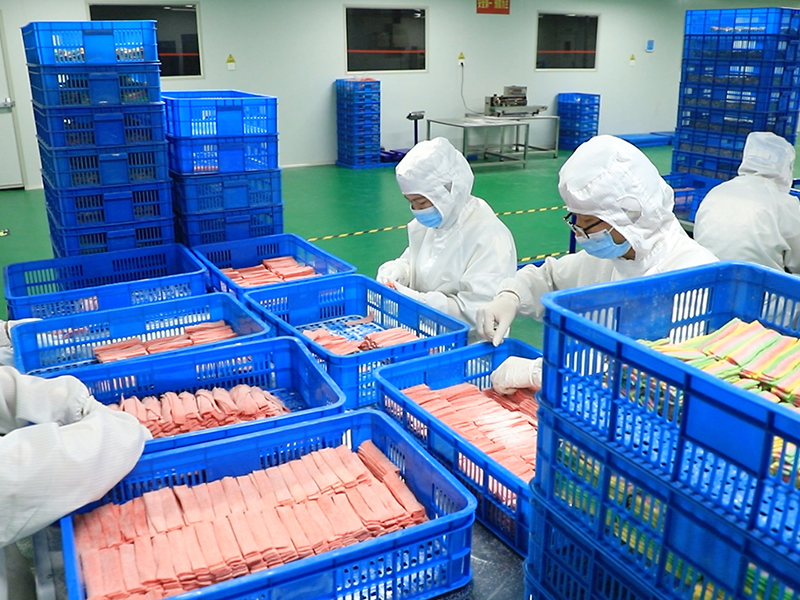
Making hard candy at home and making it at commercial scale are two very different things. A stovetop batch requires a candy thermometer with a bit of luck. Meanwhile, a factory batch depends on a tested recipe with controlled cooking equipment. Even the production line must repeat the same result thousands of times a day.
This guide walks through the process of making commercial hard candy. You’ll know what goes into a production recipe, how that recipe is developed, executed, and tested, as well as the full factory process from cooking to packaging. We’ll also cover what you should know before requesting a formula or quotation to conduct a successful B2B deal.
What Is Hard Candy?
Hard candy is a glass-like confection made by cooking sugar syrup until almost all the water has evaporated. Once cooled, that low-moisture syrup sets into a firm, brittle structure rather than a soft or chewy one.
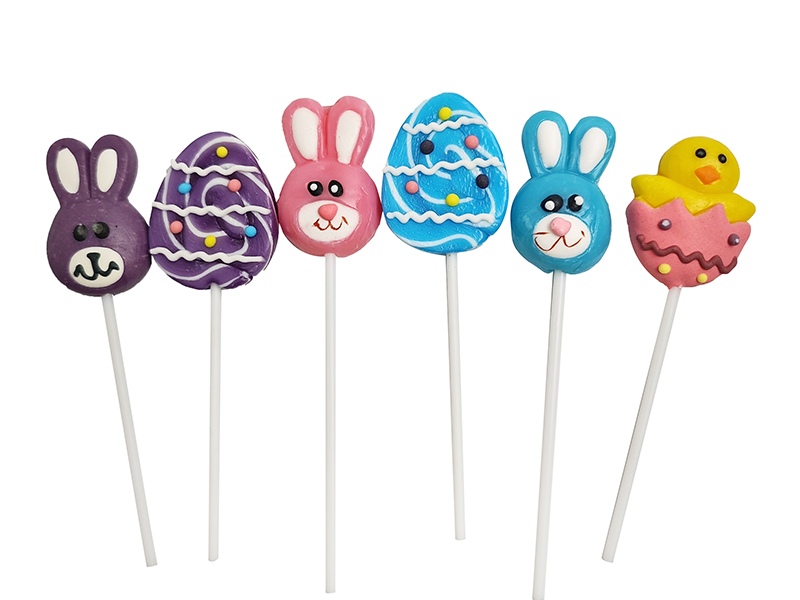
You can have the finished hard candy transparent, translucent, or opaque based on the recipe and ingredients. Commercially, hard candy is available for B2B business in several standard formats –
- Solid hard candy
- Center-filled hard candy (liquid or powder centers)
- Layered hard candy
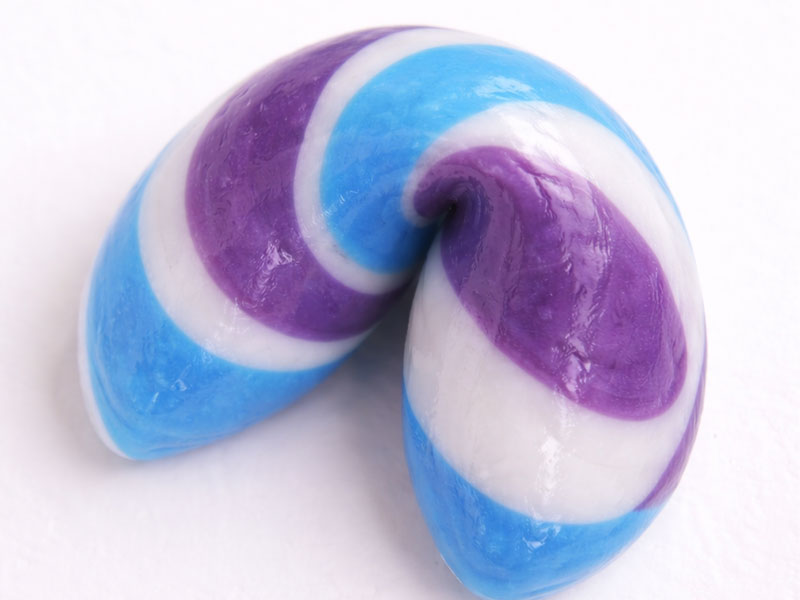
- Striped hard candy
- Lollipops
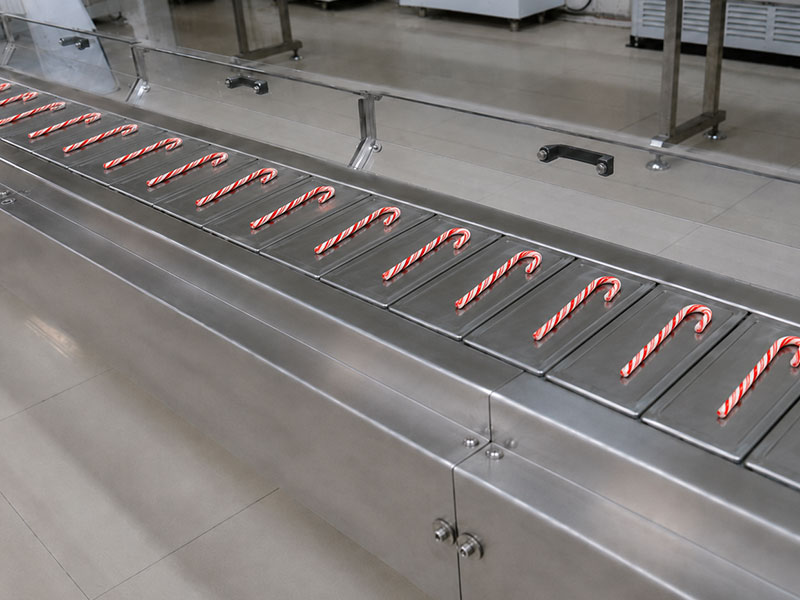
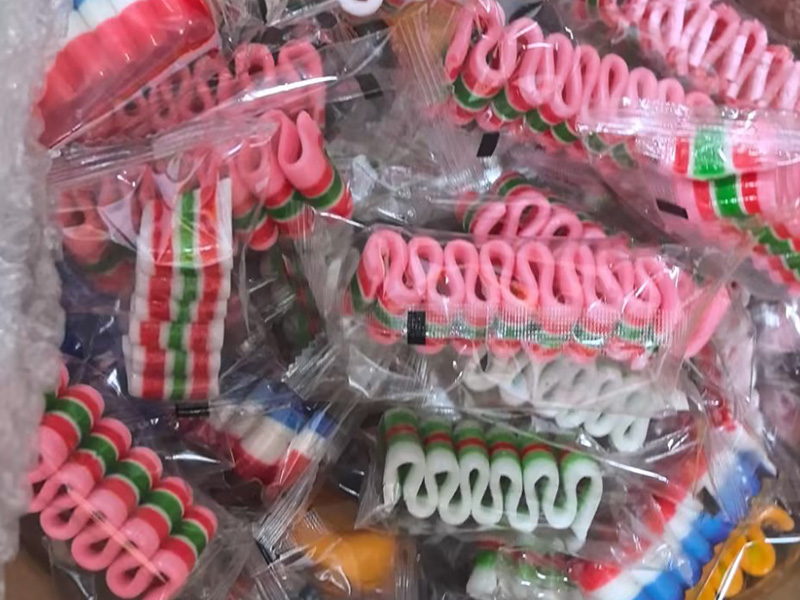
- Candy canes
Each format starts from a similar base syrup. But the forming method, filling equipment, and finishing steps differ based on the factory-made product(s).
What Is a Commercial Hard Candy Recipe?
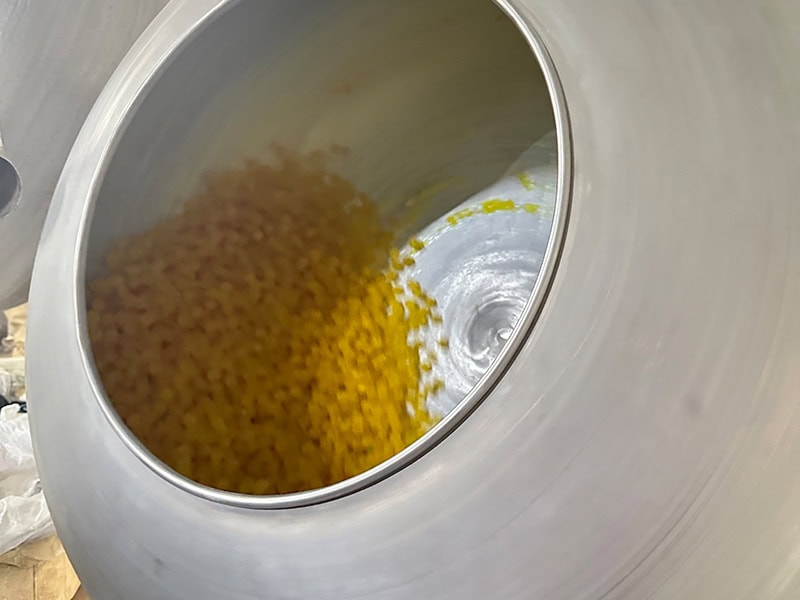
A commercial hard candy recipe isn’t the same thing as a home recipe scaled up. It’s a controlled-recipe formula intended to perform consistently on industrial equipment. A workable commercial recipe has to account for several factors at once –
- Ingredient ratios that hold up across large batch sizes.
- Cooking performance at commercial temperatures and cook times.
- Forming suitability for the specific depositing or die-forming equipment being used.
- Flavor stability through high-heat cooking and storage.
- Moisture control to prevent stickiness after packaging.
- Packaging compatibility with the intended wrapping format.
- Target shelf life appropriate for the product’s distribution market.
Even a small change in the formulation can cause very different production scaling. So, commercial recipes always need testing before they’re approved for mass production. A recipe that looks perfect on paper can still fail if it doesn’t form, cool, or color properly under high-volume cooking conditions.
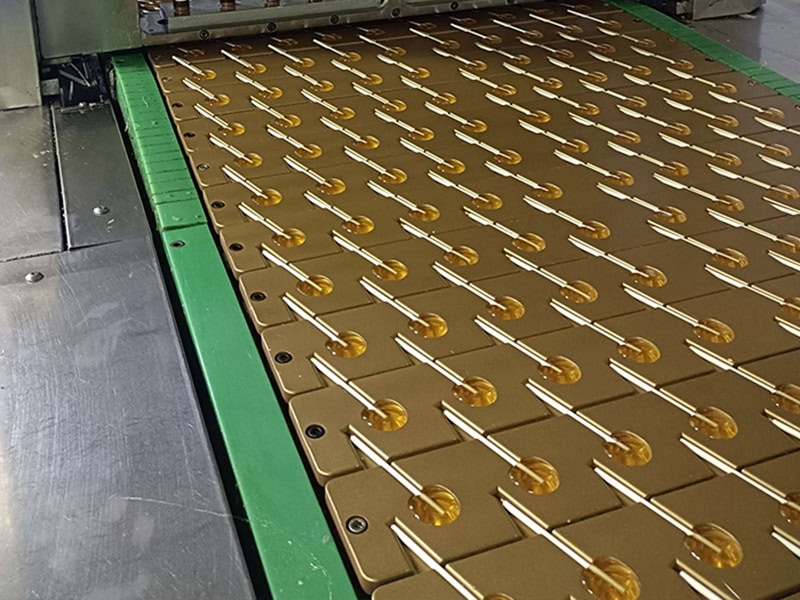
What Ingredients are Used in a Commercial Hard Candy Recipe?
1. Sugar
Sugar is the main source of sweetness. It’s also the primary structural component of the candy. The chosen sugar heavily determines the final hardness and appearance of the finished piece.
2. Glucose Syrup
Glucose syrup does more than add sweetness. Its smaller sugar molecules physically get in the way of sucrose molecules as they try to lock into crystals. It’s what keeps hard candy smooth and glassy, rather than grainy. Glucose syrup also improves processing stability, clarity, and texture. So, it has become a near-universal ingredient in almost every commercial hard candy formula.
3. Water
Water dissolves the sugar and glucose syrup into a workable syrup. Almost all the added water is removed during cooking. Residual moisture makes finished candy soft or sticky.
4. Flavors
Common commercial flavor categories include fruit, mint, coffee, milk, herbal, and spicy profiles. Flavor selection also affects how and when an ingredient should be added. Otherwise, some flavors may break down under sustained heat.
5. Colors
Hard candy colors fall into two categories: transparent and opaque. This stage uses natural or permitted synthetic colorants depending on target-market regulations. Furthermore, color requirements vary significantly by country. So, it’s an area where market-specific compliance matters equally.
6. Acids and Additional Ingredients
Your intended formula(s) may also include citric acid, malic acid, salt, milk powder, coffee extract, herbal extracts, or other product-specific ingredients. It’ll define the candy’s final flavor and character.
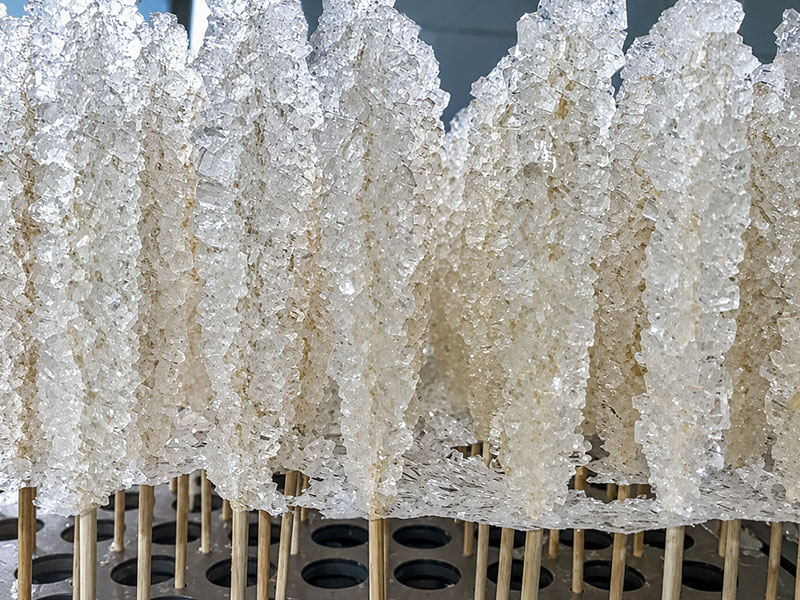
How Is a Hard Candy Recipe Developed for Mass Production?
Any scalable candy production starts at the concept stage. And turning a candy concept into a working commercial product typically follows five stages.
1. Defining the Product Concept
The manufacturer locks down the product type, flavor, color, shape, piece weight, filling (if any), packaging, and target market before anything.
2. Selecting the Ingredient System
It covers sweetener selection, flavor system, acid balance, color system, and filling ingredients. The manufacturer also makes sure every ingredient complies with the target market’s food regulations.
3. Testing the Formula
The brand cooks and evaluates lab-scale batches for cooking behavior, forming performance, flavor retention, color stability, hardness, and moisture stability.
4. Pilot Sample Production
A small-scale production trial produces samples for customer evaluation. Formula adjustments and final sample approval before full production follow the segment.
5. Converting the Recipe into a Production Specification
The approved formula gets documented as a full production spec. It covers ingredient quantities, process sequence, critical controls, product weight + dimensions, packaging needs, and quality standards.
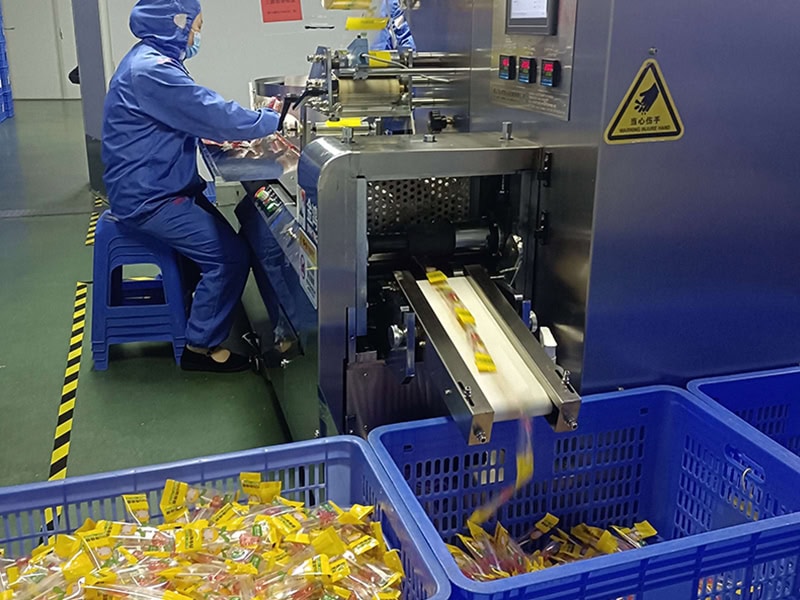
How to Make Hard Candy in a Factory: Step-by-Step Process
At a high level, commercial hard candy production follows the sequence –
Recipe Confirmation → Raw Material Inspection → Weighing → Dissolving → Cooking → Moisture Reduction → Flavoring → Forming → Cooling → Inspection → Packaging.
1. Confirm the Recipe and Production Specification
The team reviews the approved commercial recipe first. Then, it comes to confirmed ingredient batches, flavor and color requirements, product shape + weight, and packaging specs.
2. Inspect and Weigh the Raw Materials
Incoming ingredients are inspected and verified against supplier + batch records. Then, they get weighed per the formula. It also builds ingredient traceability and production records, preventing potential measurement errors.
3. Dissolve the Sugar and Glucose Syrup
Sugar, glucose syrup, and water are combined and dissolved into a uniform candy syrup. Any unwanted particles are filtered out, and the syrup is prepared for cooking.
4. Cook the Candy Syrup
The syrup gets heated using batch or continuous cooking equipment. Modern hard-boiled candy lines usually cook the syrup to 140–150°C before cooling it to 105–90°C to add flavor, color, and acid. It also evaporates the water to concentrate the sugar solids while controlling color and transparency without scorching.
5. Reduce Moisture under Controlled Conditions
Residual moisture is further reduced to improve product stability, enhance clarity, and control caramelization. It also lowers the risk of stickiness, preparing the candy mass for forming.
6. Add Flavor, Color, and Acid
Heat-sensitive ingredients are added after the main cooking to reduce flavor loss and protect color quality. It also adjusts acidity to ensure uniform distribution. Meanwhile, different flavors and colors are kept separate when a product calls for it.
7. Form the Hard Candy
There are two main forming technologies used in commercial hard candy production: depositing and stamping. The latter is also called die forming.
Deposited hard candy involves pouring liquid candy syrup directly into molds. It enables accurate piece weight, smooth surfaces, and detailed shapes (transparent, layered, filled, etc.).
Die-formed hard candy cools the candy mass slightly, batch-rolls it, sizes it into a rope, and presses it through forming dies. Thus, it separates individual pieces to emboss a logo or pattern onto the surface.
| Factor | Depositing | Die Forming |
|---|---|---|
| Forming Method | Candy syrup is deposited into molds | Candy rope is pressed through forming dies |
| Product Surface | Usually smooth | May include embossing or forming seams |
| Shape Options | Suitable for detailed molded shapes | Suitable for traditional and regular shapes |
| Weight Control | Controlled through depositing volume | Controlled through rope and die settings |
| Common products | Solid, layered, and some filled candy | Solid and center-filled candy |
8. Cool and Harden the Candy
The formed candy passes through a cooling conveyor or cooling tunnel. That’s where controlled temperature reduction locks in the final, hardened structure, stabilizing the surface against deformation. Humidity management is important, as freshly formed candy is still vulnerable to moisture.
9. Inspect the Finished Candy
The manufacturer checks the finished pieces for appearance, color consistency, weight, shape and dimensions, flavor, hardness, and moisture content. Foreign-material control, including metal detection, marks a physical hazard control point. The regulation falls under food safety frameworks, such as the FDA’s Preventive Controls rule. The same goes for batch traceability and retained samples for quality records.
10. Wrap and Pack the Hard Candy
Your packaging may include twist wrapping, pillow packing, flow wrapping, stick packing, printed retail bags, stand-up pouches, jars, display boxes, bulk cartons, or shelf-ready packaging. It primarily depends on the product and market.
11. Carton, Store, and Ship the Products
The final stage covers carton packing, batch coding, quantity verification, palletizing, moisture-protected storage, export documentation, container loading inspection, and shipment preparation.

What Determines Whether a Hard Candy Recipe Works at Scale?
A recipe that performs well in a lab can’t always guarantee success in full production. A few factors tend to make or break such a transition.
- Ingredient balance affects crystallization control, sweetness, acidity, texture, and how well the syrup behaves during forming. Cooking control determines final hardness, color, flavor, transparency, and batch-to-batch consistency.
- Moisture content governs stickiness, hardness, storage stability, and moisture absorption in the finished candy. On that note, sugar and glucose syrup are naturally moisture-attracting. That’s why unprotected hard candy softens and turns sticky in humid conditions.
- Forming compatibility covers how well the syrup performs on depositing or die-forming equipment. The same goes for shape stability and filling compatibility for center-filled products.
- Cooling conditions affect surface quality, product shape, wrapping readiness, and whether pieces stick together before they’re fully set. Packaging compatibility ties everything together as moisture, sealing, flavor, transport, and shelf-life depend on the right packaging format.
- Moisture migration remains one of the leading causes of shelf-life loss in glassy sugar confections, such as hard candy. Therefore, your packaging decisions become part of the recipe conversation, not an afterthought.
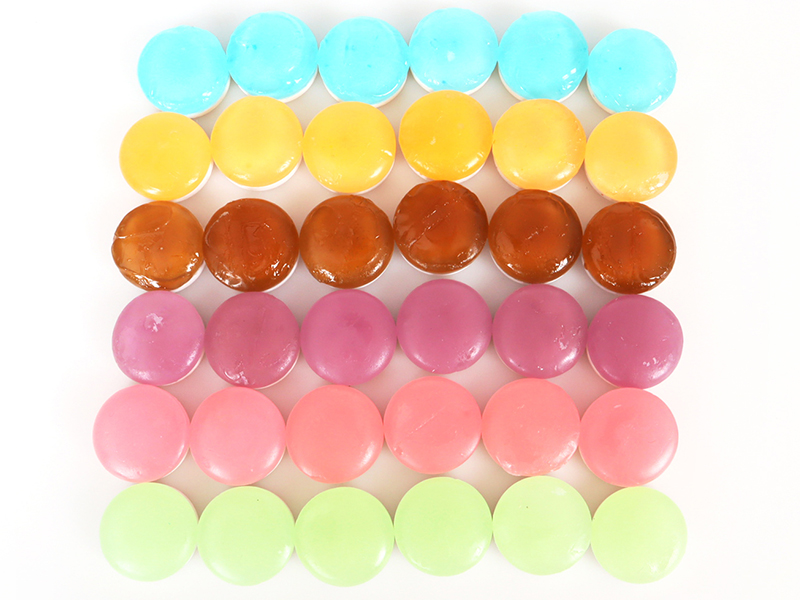
What Types of Hard Candy Can Be Made at Scale?
The first step is to develop a base formula and lay out the forming process. Once done, that same production system should support a wide range of finished products, including –
- Fruit-flavored hard candy
- Mint hard candy
- Coffee hard candy
- Milk hard candy
- Sour hard candy
- Spicy hard candy
- Herbal hard candy
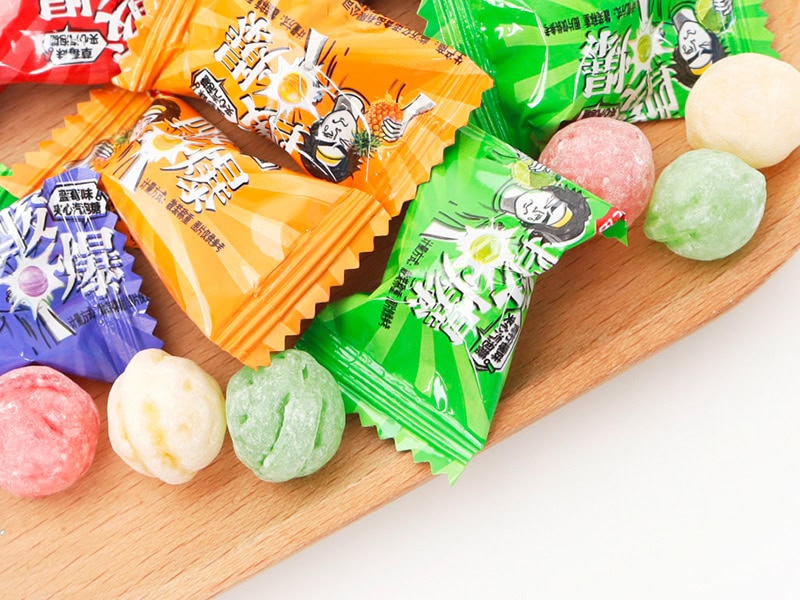
- Center-filled hard candy (powder or liquid)
- Layered hard candy
- Striped hard candy
- Sugar-free hard candy
- Lollipops
- Candy canes
What Can Be Customized in an OEM Hard Candy Recipe?
For brands and importers working with a contract manufacturer, customization usually falls into five areas.
- Flavor can be developed as single flavors, mixed flavors, sweet-and-sour balances, cooling sensations, milk and coffee profiles, or herbal and spicy profiles.
- Color can be single or multiple, transparent or opaque, layered, or striped.
- Shape and size range from standard shapes to custom molds, brand-specific shapes, seasonal designs, logo embossing, and different piece weights.
- Product structure can include solid, powder-filled, liquid-filled, layered, or chewy-center candy.
- Packaging options include individual wrapping, printed retail bags, stand-up pouches, jars, display boxes, private-label packaging, shelf-ready cartons, and bulk packaging.
How Does a Custom Hard Candy Project Move from Recipe to Production?
A standard custom project moves through several mandatory stages. It starts with confirming the requirements to initiate recipe development and formula formulation, and to produce samples. Then it comes down to flavor/color/shape approval, packaging, and pre-production.
Only after confirming pre-production, mass production begins, followed by quality inspection and shipment. Each stage builds on customer approval from the previous stage. That’s why early, detailed requirement confirmation tends to shorten the overall timeline.
MPS moves every custom project seamlessly from recipe to production through a well-structured OEM/ODM process. It starts with client inquiry, sample development, and customization, then scaling into mass production with certified quality and timely delivery.

How to Choose a Manufacturer That Knows How to Make Hard Candy at Scale
Not every candy factory is set up to develop and scale a custom recipe. A few areas are worth evaluating directly.
- Recipe-development capability covers formula adjustment, flavor development, filling development, and scale-up testing from lab batch to full production.
- Manufacturing experience should include work across different hard candy structures, general commercial production knowledge, and experience serving international markets specifically.
- Production capacity matters for both routine and peak-season orders, including the number of production lines, daily output, and demonstrated high-volume order capability.
- A quality-control system should cover raw material control, in-process inspection, finished-product testing, batch traceability, and foreign-material control.
- HACCP identifies hazards, sets critical control points, and documents the entire process on the certification side, laying the foundation for most other food safety certifications.
- Beyond HACCP, you may consider ISO 22000, FSSC 22000, BRCGS, Halal, and Kosher certification. FSSC 22000 and BRCGS are both benchmarked against the Global Food Safety Initiative.
- Buyers should also expect a manufacturer to provide COAs, product specifications, allergen statements, and export documentation as standard practice.
- Finally, packaging and export experience should include private-label packaging, retail-ready packaging, export cartons, container loading, and support for FOB and CIF shipping terms.

Information Buyers Should Provide Before Requesting a Hard Candy Recipe or Quotation
Sourcing moves faster when buyers come prepared with clear specifications up front –
- Product type
- Reference images
- Desired flavor
- Color requirements
- Candy shape
- Piece weight
- Filling requirements (if any)
- Individual wrapping preferences
- Retail packaging format
- Target market
- Estimated order volume
- Required certifications
- Expected delivery date
Having the details ready before the first conversation with a manufacturer means fewer rounds of back-and-forth before sampling.
Frequently Asked Questions (FAQs)
1. How to make hard candy in a commercial factory?
Commercial hard candy is made by dissolving sugar and glucose syrup in water, cooking the syrup to a controlled temperature, and adding flavor and color. Then, it comes to forming the candy through depositing or die forming, cooling, inspection, wrapping, and packaging for shipment.
2. What is included in a commercial hard candy recipe?
A commercial recipe includes precise ingredient ratios, cooking parameters, forming instructions, flavor and color specifications, moisture targets, packaging requirements, and the intended shelf life.
3. Is a commercial hard candy recipe different from a homemade recipe?
Yes. You can cook a homemade recipe for a single small batch by hand. In contrast, a commercial recipe must perform consistently across large batches on industrial cooking, forming, and packaging equipment.
4. What does hard candied mean?
“Hard candied” describes an ingredient (a fruit or nut) that has been coated or preserved in a hard sugar candy shell. It’s different from hard candy, which refers to the standalone confection made primarily from cooked sugar syrup.
5. What ingredients are used to make hard candy?
Hard candy is primarily made from sugar, glucose syrup, and water, along with flavors and colors. Sometimes manufacturers add acids like citric or malic acid, along with product-specific ingredients such as milk powder or coffee extract.
6. What is the difference between deposited and die-formed hard candy?
Deposited hard candy is poured as liquid syrup into molds, producing smooth surfaces and detailed shapes. Die-formed hard candy is pressed through forming dies as a semi-cooled rope, better suited to traditional shapes and center-filled products.
7. Why does hard candy become sticky?
Hard candy becomes sticky when it absorbs moisture from the surrounding air. Poor packaging, high humidity, or incomplete moisture reduction during cooking can all contribute to stickiness.
8. Can hard candy recipes be customized? How long does custom hard candy production take?
Yes. Flavor, color, shape, size, product structure, and packaging can all be customized for private label and OEM projects. Timelines vary by project complexity. It takes time to develop the formula, approve the sample, packaging, and mass production.
9. Can a factory produce liquid-filled or powder-filled hard candy?
Yes. However, it usually requires forming equipment specifically designed for center-filled products. Even having a formula to keep the filling stable through cooking and packaging becomes necessary.
10. What is the MOQ for custom hard candy?
MOQ varies by product and packaging format. For many candy products, the typical MOQ is approximately 2–4 metric tons per flavor. For piece-counted, individually wrapped, molded or highly customized products, MOQ may instead be calculated by pieces, packaging quantity or production batch. Each selected flavor, color or style may have its own MOQ depending on the product.
Different qualifying flavors and MPS products can be combined in one container. If needed, your shipment can also be consolidated with goods from your other suppliers in China. For better freight efficiency, we generally recommend arranging the total shipment on a full-container basis.
Gummies, chocolate and other heat-sensitive products must be shipped in a reefer container.

Conclusion
Scaling hard candy production means transforming a craft into a system. And it ranges from the precision of recipe formulation to the orchestration of industrial machinery. Every production step moves forward to accomplish optimal consistency, efficiency, and market readiness.
It also serves as proof that confectionery success lies in merging a subtle combination of flavors, colors, and shapes with engineering discipline. Embracing quality control from start to finish enables a top-tier manufacturer to build trust, brand recognition, and long-term profitability.
Partner with MPS to Start Your Custom Hard Candy Project
You should always carefully consider moving forward with scalable hard candy production. And when you do, do yourself a favor. Start by selecting the desired product type and sharing your flavor, color, and shape requirements. Then confirm your packaging and target market, and request a formula evaluation or sample development.
MPS specializes in OEM/ODM candy production for global brands, importers, distributors, wholesalers, and retail channels. You may need a solid hard candy line, a center-filled formula, or a fully custom private-label project. Reach out to request a formula evaluation, samples, or a full quotation for your next hard candy project.