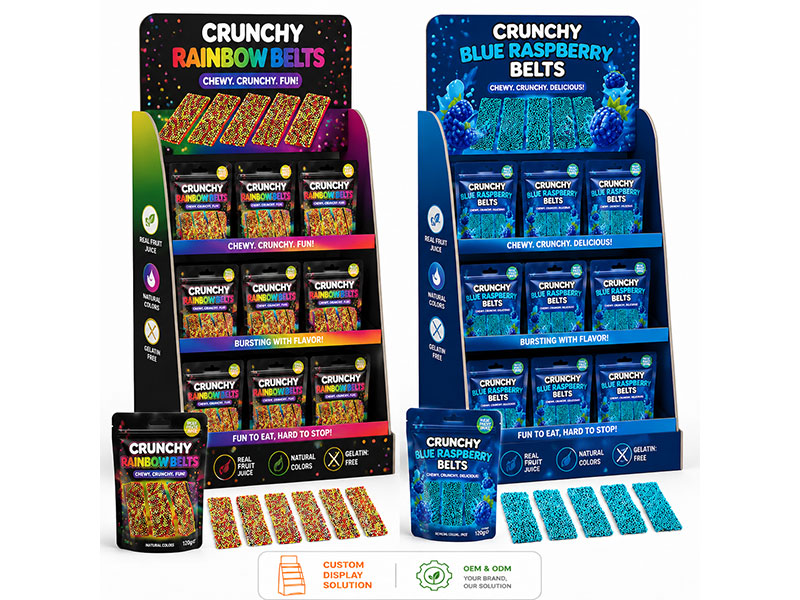
Rainbow crunchy-bead sour belts are becoming an interesting format for candy buyers looking for products with stronger visual appeal and a different eating experience.
Unlike traditional sour belts covered with fine sugar or sour powder, this format combines a chewy sour candy strip with a colorful crunchy candy-bead coating.
For consumers, the difference is simple: Crunchy outside. Chewy and sour inside.
For importers, distributors, wholesalers and private-label brands, however, sourcing this product requires more than comparing prices.
The coating, gummy texture, packaging, production capability and shipping conditions all influence whether the final product can perform successfully in the retail market.
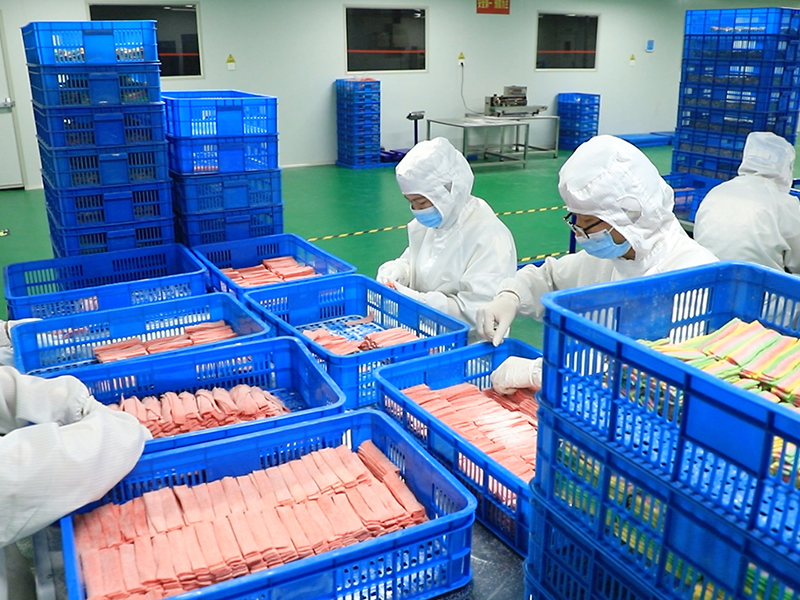
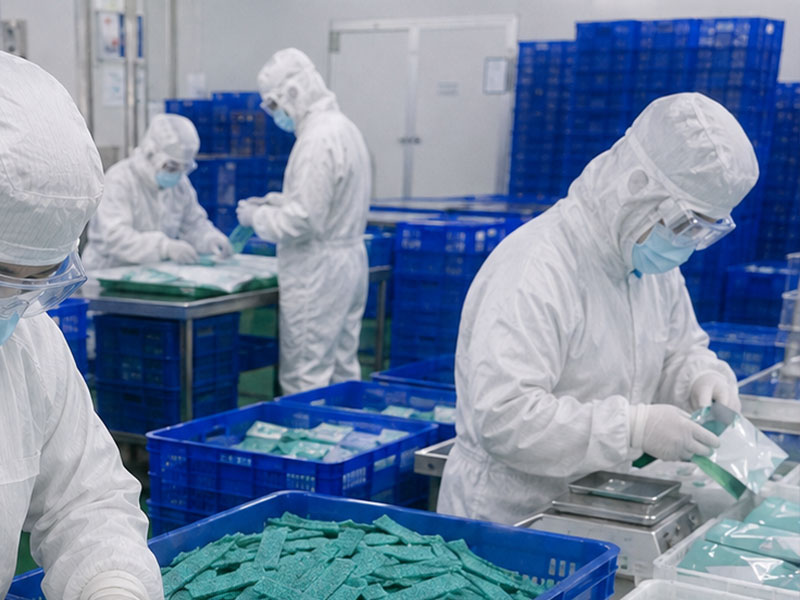
A reliable supplier should not only provide a competitive quotation, but also demonstrate the ability to produce consistent quality at commercial scale.
This guide explains what wholesale buyers should consider before purchasing rainbow crunchy-bead sour belts.
What Should Buyers Understand Before Purchasing Crunchy Sour Belts?
Before requesting a quotation, buyers should first define what type of product they actually need.
A crunchy-bead sour belt project may involve different levels of customization:
| Product Type | Description | Suitable For |
|---|---|---|
| Standard crunchy sour belt | Existing formula, existing shape and standard packaging | Buyers looking for faster launch and lower development complexity |
| Private label sour belt | Existing product with customized branding and packaging | Importers, distributors and candy brands building their own products |
| Customized crunchy sour belt | Adjusted flavor, color, coating, size or packaging | Brands seeking stronger market differentiation |
| New product development | New formula, shape, coating structure or product concept | Brands developing exclusive candy products |
Understanding the required level of customization helps buyers evaluate realistic MOQ, development time and production costs.
What Information Should You Prepare Before Requesting a Quote?
A supplier cannot provide an accurate wholesale quotation from a simple request such as:
“Please send your best price.”
The quotation depends on the destination market, product requirements and packaging format.
Before contacting a manufacturer, buyers should prepare the following information:
| RFQ Item | Information to Provide |
|---|---|
| Destination market | Country or region where the product will be sold |
| Sales channel | Supermarket, convenience store, wholesale, e-commerce, candy store or other channels |
| Product format | Crunchy-bead sour belt, traditional sour belt or other candy format |
| Flavor direction | Mixed fruit, strawberry, blue raspberry or custom flavors |
| Sourness level | Mild, medium, strong or reference sample |
| Pack weight | Required net weight per retail unit |
| Packaging format | Individual pack, pouch, jar, display box or bulk packaging |
| Branding | Factory brand, white label or private label |
| Estimated quantity | Trial order, container quantity or annual forecast |
| Compliance requirements | Required documents, certificates and labeling requirements |
| Delivery requirements | Destination port, city and preferred trade term |
| Launch timeline | Required production and delivery schedule |
Providing this information allows manufacturers to evaluate the project more efficiently and provide a more realistic quotation.
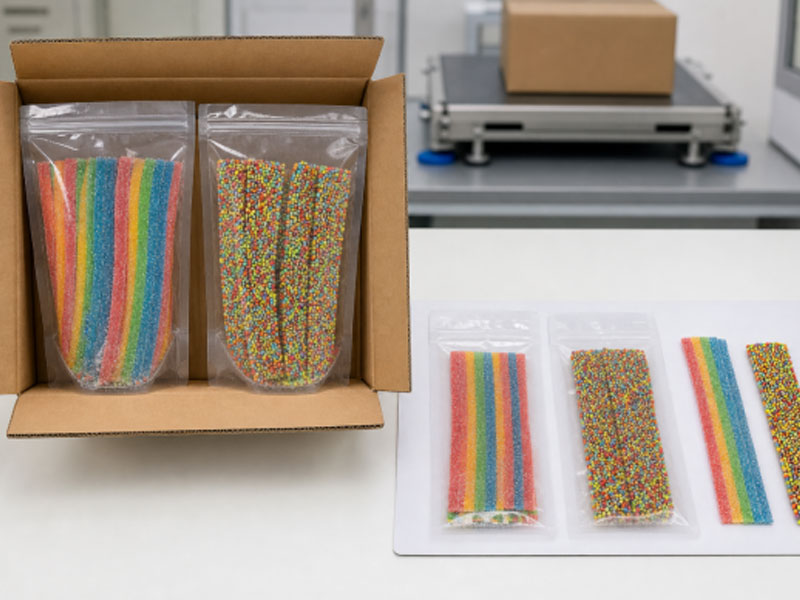
What Wholesale Packaging Formats Are Available?
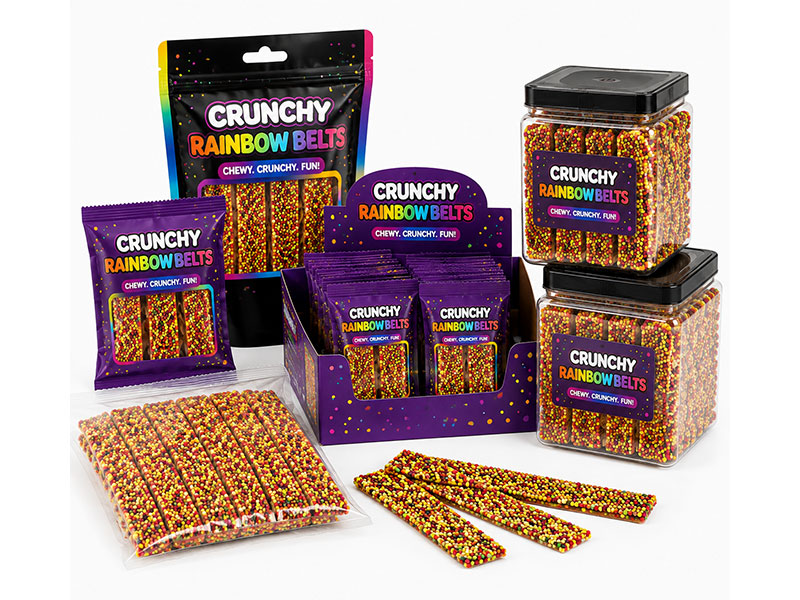
1. Individual packs
Individual packs may be suitable for convenience stores, checkout displays, vending, party assortments and promotional multipacks.
- Unit weight tolerance
- Seal strength
- Barcode position
- Display-box configuration
- Retail price compatibility
- Ease of shelf replenishment
2. Sharing pouches
- Product protection after opening
- Pack dimensions and shelf appearance
- Number of pieces per pack
- Film barrier performance
- Case and pallet efficiency
3. Jars and tubs
Clear jars can display the colorful coating and may suit candy shops, wholesale clubs and food-service environments. Buyers should compare packaging cost, container weight, cube efficiency and breakage risk.
4. Bulk packaging
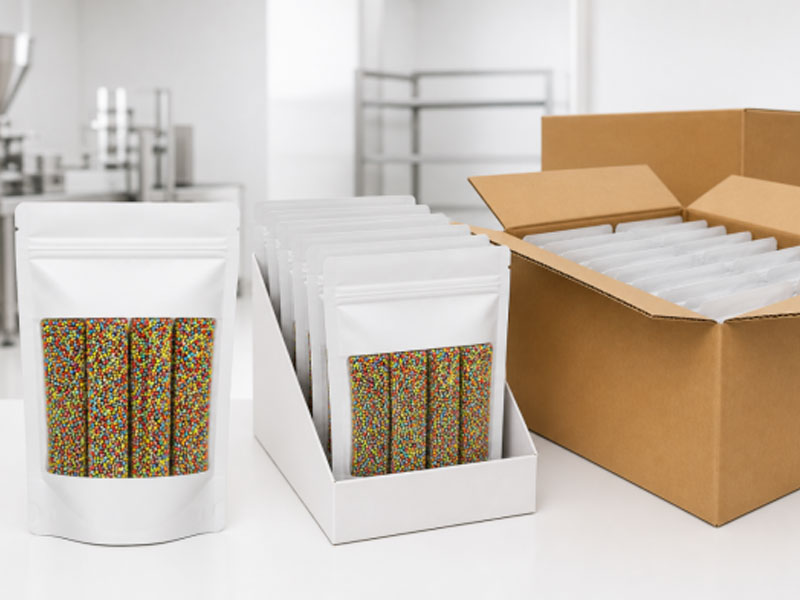
Bulk bags may be appropriate for pick-and-mix stores, repackers, food-service distributors and candy wholesalers. Confirm whether the product can withstand compression and repeated handling without excessive sticking, deformation or bead loss.
5. Display-ready cases
Supermarket and convenience-store programs may require outer cases that can be opened and placed directly on the shelf. Confirm the retailer’s requirements before approving the case structure and artwork.
How Does MOQ Work for Wholesale Crunchy Sour Belts?
MOQ depends on several factors:
- Formula
- Product size
- Flavor
- Color
- Packaging format
- Printing requirements
- Production setup
Different project types normally have different MOQ expectations.
| Project Type | MOQ Consideration |
|---|---|
| Existing product with standard packaging | Usually the simplest route with lower development complexity |
| Existing product with private label packaging | Depends on candy MOQ and printed packaging requirements |
| Customized flavor or color | May require additional production planning |
| Custom shape or formula | Requires development evaluation before confirming MOQ |
For many candy products, MOQ is typically 4–6 tons or 30,000–60,000 pcs per item. Some customized products may require a higher MOQ. For crunchy-bead sour belts specifically, MOQ may also depend on:
Belt size
Bead color combination
Flavor assortment
Packaging format
A professional manufacturer should confirm MOQ after reviewing the complete product requirement rather than providing an unrealistic number without details.
You can order one product or combine multiple MPS products in one container. If needed, your shipment can also be consolidated with goods from your other suppliers in China. If the total shipment does not fill a full container, the shipping cost per unit will be higher.
Gummies, chocolate and other heat-sensitive products must be shipped in a reefer container.
How Should Buyers Compare Wholesale Prices?
The lowest unit price is not always the lowest total cost.
A complete comparison should consider:
| Cost Factor | Why It Matters |
|---|---|
| Product price | Basic manufacturing cost |
| Packaging cost | Influences retail appearance and MOQ |
| Printing/setup charges | May apply to customized packaging |
| Freight cost | Depends on carton efficiency and shipment volume |
| Import duties and taxes | Affects landed cost |
| Product loss | Damaged or unsaleable products affect profitability |
| Shelf life at arrival | Important for international distribution |
For coated candy products, buyers should also consider:
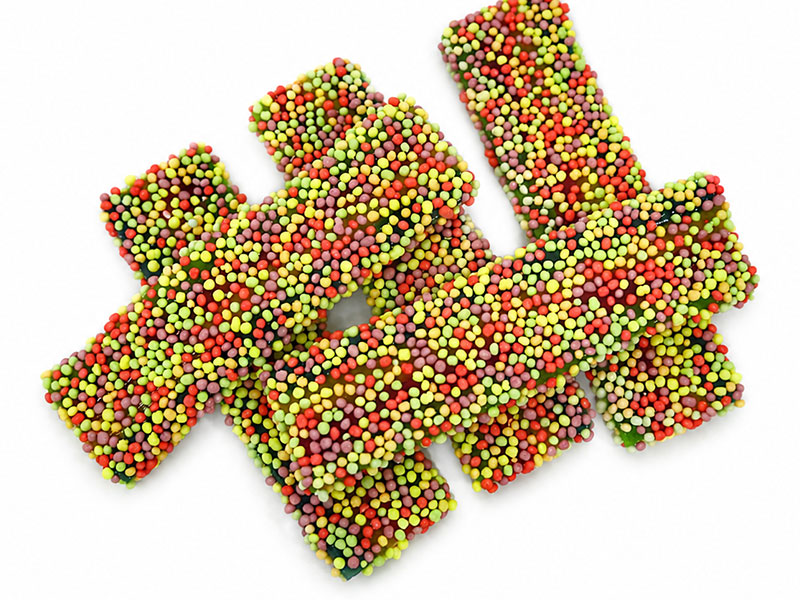
- Coating stability
- Packaging protection
- Transportation conditions
- Expected retail shelf performance
A slightly higher factory price may create better overall value if the product arrives in better condition and reduces quality issues.
What Samples Should Wholesale Buyers Request?
A professional sourcing process should not rely on one sample only.
Different sample stages serve different purposes.
| Sample Type | Purpose |
|---|---|
| Reference sample | Understand existing product quality and concept direction |
| Customized sample | Evaluate requested changes in flavor, color, coating or packaging |
| Pre-production sample | Confirm the final approved production standard |
| Production sample | Verify commercial batch consistency |
For crunchy-bead sour belts, buyers should pay special attention to:
- Crunch intensity
- Bead coverage
- Flavor balance
- Sourness level
- Belt softness
- Product appearance
How Should Buyers Evaluate Crunchy Sour Belt Samples?
A good sample evaluation should include more than taste.
1. Appearance
Check:
- Belt dimensions
- Color consistency
- Bead distribution
- Coating coverage
- Broken pieces
- Loose beads inside packaging
2. Texture
Evaluate:
- Initial crunch
- Chewy texture
- Sourness release
- Flavor balance
- Overall eating experience
3. Packaging Performance
Check:
- Seal quality
- Product sticking
- Coating loss
- Package condition after transportation
The approved sample should ideally be connected with a written product specification to ensure consistency during mass production.
What Should Buyers Check When Selecting a Crunchy Sour Belt Manufacturer?
A capable supplier should be evaluated beyond product samples.
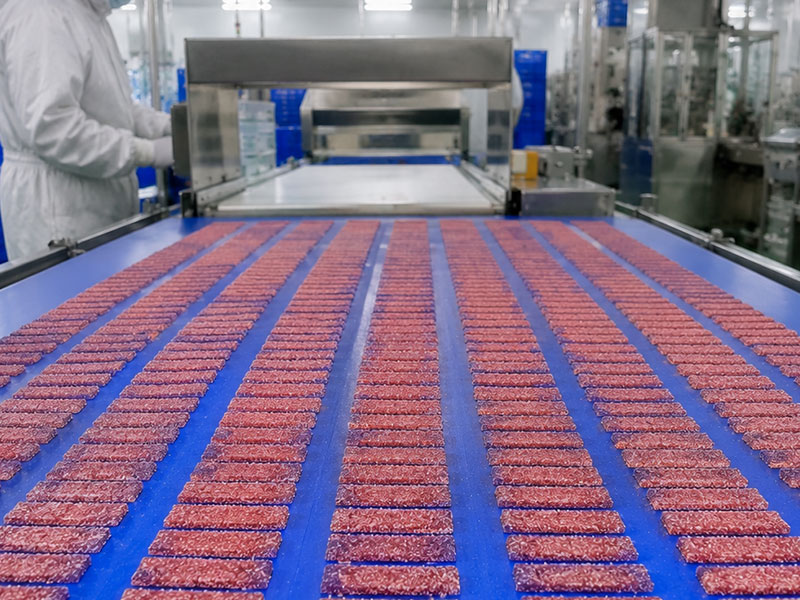
1. Manufacturing Capability
Buyers should understand:
- Whether the company is the actual manufacturer
- Production capacity
- Experience with coated candy products
- Ability to support repeat orders
- Packaging capability
2. Product Stability
For crunchy-bead sour belts, important questions include:
- Does the coating remain attached?
- How does the product perform in humid environments?
- Does the candy maintain texture during transportation?
- Can the product remain consistent between batches?
3. Export Experience
International buyers should also confirm:
- Export documentation capability
- Experience with destination markets
- Communication efficiency
- Ability to support long-term supply
How Long Does Wholesale Production Take?
The timeline depends on whether the project uses an existing product or requires customization.
A typical process includes:
- Product requirement confirmation
- Sample preparation
- Sample approval
- Packaging confirmation
- Production scheduling
- Quality inspection
- Shipment arrangement
Existing products with standard packaging normally move faster.
Customized products involving new flavors, packaging or product adjustments may require additional development time. For buyers requiring deeper customization, OEM and ODM candy development can provide a more structured approach.
For international buyers, planning should consider not only factory production but also shipping, customs clearance and local distribution.
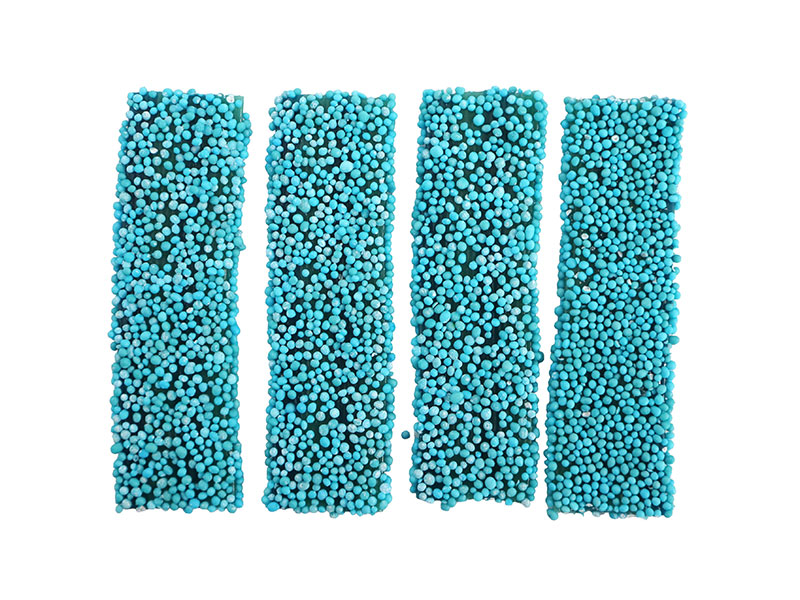
Should Buyers Choose Standard Products or Custom Crunchy Sour Belts?
The right choice depends on the business objective.
1. Standard Products
Suitable when buyers prioritize:
- Faster launch
- Lower complexity
- Proven product formats
- Easier market testing
2. Customized Products
Suitable when buyers prioritize:
- Brand differentiation
- Private-label identity
- Unique flavor combinations
- Exclusive packaging
The best solution is not always the most customized option.
A successful retail product needs the right balance between uniqueness, production feasibility and commercial cost.
Common Mistakes When Buying Wholesale Sour Candy
1. Choosing Only Based on Price
A lower price does not always mean a better supplier.
Product consistency, packaging quality and delivery reliability directly affect profitability.
2. Ignoring Packaging Requirements
Crunchy coatings require suitable protection.
Packaging should be evaluated together with the finished candy.
3. Requesting Customization Without Considering MOQ
Every additional customization may influence:
- Production planning
- Packaging materials
- Sampling time
- Final cost
4. Not Planning for Repeat Orders
A supplier should be able to support not only the first shipment but also future replenishment.
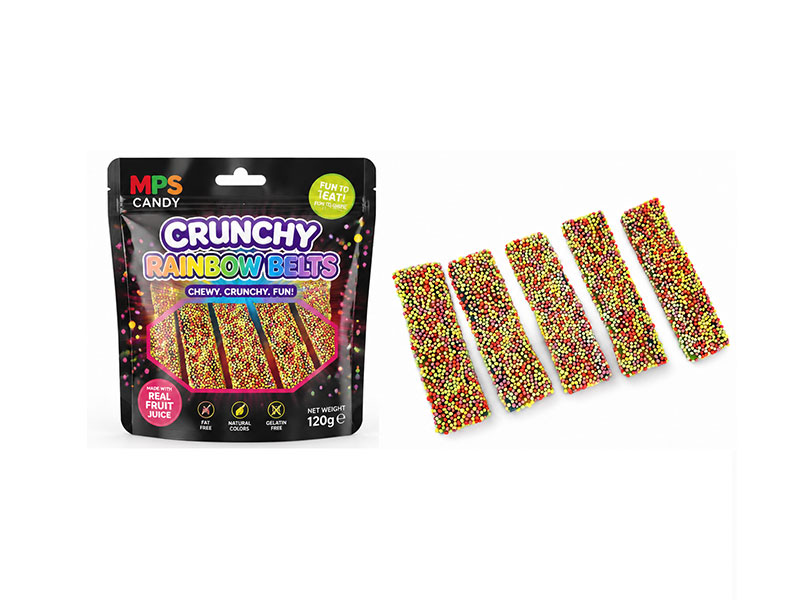
Frequently Asked Questions
1. What is the MOQ for crunchy sour belts wholesale?
MOQ varies by product and packaging format. For many candy products, the typical MOQ is approximately 2–4 metric tons per flavor. For piece-counted, individually wrapped, molded or highly customized products, MOQ may instead be calculated by pieces, packaging quantity or production batch. Each selected flavor, color or style may have its own MOQ depending on the product.
Different qualifying flavors and MPS products can be combined in one container. If needed, your shipment can also be consolidated with goods from your other suppliers in China. For better freight efficiency, we generally recommend arranging the total shipment on a full-container basis.
Gummies, chocolate and other heat-sensitive products must be shipped in a reefer container.
2. Can I create my own private-label crunchy sour belts?
Yes. Buyers can discuss customization options including flavors, colors, packaging and suitable product adjustments.
3. Can different flavors be combined in one shipment?
This depends on product quantity, production scheduling and packaging requirements. A manufacturer can evaluate mixed-SKU shipment options based on the project details.
4. Are crunchy-bead sour belts suitable for supermarkets?
Yes. The product can be developed for supermarkets, convenience stores, candy shops, distributors and online channels depending on packaging and positioning.
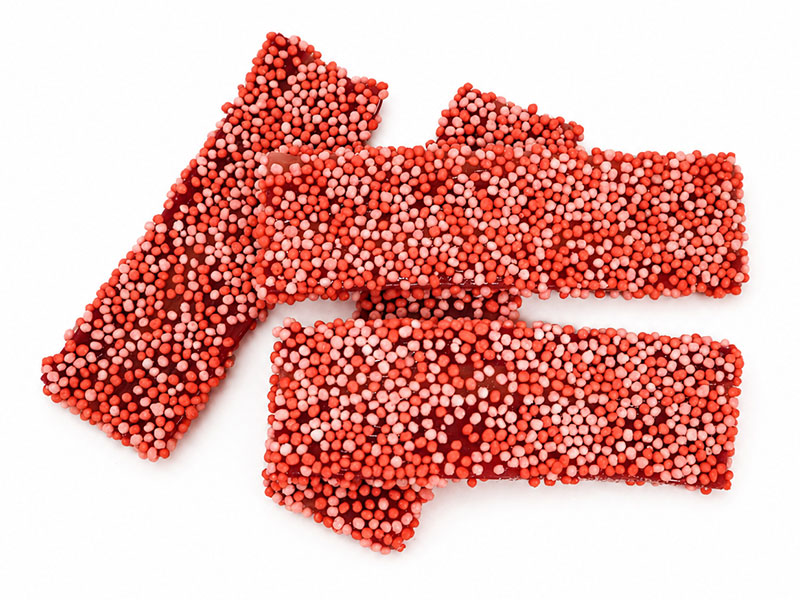
Source Crunchy Sour Belts from a Professional Candy Manufacturer
Rainbow crunchy-bead sour belts combine a familiar sour-candy format with a more distinctive crunchy texture.
For buyers, successful sourcing depends on more than selecting an attractive sample.
The right manufacturing partner should support product evaluation, customization, packaging, commercial production and export requirements.
MPS Candy is a China-based candy manufacturer and exporter supporting wholesale, private-label and OEM/ODM sour candy production for international B2B buyers.