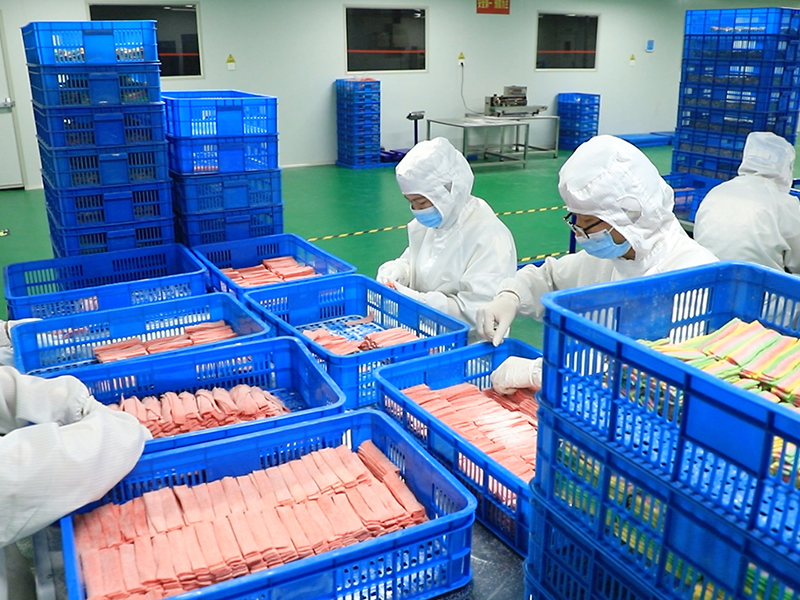
Rock candy looks nothing but large, glittering sugar crystals attached to a stick or string at first. But the process behind those crystals — whether on a kitchen counter or in a commercial production facility — involves precise chemistry, controlled conditions, and patience.
This article answers the questions most people have about rock candy: what it is, what it is made of, why it forms crystals, how to make it at home, and how it is produced at factory scale. It also covers what bulk buyers should know when evaluating a rock candy manufacturer.
What Is Rock Candy?
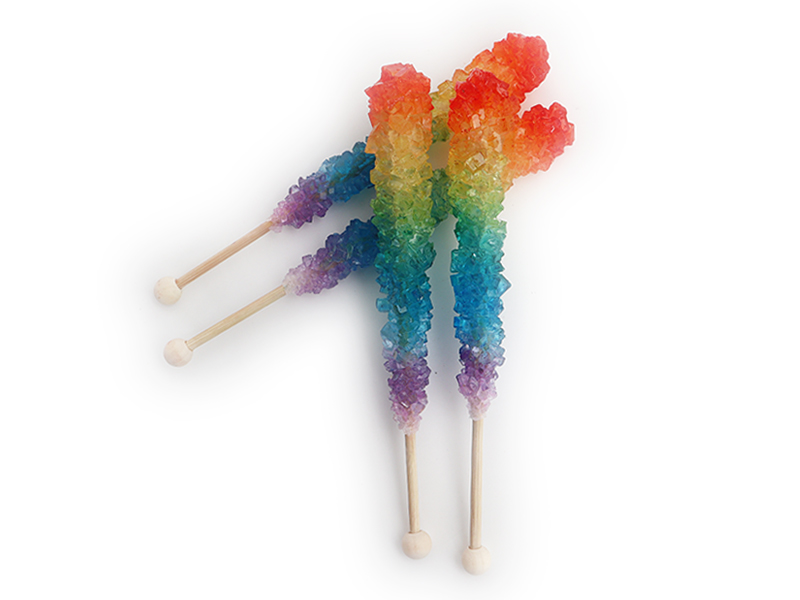
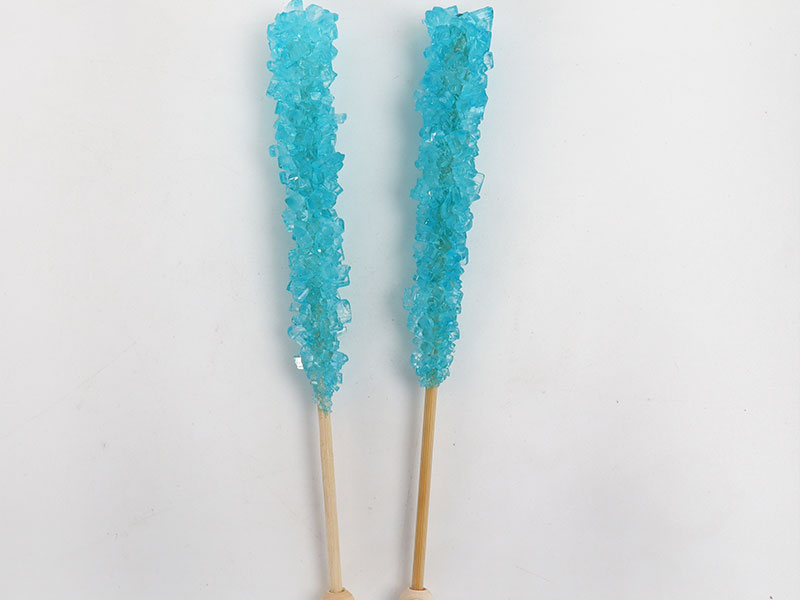
Rock candy is a crystalline sugar confection made from large sugar crystals grown from a supersaturated sugar solution. Unlike most hard candy, rock candy gets its structure from a fundamentally different process: controlled crystallization over time.
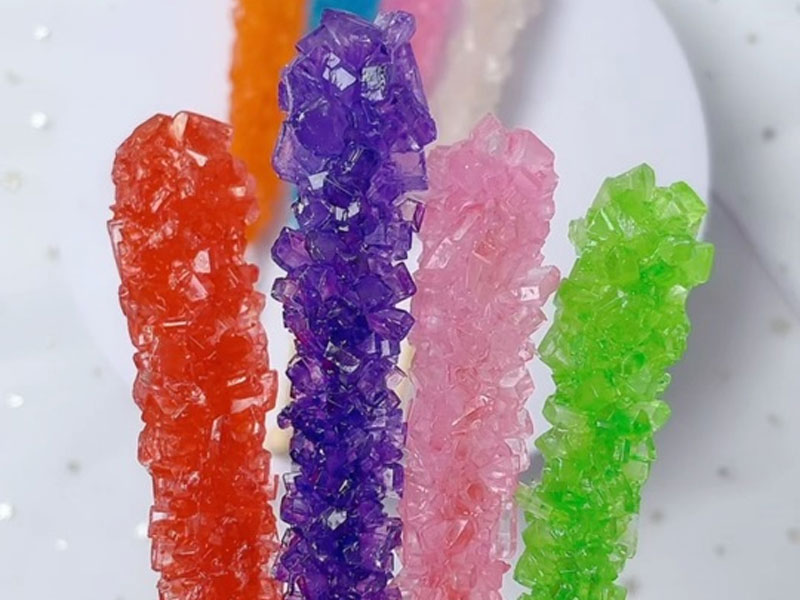
The result is a candy with a distinctive appearance: clear or colored crystal clusters with a clean, pure sweetness that reflects its straightforward ingredient base.
Common commercial formats of rock candy include:
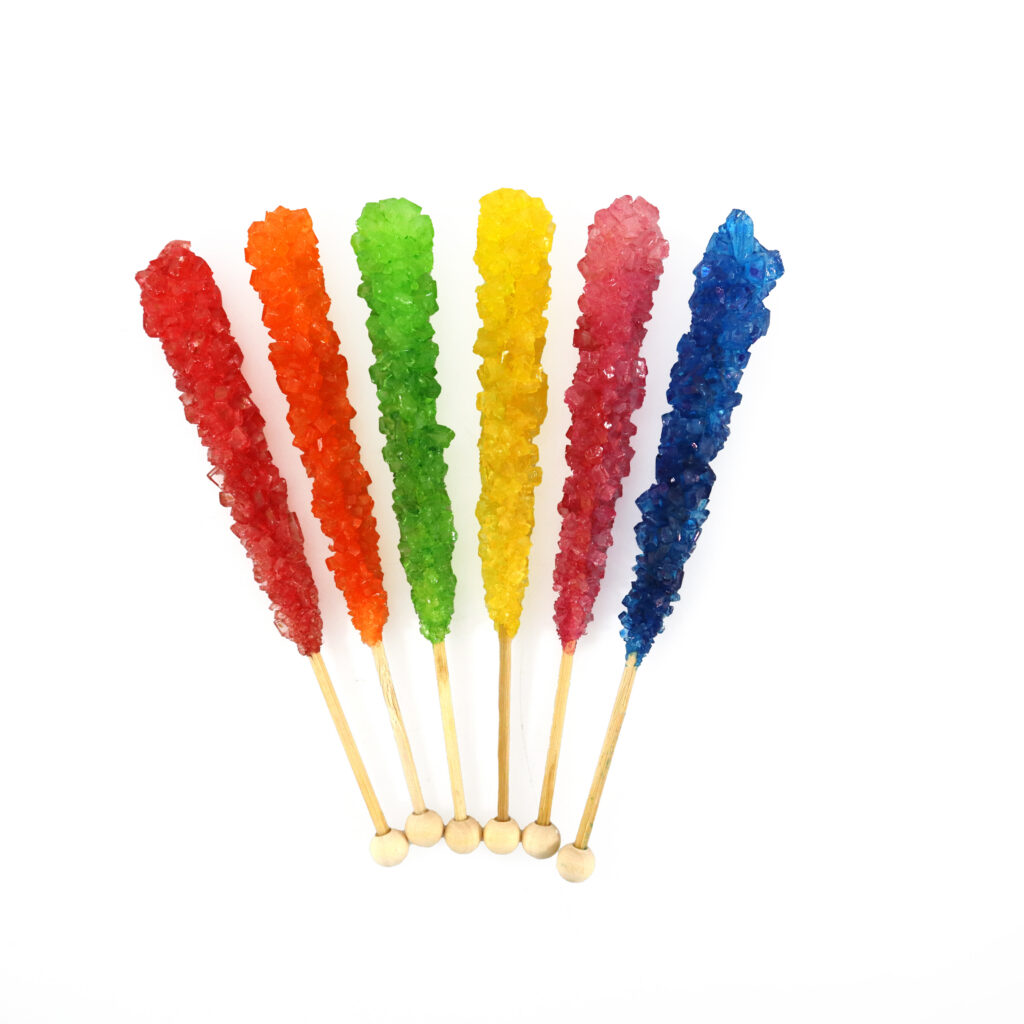
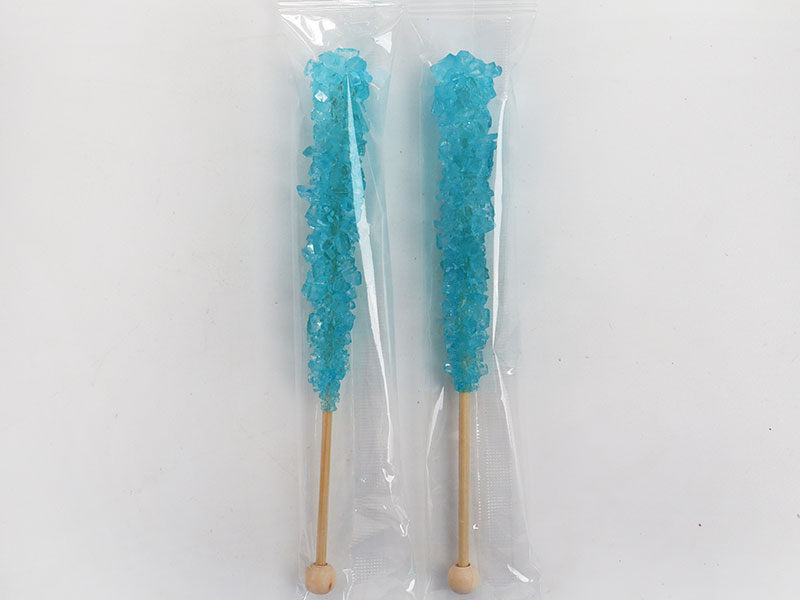
- Rock candy sticks: Sugar crystals grown directly onto a stick, the most recognized retail format.
- Loose crystal candy: Individual crystal pieces sold by weight or in bags, used in beverages and confectionery mixes.
- Swizzle sticks and tea stirrers: Slim crystal sticks used to stir and sweeten hot drinks.
- Crystal sugar chunks: Irregular or uniform crystal pieces for specialty food, beverage, or gifting applications.
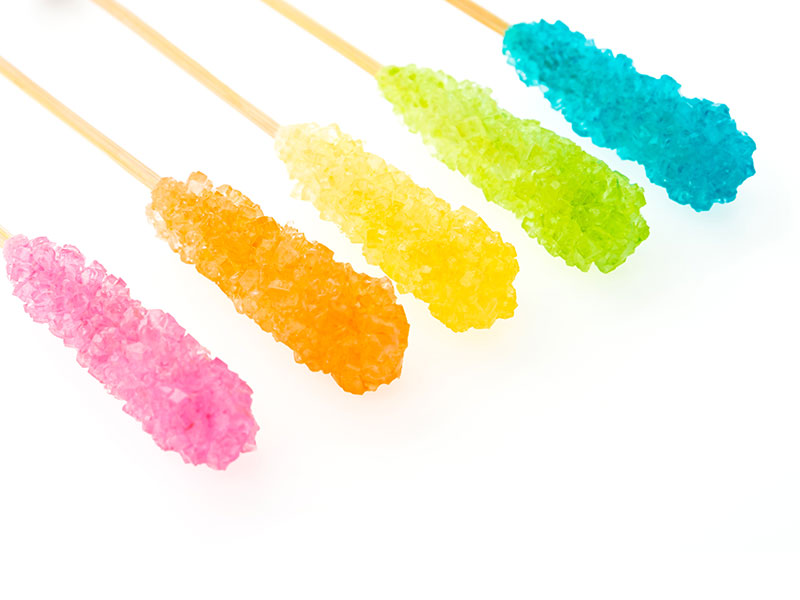
- Colored and flavored rock candy: Custom-colored or fruit-flavored formats for retail, gifting, and branded product lines.
What Is Rock Candy Made Of?
- Sugar: The primary ingredient and the material that forms the crystals themselves. Most commercial rock candy uses refined white cane or beet sugar. Sugar purity directly affects crystal clarity and appearance.
- Water: Water actively dissolves the sugar and create the solution from which crystals grow. Water quality, particularly mineral content, can affect crystal clarity and growth behavior.
- Color: Food-grade colorants are added to the syrup to produce colored crystal varieties. Both natural and synthetic color systems are used depending on the product specification.
- Flavor: Flavoring agents such as fruit extracts, vanilla, mint, or cinnamon may be incorporated. Flavor choice affects both taste and aroma and is a key differentiation point in commercial product lines.
- Acid (Optional): Small amounts of cream of tartar or citric acid are sometimes used to prevent unwanted crystallization behavior or adjust flavor.
Why Does Rock Candy Form Crystals?
The crystallization at the heart of rock candy is not accidental. It follows well-understood principles of chemistry and physics. Understanding why crystals form helps explain why the process looks so different at home versus in a factory.
1. Saturated vs Supersaturated Sugar Solution
When sugar is dissolved in water, there is a limit to how much sugar the water can hold at a given temperature. A solution that holds the maximum amount of dissolved sugar is called a saturated solution.
When hot water is used, more sugar can be dissolved than the water could normally hold at room temperature. As this solution cools, it becomes supersaturated — it contains more dissolved sugar than is stable at that temperature.
The instability is the driving force behind crystallization. The excess dissolved sugar needs somewhere to go, and it does so by forming solid crystals.
2. Nucleation and Seed Crystals
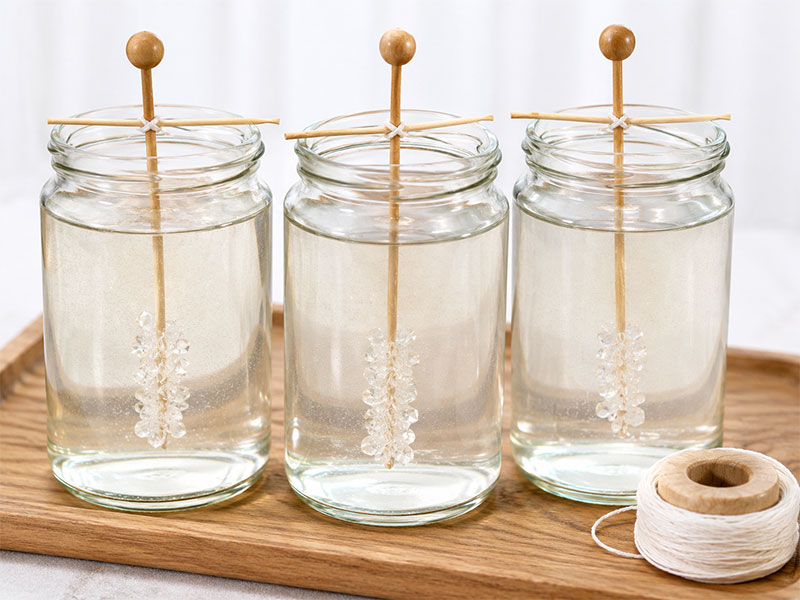
Crystallization does not happen uniformly throughout the solution. It begins at specific points called nucleation sites. At home, this is why a stick, string, or rough surface is placed into the syrup: it provides nucleation sites where crystals can begin to attach and grow.
A seed crystal — a small existing sugar crystal attached to the surface — accelerates this process significantly. Once a few crystals begin to form, they provide a template for more crystals to grow in an organized lattice structure. This is why rock candy has such a regular, geometric appearance.
In commercial production, this principle is managed deliberately. The crystallization carrier — whether a stick, string, or surface — is prepared in a way that promotes controlled, uniform crystal growth rather than random or uneven deposition.
3. Why Cooling and Evaporation Matter?
As the supersaturated solution cools, its ability to keep sugar dissolved decreases. This pushes more sugar out of solution and onto the growing crystals. At the same time, gradual water evaporation from the surface of the solution concentrates it further, encouraging continued crystal deposition.
Both temperature and evaporation rate affect the final crystal structure. Rapid cooling or disturbing the solution can create many small crystals rather than fewer large ones. Stable, undisturbed conditions favor larger, cleaner crystal formation — which is exactly what rock candy producers aim for.
How to Make Rock Candy at Home?
- Heat water to near boiling in a saucepan.
- Gradually stir in sugar, adding significantly more than the water would normally dissolve at room temperature. Continue stirring until fully dissolved to create a supersaturated solution.
- Add food coloring and flavoring if desired. Stir gently.
- Prepare your stick or string. Coat it lightly in sugar to create seed crystals and let it dry completely before use.
- Pour the syrup into a clean jar or container. Allow it to cool slightly.
- Suspend the prepared stick or string in the jar, ensuring it does not touch the sides or bottom.
- Cover loosely and place in an undisturbed location. Crystals will begin forming within a day or two and typically reach a good size within three to seven days.
- Once the crystals have reached the desired size, remove the stick, allow excess syrup to drip off, and leave to dry.
The process also helps you understand how rock candy forms practically. But it’s very different from commercial production in terms of consistency, scale, speed, and the reliability of the result.

Homemade vs Factory-Made Rock Candy: What’s the Difference?
The gap between a jar on a kitchen counter and a commercial rock candy production line is substantial.
| Factor | Homemade | Factory-Made |
|---|---|---|
| Batch Size | One jar at a time | Hundreds or thousands of pieces per batch |
| Crystallization Control | Ambient temperature, uncontrolled | Temperature and humidity managed throughout |
| Crystal Size Consistency | Variable, often uneven | Controlled for uniform size and appearance |
| Production Time | 3–7 days per batch | Optimized by process design and equipment |
| Hygiene & Compliance | Home kitchen standards | GMP, HACCP, and food safety certification |
| Appearance Quality | Inconsistent clarity and color | Graded and sorted for consistent presentation |
| Packaging | None or informal | Retail pouches, jars, gift boxes, bulk cartons |
| Scalability | Not scalable | Designed for repeatable large-scale output |
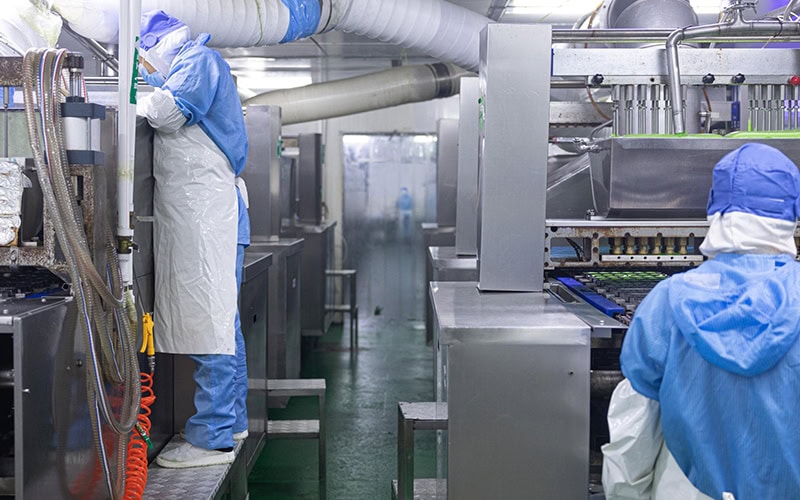
How Rock Candy Is Made in a Factory?
Commercial rock candy production follows a disciplined sequence of steps, each designed to ensure consistent crystal quality and efficient output.
1. Raw Material Preparation
Production begins with careful selection and preparation of raw materials. High-purity refined sugar is sourced to ensure crystal clarity and consistent color.
Water quality is controlled, as mineral impurities can interfere with crystallization. If the product will be colored or flavored, the color and flavor systems are prepared separately for precise, consistent addition at the right stage of the process.
2. Sugar Dissolution and Syrup Cooking
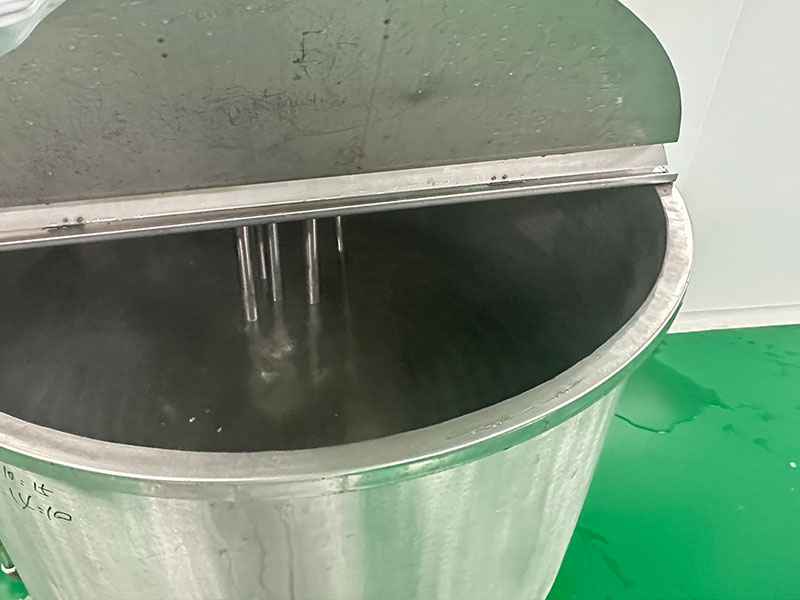
Sugar is dissolved in hot water in industrial dissolving equipment. The mixture is heated to fully dissolve the sugar and reach a high solids concentration. During this stage, impurities are removed through filtration or clarification processes.
Otherwise, it becomes problematic for achieving the crystal clarity expected in commercial rock candy. The cooked syrup is monitored for concentration using refractometers or other measurement tools.
3. Concentration Control and Crystallization Setup
Before crystal growth can begin, the syrup must be brought to the correct concentration and temperature. Too low a concentration produces slow or minimal crystal growth. Too high can cause uncontrolled mass crystallization rather than the organized crystal formation needed for rock candy.
Crystallization carriers — sticks, strings, or molds depending on the product format — are prepared and loaded. In many commercial operations, the carriers are pre-seeded to encourage uniform crystal nucleation.
4. Crystal Growth
This is the core stage of rock candy production. Loaded carriers are placed in crystallization tanks or chambers filled with the prepared supersaturated syrup. The environment is maintained at stable temperature and humidity to promote steady, uniform crystal growth.
The duration of this stage depends on the target crystal size, the specific product format, and process design. Managing temperature changes, minimizing vibration, and maintaining syrup concentration throughout the growth period all influence the final crystal quality.
5. Draining, Drying, and Separation
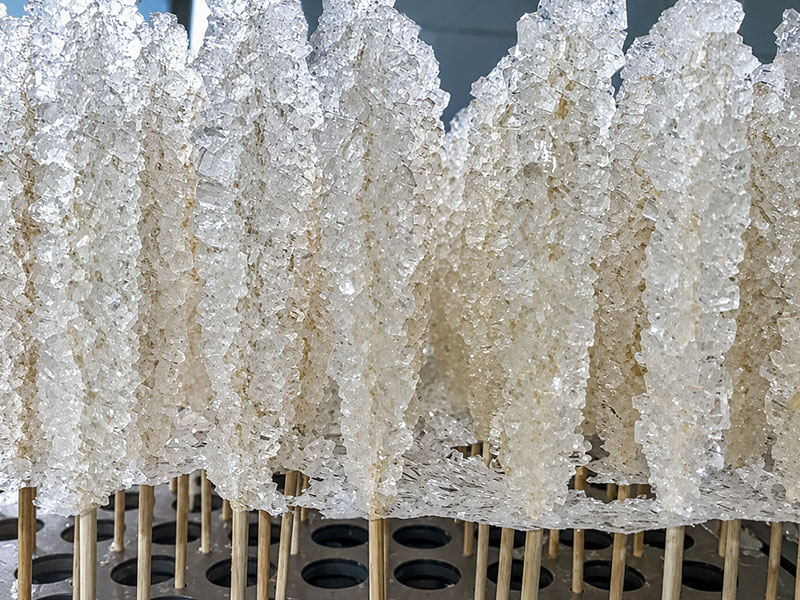
Once the crystals have reached the target size, the products are removed from the crystallization tanks. Excess syrup drains off the crystals, and the product moves into a drying stage to remove surface moisture and stabilize the crystals.
Thorough drying is essential for shelf stability. Residual moisture on the crystal surface can cause sticking, clumping, or quality degradation during storage and transport. For stick candy, the drying and separation process also ensures that sticks are clean and presentable.
6. Sorting and Grading
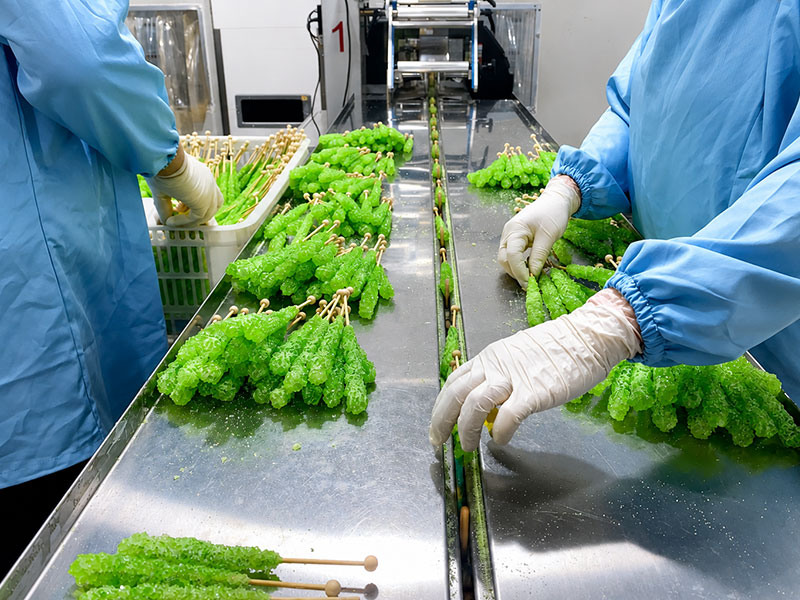
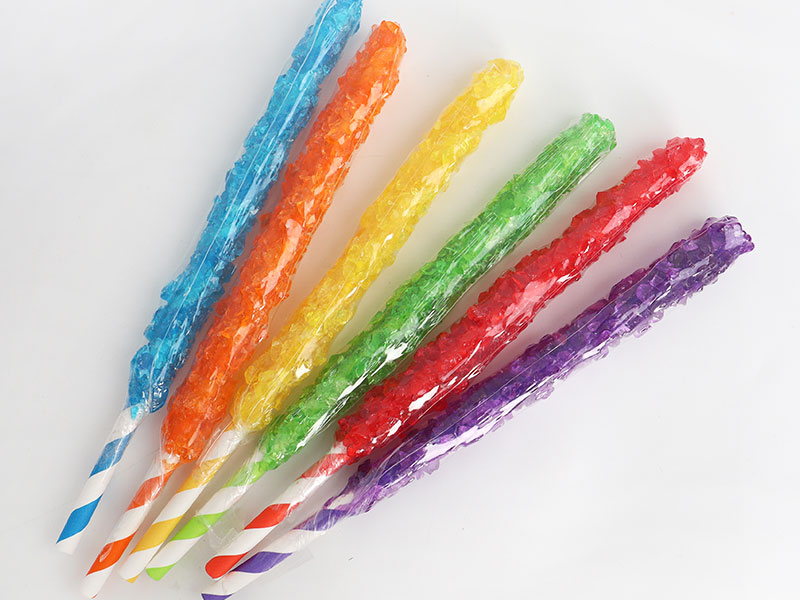
Commercial rock candy is sorted and graded before packaging. Grading criteria include –
- Crystal Size: Ensuring pieces fall within the target size range for the product specification.
- Transparency and Appearance: Removing cloudy, discolored, or malformed crystals that do not meet visual standards.
- Color Consistency: Ensuring colored products have uniform, consistent color throughout the batch.
- Stick Attachment Quality: For rock candy sticks, verifying that crystals are firmly and evenly attached.
Grading protects product presentation and ensures that what reaches the consumer or retail buyer is consistently attractive and on-specification.
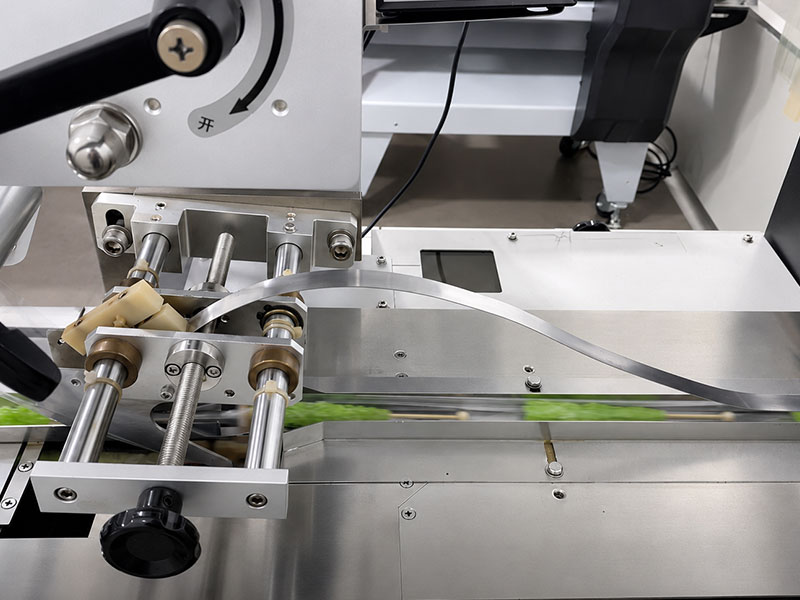
7. Packaging for Wholesale or Retail
Finished rock candy is packaged in the format specified by the buyer or product program. Common packaging options include –
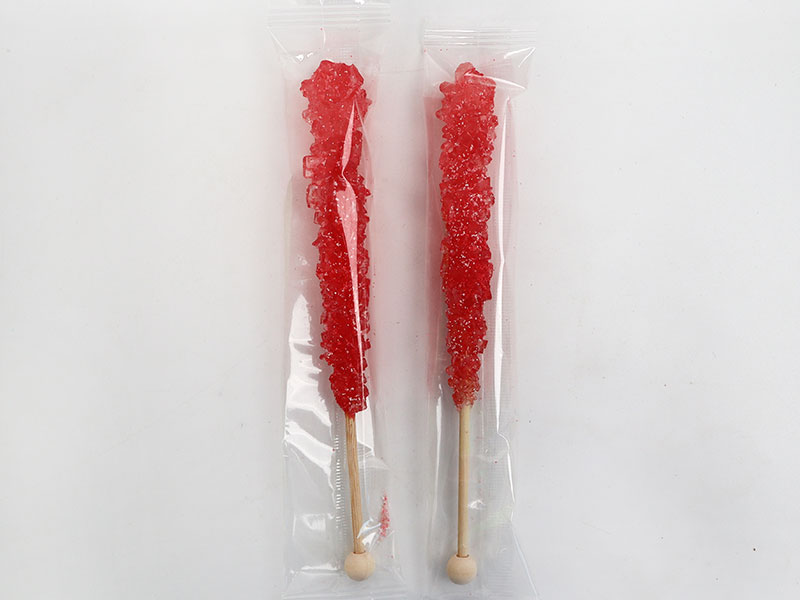
- Individual cellophane or film wrapping for retail display
- Stand-up pouches and resealable bags
- Glass or plastic jars
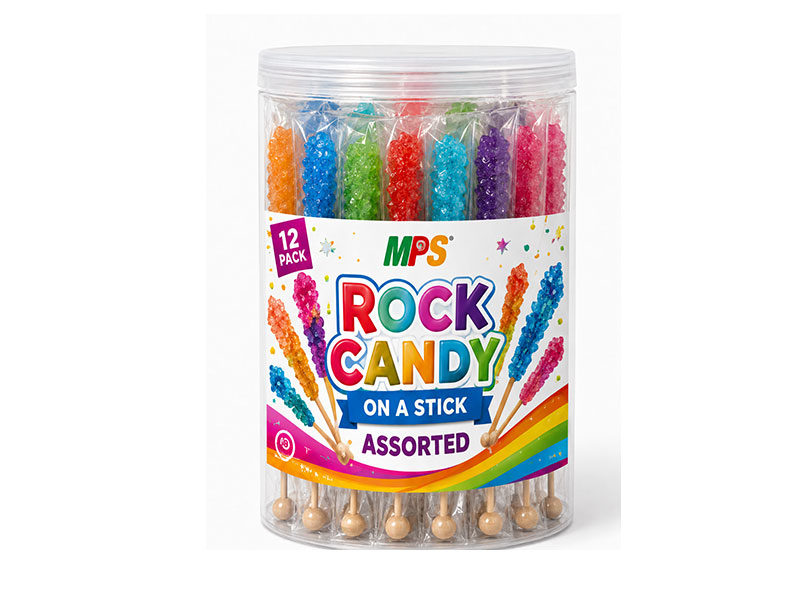
- Boxed gift packs with multiple stick varieties
- Bulk cartons for wholesale and foodservice supply
- Custom private label packaging for branded retail programs
Packaging is not just protective. It is the final presentation layer that determines how the product positions on shelf, how it handles during shipping, and how long it maintains quality in the supply chain.
How Long Does It Take to Make Rock Candy?
One of the most common questions about rock candy is how long the process takes. The answer depends significantly on whether you are making it at home or producing it commercially.
1. Homemade Rock Candy
Typically requires three to seven days for crystals to reach a good retail-style size. Smaller crystals may appear within one to two days, but full development takes longer.
2. Commercial Production
Production time in a factory setting depends on the product type, the target crystal size, and how the crystallization process is designed and managed.
3. What Actually Matters for Buyers
Lead time in bulk production includes not just crystallization but also raw material sourcing, preparation, drying, sorting, packaging, and logistics.
If speed is a priority, discuss your timeline specs with a manufacturer directly. Some product formats, smaller crystal sizes, or specific process configurations may support shorter lead times than others.
Key Quality Control Points in Commercial Rock Candy Production
For B2B buyers, the quality of rock candy isn’t a matter of taste. It determines how the product looks, how it performs through the supply chain, and whether it meets the expectations of your customers.
1. Crystal Size Consistency
Uniform crystal size is one of the most visible quality indicators in rock candy. Inconsistent sizing creates a poor impression in retail packaging and. Manufacturers should be able to specify target crystal size ranges and demonstrate batch-to-batch consistency.
2. Transparency and Appearance
High-quality rock candy crystals are clear or uniformly colored. Cloudiness, surface defects, or uneven crystal structure are signs of quality issues. Crystal clarity depends on sugar purity, water quality, and the precision of the crystallization process.
3. Flavor and Color Uniformity
Color should be even, not patchy or faded. Flavor should be present at the intended intensity without off-notes. It requires careful control of when and how colorants and flavorings are added during the cooking and crystallization stages.
4. Moisture Control and Storage Stability
Rock candy that retains too much surface moisture will stick, clump, or degrade during storage and transit. Proper drying after crystallization is a critical quality step. Packaged product should be tested for stability, including temperature and humidity variation.
5. Packaging Integrity
Packaging must protect the crystals from moisture absorption and physical damage. Seal quality, barrier properties, and labeling accuracy should all be verified before shipment. Poor packaging is one of the most common causes of quality complaints.
6. Food Safety and Compliance Documentation
Commercial rock candy production should be supported by food safety management systems. Buyers sourcing for regulated markets may also require certifications. Asking for the documentation during evaluation is standard that reflects a well-managed supply chain.
Commercial Formats and Customization Options
An advantage of working with an experienced rock candy manufacturer is the range of product formats and customization options. Commercial buyers are not limited to a single standard product.
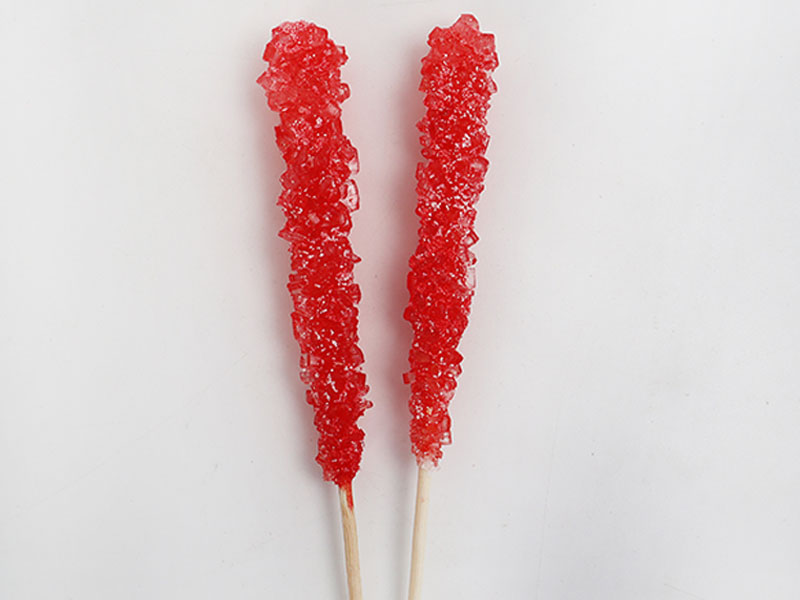
- Rock Candy Sticks: The classic format, available in natural, colored, and flavored varieties. Suitable for retail, gifting, and beverage accompaniments.
- Loose Crystal Candy: Sold by weight in bags or jars. Commonly used as a beverage sweetener, in candy mixes, or in specialty food applications.
- Swizzle Sticks and Tea Stirrers: Slim, elegant crystal sticks used to sweeten hot drinks. Popular in hotel amenity programs, specialty tea and coffee retail, and gift sets.
- Assorted Color Packs: Multi-color product lines for retail display or gift packaging.
- Custom Flavors: Fruit, botanical, mint, vanilla, cinnamon, and other flavor profiles available depending on the manufacturer’s development capability.
- Gift Packs and Seasonal Packaging: Boxed assortments, festive formats, and seasonal designs for holiday, event, and specialty retail channels.
- Private Label Retail Packs: Fully branded packaging with your logo, design, and product specifications for direct retail or e-commerce programs.
- Wholesale Bulk Cartons: Unbranded or simply labeled bulk formats for redistribution, repackaging, or foodservice buyers.
There are buyers want to build a product line rather than sourcing a single SKU. In that case, choose a manufacturer that can support multiple formats, colors, and packaging configurations.
What Bulk Buyers Should Ask Before Choosing a Rock Candy Manufacturer?
The right rock candy supplier is not just the one with the lowest price per kilogram. Consistent quality, reliable supply, and the ability to support your product program are equally important.
- What product formats can you produce? Confirm whether the manufacturer can produce sticks, loose crystals, swizzle sticks, and custom shapes.
- Can you support custom colors and flavors? If you need a specific color palette or flavor profile for your brand or market, verify this capability before committing.
- What packaging options are available? Ask about retail pouches, jars, gift boxes, bulk cartons, and custom private label packaging.
- What is the minimum order quantity (MOQ)? MOQ varies significantly between manufacturers and product formats. Confirm whether this fits your buying volume.
- Can you support mixed loading? If you want to combine multiple SKUs in a single container, this needs to be confirmed with the manufacturer.
- How do you maintain consistency between batches? Ask about quality control systems, batch testing, and how deviations are handled.
- What certifications or compliance documents are available? Request GMP, HACCP, halal, kosher, or other relevant documentation for your target market.
- What is your lead time for bulk production? Understand the full production and logistics cycle so you can plan your inventory correctly.
- What is your export experience? Suppliers with established export experience handle customs documentation, logistics coordination, and supply chain issues more reliably.
Is Rock Candy Gluten Free? Does It Go Bad?
1. Is Rock Candy Gluten Free?
Plain rock candy made from sugar and water is naturally gluten free. However, whether a specific commercial product can be labeled or marketed as gluten free depends on more than just the formula.
Flavoring agents, colorants, or other additives may introduce gluten in some formulations. Cross-contamination in facilities that also process gluten-containing products is another risk factor.
For buyers building a gluten-free product line, the safest approach is to request written confirmation about ingredients, production practices, and whether the product has been tested or certified.
2. Does Rock Candy Expire or Go Bad?
Rock candy has a relatively long shelf life compared to many confectionery products. Because it is primarily sugar — a natural preservative — with low moisture content.
However, rock candy can degrade in quality over time or under poor storage conditions –
- Moisture Absorption: Rock candy is hygroscopic, absorbing moisture from air. Exposure to humidity causes the crystals to become sticky, lose defined edges, or eventually dissolve on the surface.
- Flavor Loss: Flavored rock candy may lose its aroma and taste intensity over time, particularly if packaging is not well-sealed.
- Color Fading: Colored rock candy exposed to light or humidity may fade over time.
Under correct storage conditions, sealed candy remains in good quality for 12 to 24 months. Always check the manufacturer’s stated shelf life and storage recommendations.
When Was Rock Candy Invented?
Rock candy has a much longer history than most modern confectionery. The process of crystallizing sugar from a concentrated solution was known in ancient India and Persia, where sugar was first cultivated and refined at significant scale.
The candy was prized as a sweet and for its perceived medicinal properties, as a sweetener for beverages, and as a trade commodity. As sugar production expanded through the medieval period and into the early modern era, crystallized sugar became more accessible in Europe and Asia.
Today, rock candy has evolved from an artisanal/household product into a commercially manufactured confectionery category. Its production methods have been refined and industrialized, but the underlying chemistry — supersaturation and crystallization — remains unchanged.
Frequently Asked Questions (FAQs)
1. What is rock candy made of?
Rock candy is made primarily from sugar and water. Optional ingredients include food-grade colorants, flavorings such as fruit extracts or mint, and occasionally small amounts of acid.
2. How is rock candy made in a factory?
Commercial rock candy production follows: raw material preparation, sugar dissolution and syrup cooking, concentration control and crystallization setup, crystal growth under managed conditions, draining and drying, sorting and grading for quality, and packaging in specific formats.
3. What is the difference between homemade and commercial rock candy?
Homemade rock candy is made in small batches with basic equipment, with variable results in crystal size, clarity, and consistency. Commercial rock candy is produced with controlled syrup concentration, managed conditions during crystallization, industrial drying and sorting, and professional packaging.
4. How long does rock candy take to form?
At home, rock candy crystals typically develop over three to seven days depending on temperature, syrup concentration, and conditions. In commercial production, crystallization time depends on the product type and process design.
5. Can rock candy be customized in color and flavor?
Yes. Commercial manufacturers can produce rock candy in a wide range of colors using food-grade colorants and in various flavors including fruit, mint, vanilla, cinnamon, and others.
6. What packaging options are available for bulk rock candy?
Common bulk and retail packaging options include individual wrapped sticks, stand-up pouches, glass or plastic jars, gift boxes, seasonal formats, private label retail packs, and bulk cartons.
7. Is rock candy gluten free?
Plain rock candy made from sugar and water does not contain gluten-based ingredients. However, gluten-free certification depends on the specific formula, including any flavors or colorants, and the production facility’s practices.
8. Does rock candy expire?
Rock candy doesn’t spoil fast because it is primarily sugar with low moisture. But it absorbs humidity, lose crystal definition, and degrade in flavor and color over time if poorly stored or packaged. Well-packaged commercial rock candy has a shelf life of 12 to 24 months under proper storage conditions.
Conclusion
Making rock candy with consistent quality and at scale requires controlled crystallization, precise process management, rigorous quality control, and packaging. The chemistry is the same whether you are growing crystals in a jar or running a factory production line.
However, everything around that chemistry determines whether the result is reliable, attractive, and commercially viable. Understanding how rock candy is made gives you the framework to evaluate supplier capability, ask the right questions, and select a reliable partner.
Start Sourcing or Developing Your Own Rock Candy Line with MPS
MPS has been a top-tier manufacturer with multiple product formats — sticks, loose crystals, swizzle sticks, and custom shapes. Ask about custom color, flavor, and private label packaging for your brand. Get in touch for bulk supply, mixed loading, and OEM/ODM development.
We are MPS Candy, a China-based candy manufacturer specializing in OEM and ODM candy production for global brands, importers, distributors, wholesalers, and retail channels.