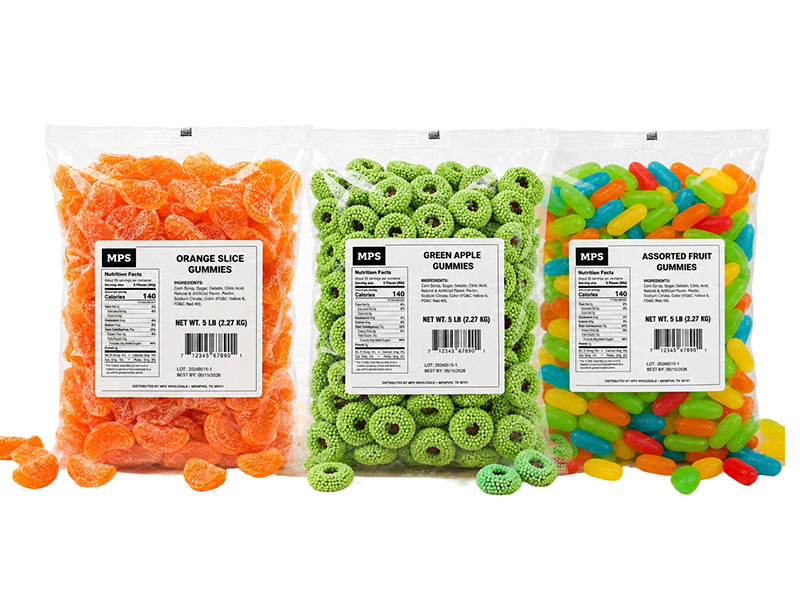
A buyer selects a gummy, approves the flavor and likes the product.
Then a surprisingly difficult question appears: Should the retail pack be 80 g, 100 g, 150 g or 200 g?
At first, this looks like a packaging decision. It is not. Pack size influences how much candy the consumer receives, how many pieces appear inside the pouch, the likely retail price, packaging cost per unit, carton configuration, container utilization and even how many retail units can be produced from one commercial production run.
For private label candy projects, choosing the wrong net weight can create problems much later.
A pack may look too empty. The intended retail price may become difficult to achieve.
The carton may become inefficient. The buyer may discover that one production MOQ creates far more retail units than expected. This is why pack size should be treated as part of product economics, not simply artwork development.
The best starting question is not: What size pouch do you have?
It is: What retail product are we trying to create, and how much candy should that product contain?
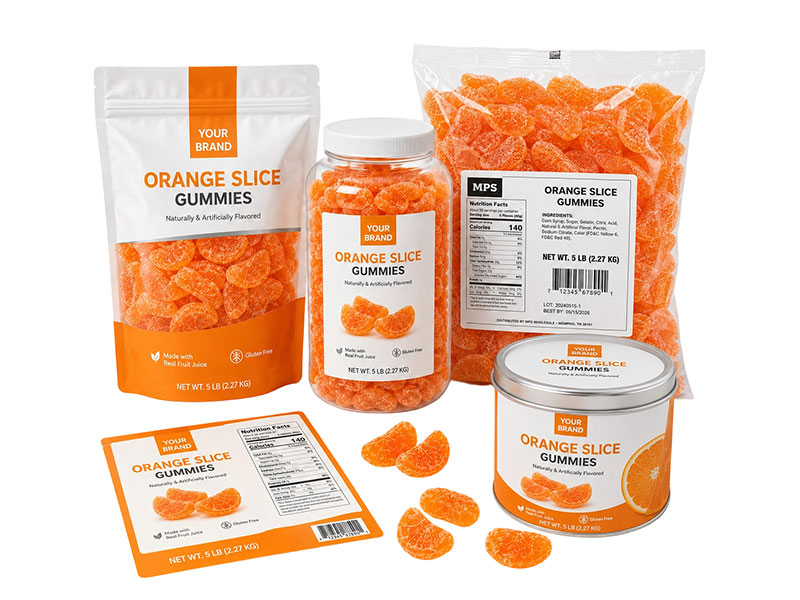
Start with the Target Retail Position
Before choosing a net weight, the buyer should understand where the product is supposed to sit in the market.
A value-oriented sharing gummy and a premium novelty gummy may use completely different pack sizes even when the manufacturing cost per kilogram is similar.
The larger pack may depend on volume and perceived value.
The premium product may intentionally use less candy because its value comes from an unusual shape, filling, coating or eating experience.
That is why “bigger is better” is not a useful rule. Neither is “smaller is cheaper.”
The correct pack size depends on how the finished product should be perceived.
If the target product needs to sell at a relatively accessible impulse price, a smaller net weight may make sense.
If the product is intended for family sharing or take-home consumption, a larger pack may fit the positioning better.
If the candy itself is highly differentiated, the buyer may be able to support a higher retail value without simply increasing the amount of candy inside the package.
The candy concept and the price position should therefore be considered together.

Work Backward from the Retail Price
One of the most practical ways to choose pack size is to start with the approximate shelf price the buyer believes the market can support.
The factory does not determine the final retail price. That belongs to the buyer, distributor or retailer. But once a target price range is known, the product structure becomes easier to evaluate. Imagine that two buyers want to sell the same gummy. One needs a lower-priced everyday product.
The other wants a larger sharing pack. The appropriate net weight may be different even though the gummy itself is identical. The relationship can be thought of as:
target shelf price → acceptable landed cost → product quantity → packaging format
rather than:
available pouch → fill it with candy → decide the price later.
That sequence matters.
When pack size is chosen without considering the target price, the buyer may later discover that the finished unit is too expensive for the intended channel.

Net Weight and Perceived Value Are Not the Same Thing
Consumers do not evaluate candy only by grams. They also see the size of the pieces, package dimensions, number of candies, product novelty and overall presentation.
A 100 g pack containing large novelty gummies may appear generous because the individual pieces are visually substantial.
A 100 g pack containing very small pieces may create a completely different impression.
This means the same net weight can produce different perceived value depending on the candy. That is especially important for private label development. The pack should feel appropriate when the actual candy is inside it. A buyer should not approve a 150 g format purely because another brand in the market uses 150 g.
If the candy shape, density and piece weight are different, the finished pack may not look or feel comparable.
Piece Count Can Be More Useful Than Grams Alone
Weight is essential for labeling and commercial calculation, but piece count helps buyers understand what the consumer actually receives.
Suppose one gummy weighs approximately 5 g. A 100 g pack might contain roughly 20 pieces. If the gummy weighs 10 g, the same 100 g pack may contain only around 10 pieces.
Those products can feel very different at retail. This becomes even more important with large or novelty candies.
A pouch containing six large pieces can technically have the same net weight as a pouch containing twenty small pieces, but consumers may interpret the value differently.
For this reason, product development should often consider both: net weight and approximate pieces per pack.
The exact piece count may naturally vary with product weight tolerances, but an estimated range helps determine whether the retail format feels appropriate.

Four Pack Sizes Can Create Four Different Products
The numbers below are only illustrative, but they show why changing net weight changes more than the amount of candy.
| Example Pack Size | Possible Retail Role | Commercial Consideration |
|---|---|---|
| 80 g | Smaller trial or impulse format | Lower amount of candy, packaging cost represents a larger share of unit cost |
| 120 g | Standard individual / everyday retail format | Balance between price, product visibility and quantity |
| 200 g | Larger take-home or sharing format | Higher unit value, more product per pack |
| 500 g+ | Family, wholesale or selected specialty format | Greater product volume but different shelf, carton and freight implications |
There is no universal “best” weight in this table.
An 80 g gummy pack may be excellent in one market and commercially unsuitable in another.
A 200 g pack may work well for mainstream fruit gummies but be too large for an expensive filled novelty product.
The point is that the weight should reflect the role of the SKU.
Candy Type Changes the Pack-Size Calculation
Different confectionery categories behave very differently inside retail packaging.
Gummies are relatively dense.
Marshmallows are light and bulky.
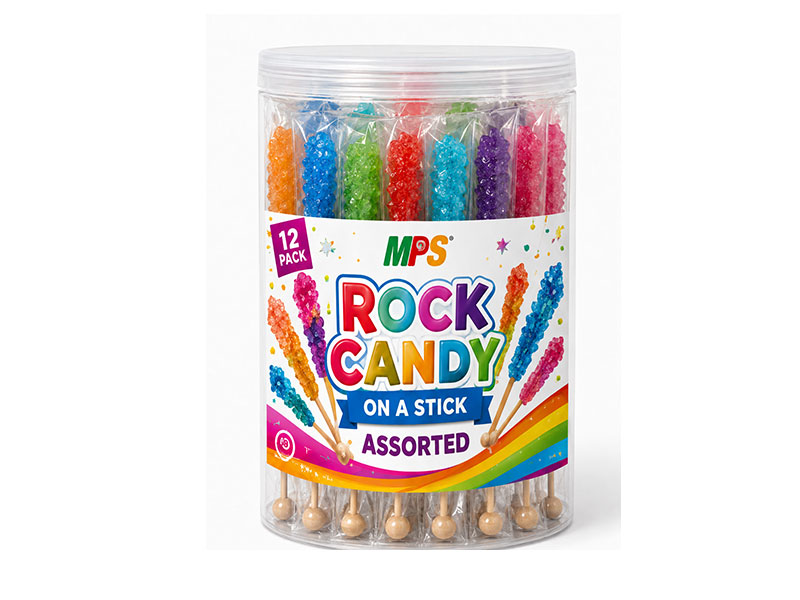
Lollipops include sticks that occupy physical space without adding much candy weight.
Individually wrapped hard candies include wrapper material between each piece.
Large novelty gummies can occupy significant pouch volume even at moderate net weights.
Bubble gum may be sold in small pieces, larger balls or individually wrapped formats.
Because of these differences, a simple rule such as “150 g is a good retail size” has limited value across an entire candy portfolio.
The correct net weight has to be evaluated against the physical product.

Gummies: Weight and Piece Size Need to Feel Balanced
Gummies offer considerable flexibility because they can be produced in many sizes and shapes.
But that flexibility creates a decision.
A smaller gummy allows more pieces inside the same net weight.
A giant or highly detailed gummy reduces the number of pieces.
That affects the consumer experience.
For a standard fruit gummy, consumers may expect enough pieces to snack over time or share.
For a novelty gummy, fewer larger pieces may be completely acceptable because the product is designed around the shape or eating experience.
The pack should reflect that difference.
This is one reason a buyer should ideally see the physical gummy before locking final packaging dimensions.
The actual product tells you much more than a net-weight number on a spreadsheet.

Marshmallows Show Why Volume Matters
Marshmallows demonstrate the difference between weight and physical volume particularly well.
They are lightweight and contain a large amount of air.
A relatively modest net weight can therefore create a physically large bag.
From a retail perspective, this can produce strong shelf presence.
From a logistics perspective, it can use container space quickly.
That means increasing the marshmallow pack from one weight to another may have a bigger effect on carton and container volume than expected.
A buyer importing commercial quantities should therefore look beyond cost per kilogram.
The question becomes:
How many saleable retail packs can be transported efficiently?
That is often a more useful commercial measurement.
Lollipops Need a Different Approach
Lollipops are a good example of why some candy projects are not best discussed only in kilograms.
The piece itself has a candy head and a stick.
It may also be individually wrapped.
A retail program might sell one piece at a time, several pieces in a bag or multiple units in a display box.
In these cases, piece count can become as important as net weight.
A convenience-store display may be planned around 24, 30 or another commercially appropriate number of units rather than around a consumer pouch weight.
A supermarket multipack may use a different structure entirely.
The same lollipop can therefore become several different retail products depending on how many units are grouped together.
That is why piece-counted candy should be evaluated according to the actual retail format rather than forced into the same logic as gummy pouches.
Pack Size Influences Packaging Cost per Unit
Packaging has a cost regardless of how much candy is inside it.
A small retail pouch still requires film, printing, sealing and production handling.
This means packaging can represent a larger proportion of the finished-unit cost when the candy quantity is very small.
As net weight increases, the packaging cost is spread across more candy.
However, increasing weight also increases product cost and may push the retail price upward.
There is therefore a balance.
The cheapest package per gram is not automatically the strongest retail product.
A buyer may deliberately accept a higher packaging-cost ratio if the smaller format helps achieve a useful retail price or consumption occasion.
The important thing is to understand that pack size changes the economics of the complete finished unit.
Smaller Pack Does Not Always Mean Lower Landed Cost
It is easy to assume that reducing the pack from 150 g to 100 g makes the retail unit proportionally cheaper.
The candy cost decreases.
But other costs do not necessarily fall at the same rate.
The pouch still needs to be printed.
The product still needs to be filled and sealed.
The retail unit still needs to be placed into a carton.
The carton still needs handling.
International freight is still involved.
As a result, the cost per gram can rise as the retail pack becomes smaller.
That may still be commercially acceptable if the smaller pack reaches the desired shelf price.
But buyers should understand the trade-off.
The goal is not necessarily the lowest cost per kilogram.
It is the right cost per saleable retail unit.

Larger Packs Create Their Own Risks
Larger packs can improve value perception and reduce packaging cost per gram.
They can also create challenges.
The retail price rises.
The consumer commitment becomes larger.
The product occupies more shelf and warehouse space.
More candy is tied up in each retail unit.
If the product is new to the market, a large pack may create a higher barrier to trial.
This is particularly important for novelty candy.
A consumer may be curious enough to buy 80 g of an unfamiliar product but less willing to purchase 400 g before knowing whether they like it.
Pack size therefore also influences trial behavior.
A product that is already established can support different sizing strategies from a completely new concept.
Consider Whether the Candy Is for Trial, Repeat Purchase or Sharing
This is a useful way to think about retail size.
A trial-oriented product usually needs to reduce the consumer’s commitment. A repeat-purchase product can support a more established everyday format. A sharing product can justify larger quantity. A premium novelty product may use a smaller amount while maintaining a higher perceived value. The same candy can even move through these stages over time. A brand may launch with one accessible size. After demand is established, a larger value pack can be added.
This can be more effective than launching every possible size simultaneously. Private Label Brands Should Avoid Copying Competitor Pack Weight Blindly. It is reasonable to study the market. But copying another product’s net weight without understanding the underlying product can be misleading.

How MOQ Fits into the Pack-Size Decision
MOQ varies according to the actual candy and packaging format.
For many candy products, the typical MOQ is approximately 2–4 metric tons per flavor, depending on formula, shape, process and packaging requirements.
However, this is not a universal rule.
Piece-counted, individually wrapped, molded or highly customized candies may instead use MOQ calculations based on pieces, packaging quantity or production batch.
Pack size does not automatically change the underlying candy production MOQ.
It changes what that production quantity becomes after packing.
For example, the same amount of candy can create many more 80 g retail units than 200 g units.
That is why the buyer should evaluate both:
How much candy must be produced?
and:
How many finished retail units will that quantity create?
These are related but different questions.
What Information Should a Buyer Send to the Manufacturer?
A buyer does not need to know the perfect pack size before contacting the factory.
In fact, part of the manufacturer’s role is helping evaluate whether the selected product and retail format work together.
A useful inquiry might say:
We need private label gummy candy for supermarket distribution in the United States. Our target retail pack is approximately 100–150 g, and we expect commercial container-based purchasing.
Or:
We are developing a novelty gummy for European retail and want to compare approximately 80 g and 120 g pack options.
This immediately gives the manufacturer useful context.
The most helpful information usually includes the destination market, candy product, intended sales channel, preferred or target net weight, expected purchasing volume and whether private label customization is required.
That produces a much more useful discussion than simply asking:
What pouch size do you have?
Frequently Asked Questions
1. Should I choose net weight or piece count first?
For many bagged candies, net weight is the primary retail quantity, but approximate piece count is useful for understanding the consumer experience.
For lollipops and other piece-counted products, unit count may play a much larger role in the commercial format.
2. Can the same candy be packed in several different net weights?
Yes, where production and packaging requirements allow.
The same candy may potentially be developed in several retail sizes, but each packaging format creates additional inventory, artwork, carton and packaging-MOQ considerations.
3. Does a smaller candy pack reduce MOQ?
Not necessarily.
Candy production MOQ and retail pack size are different concepts.
A smaller pack normally creates more finished retail units from the same amount of candy rather than automatically reducing the candy production MOQ.
4. What is MPS’s candy MOQ?
MOQ varies by product and packaging format.
For many candy products, the typical MOQ is approximately 2–4 metric tons per flavor.
Piece-counted, individually wrapped, molded or highly customized products may instead use MOQ calculations based on pieces, packaging quantity or production batch.
The exact requirement should be confirmed according to the selected product.
5. Does each flavor have its own MOQ?
For many products, yes.
Different flavors may require separate production runs, so each selected flavor can have its own applicable MOQ.
This should be considered before finalizing the number of flavors and pack sizes.
6. Does custom retail packaging have another MOQ?
It can.
Printed pouches, wrappers, labels, boxes and other custom packaging materials may have production minimums separate from the candy itself.
This is especially important if one candy is being launched in several package designs.
7. Can MPS recommend a pack size for my candy?
MPS can help evaluate suitable retail formats based on the selected candy, target market, sales channel, net-weight direction and expected commercial quantity.
The final decision should also reflect the buyer’s target retail price and market strategy.
8. Can MPS produce candy in my branded retail packaging?
Yes.
MPS supports OEM/ODM and private label candy production using buyer-approved packaging and artwork, subject to product, printing and destination-market requirements.
9. Do you sell empty packaging separately?
MPS is primarily a candy manufacturer and exporter.
Packaging is selected or developed as part of the finished candy manufacturing and private label project rather than as a standalone empty-packaging business.
10. Can different pack sizes be combined in one container?
Potentially yes, provided the underlying products and packaging formats meet their applicable production requirements and the overall shipment is commercially and logistically suitable.
11. Do gummies and chocolate require refrigerated shipping?
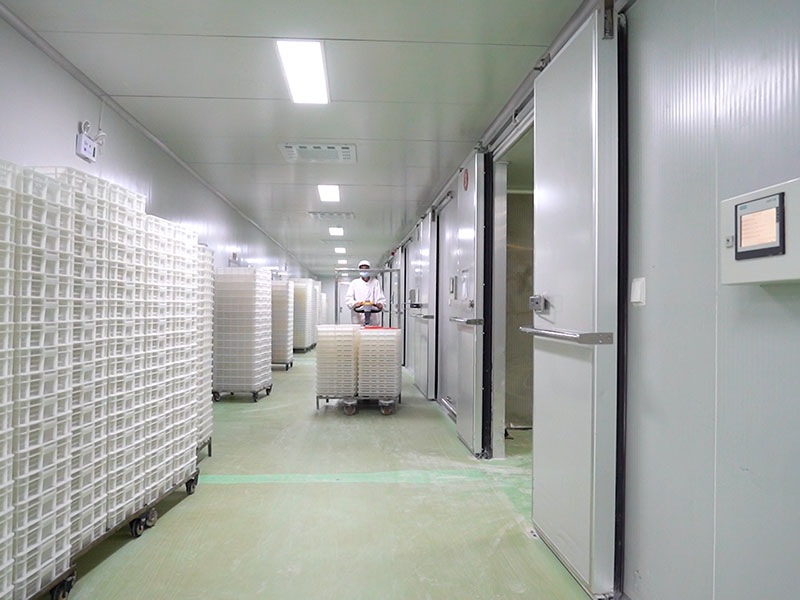
For MPS international projects, gummies, chocolate and other heat-sensitive products must be shipped in a reefer container to help protect product quality during international transportation.
Pack Size Is a Product Economics Decision
Choosing between 80 g, 100 g, 150 g or 200 g may look like a small detail.
It can affect almost every stage of a commercial candy project.
It changes the number of pieces consumers receive.
It changes the likely retail price.
It changes how much of the finished-unit cost comes from packaging.
It changes how many retail packs are created from one production run.
It changes carton quantities and potentially container efficiency.
Most importantly, it changes how consumers perceive the product.
That is why the best candy pack size should not be selected from a packaging catalogue.
It should be developed from the candy, target market, retail price and commercial volume.
MPS Candy is a China-based candy manufacturer and exporter supporting commercial B2B candy production, private label, OEM/ODM development and finished retail candy programs for international brands, importers, distributors, wholesalers and retail buyers.
Not Sure Which Retail Pack Size Fits Your Candy?
Send MPS your target country, candy type, sales channel, approximate retail pack size or target price range, preferred flavors and expected purchasing quantity.
We can evaluate the candy product, production requirements and suitable finished retail format together before mass production begins.