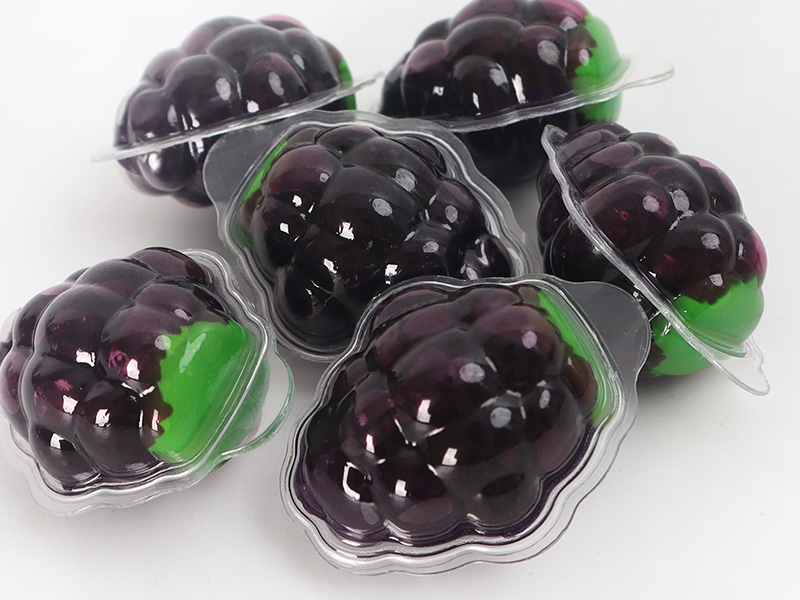
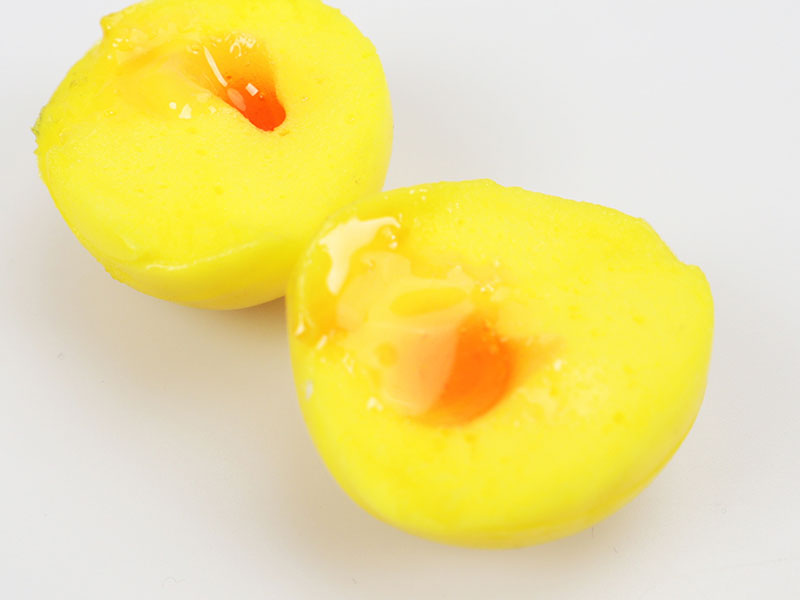
Few confectionery formats combine visual appeal, texture contrast, and impulse-buy power as effectively as jam filled gummy candy. At first glance, it looks like a colorful 3D gummy. But with one bite, the soft outer shell gives way to a sweet fruit center that slowly oozes or gently bursts onto the tongue.
For consumers, it’s a fun sensory surprise.
For retailers and brand owners, it’s a high-margin novelty product with strong differentiation potential.
Whether you call them jam filled gummies, jelly filled gummy candy, or liquid filled gummies, this category continues to expand globally—driven by texture innovation and creative packaging formats such as 3D capsule containers.
What Is Jam Filled Gummy Candy?
Jam filled gummy candy is a dual-texture confection that features:
- A soft, chewy outer gummy shell
- A fruit jam, jelly, or semi-liquid center
Unlike regular gummies, which are uniform throughout, center-filled gummies are engineered to create contrast. The outer layer provides structure and chew resistance, while the inner core delivers concentrated fruit sweetness and moisture.
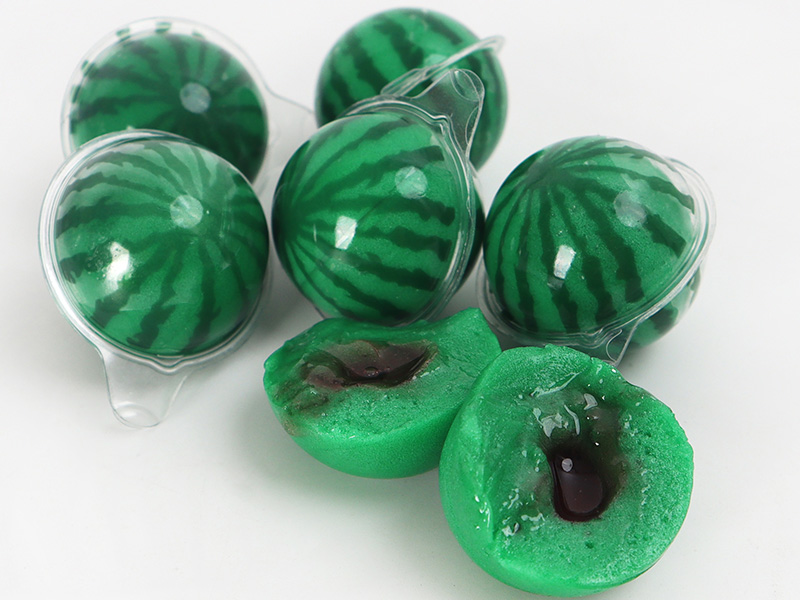
The “gooey center” effect happens because the filling retains higher moisture and lower gel strength than the shell. When pressure from biting breaks the shell wall, the filling flows outward—creating a slow ooze or gentle burst sensation.
This contrast between structure and fluidity is what makes the format so memorable.
A Brief History of Center-Filled Gummies
While filled hard candies have existed for centuries, filled gummies are a relatively modern innovation. Advances in depositing technology in the late 20th century allowed manufacturers to produce multi-phase candy structures in a single process.
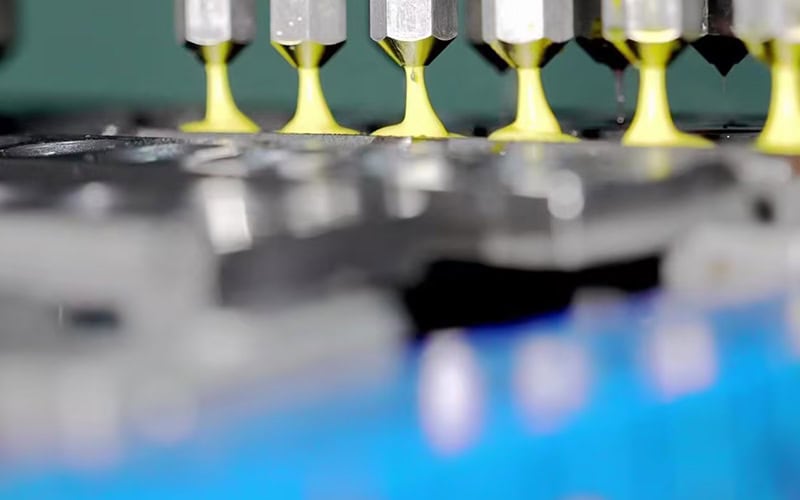
Jam-filled gummy balls are made from two semi-spherical halves, each filled with fruit jam or syrup. The halves are sealed together to form a sphere, leaving a light seam line at the center. With refined molding control, the seam remains minimal for a smooth, premium finish. The finished gummies are then placed into outer shells and automatically sealed for retail packaging.
Over time, this technology expanded into:
- 3D fruit shapes
- Ball-shaped capsules
- Eyeball gummies
- Cartoon and novelty characters
- Sports-themed formats
Today, filled gummies represent a fast-growing subcategory within novelty confectionery.
Jam Filled vs Liquid Filled Gummy: What’s the Difference?
Although the terms are often used interchangeably, there are subtle technical distinctions between jam-filled and liquid-filled gummies.
| Feature | Jam Filled Gummy | Liquid Filled Gummy |
|---|---|---|
| Center Texture | Thick fruit jam or paste | Fluid syrup |
| Bite Effect | Slow ooze | Quick burst |
| Water Activity | Moderate | Higher |
| Shelf Stability | Higher stability | Requires tighter control |
| Target Market | Premium novelty | High-impact burst candy |
Jam-filled gummies typically use a thicker fruit paste, which improves shelf stability and reduces leakage risk. Liquid-filled versions use a more fluid syrup, creating a stronger “burst” effect but requiring careful moisture and packaging control.
From a B2B perspective, jam-filled structures often offer better transportation stability for export programs.
Why Do Jam Filled Gummies “Burst”?
The “burst” effect in jam filled gummies is not created by gas pressure, as in popping candy. Instead, it comes from the relationship between shell structure and filling texture. In simple terms, the candy is designed so that the outer gummy layer can hold the center during production, packaging, and transport, but still break at the right moment when the consumer bites into it.
Typically, the outer shell is formulated with higher gel strength, often using pectin or gelatin, so it can maintain shape and protect the filling. The inner center is made softer, smoother, and more fluid, which creates the jam-like release consumers expect. When biting force exceeds the tensile strength of the shell, the wall ruptures and the filling flows out, creating the signature burst sensation.
Several technical factors influence how strong or how gentle that burst feels:
- Shell thickness – a thicker shell creates more resistance and a firmer bite before release.
- Filling viscosity – a thinner filling flows faster, while a thicker filling creates a slower, richer release.
- Filling percentage – more filling can increase the impact of the burst, but also makes process control more demanding.
- Cooling speed during production – cooling affects how the shell sets, which directly influences rupture behavior and texture stability.
For brands and product developers, this means the burst effect is not just a sensory detail—it is also a design choice. By adjusting shell strength, filling texture, and fill ratio, manufacturers can create different eating experiences, from a soft jam ooze to a more dramatic fruit burst. This flexibility is one reason jam filled gummies work well in both mass retail and more novelty-driven confectionery programs.
From a commercial perspective, the most successful products are usually those that balance consumer excitement with production stability. A filling that is too thin may leak during processing or transport, while a shell that is too strong may reduce the expected burst effect. That is why experienced manufacturers focus not only on flavor, but also on how structure, texture, and processing conditions work together in real production.
Popular Types of Center Filled Gummy Candy
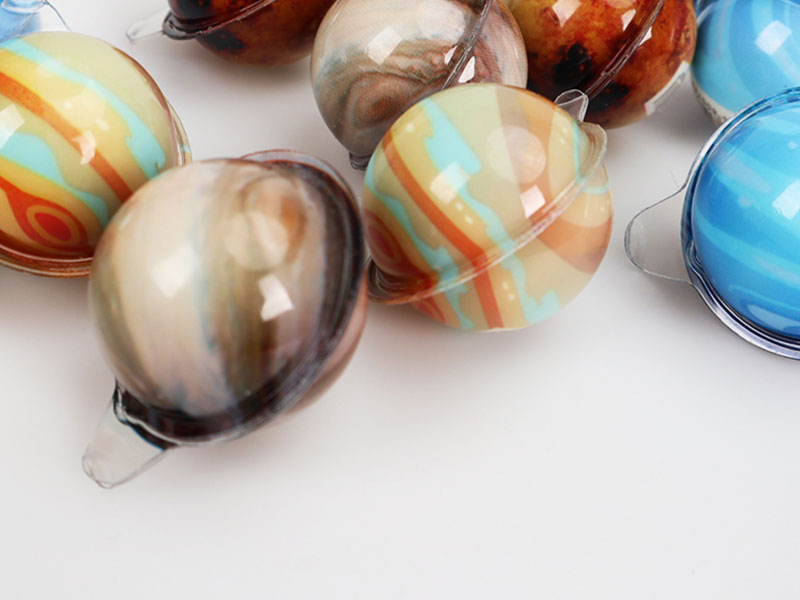
Filled gummies now extend far beyond simple dome shapes.
Fruit Filled Gummy Sweets
Classic fruit profiles dominate global demand:
- Strawberry
- Mango
- Blueberry
- Watermelon
- Apple
- Mixed berry
These flavors remain bestsellers because they align with consumer expectations for fruit-based confectionery.
Gooey Center Gummies
Some markets prefer thicker jam centers with smooth outer shells. These offer a dessert-like texture and premium positioning.
Novelty 3D Capsule Filled Gummies
One of the most commercially successful formats is the 3D capsule gummy.
Examples include:
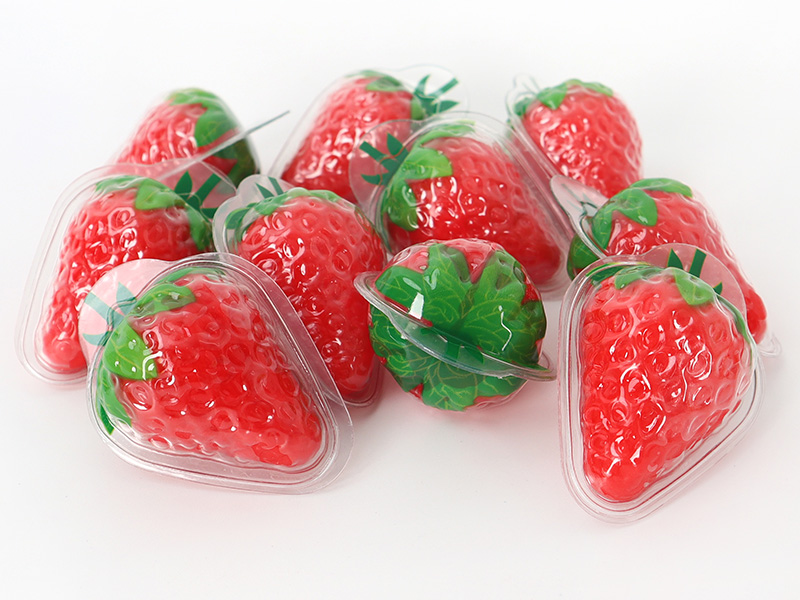
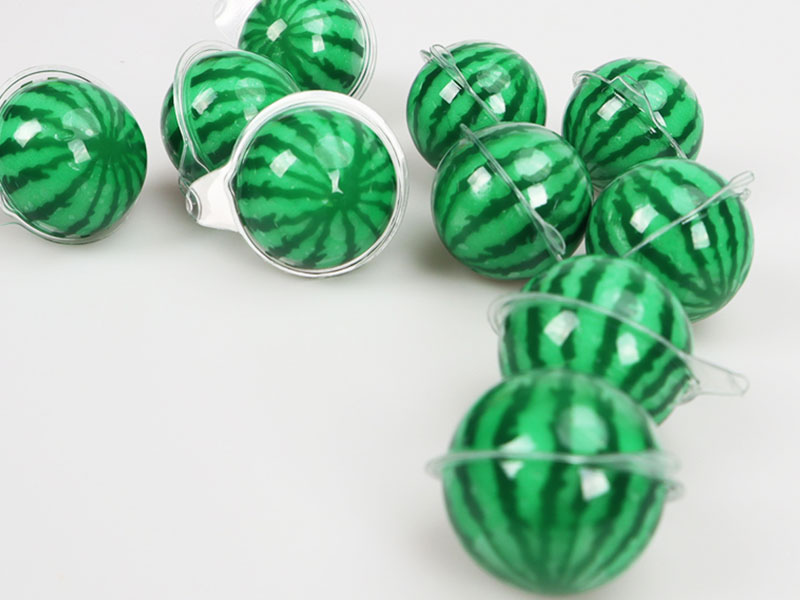
- Watermelon ball shapes
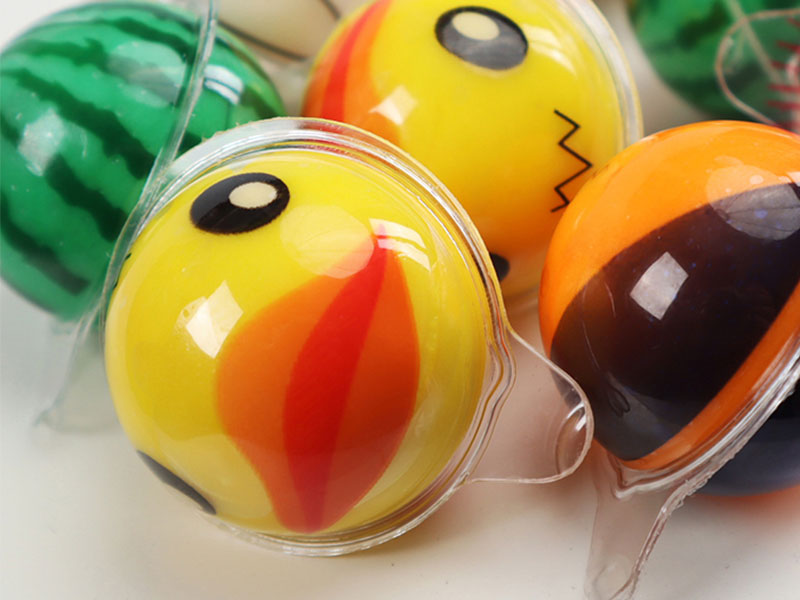
- Eyeball gummies
- Cartoon characters
- Sports balls
- Animal designs
These products often use transparent plastic capsule packaging, enhancing visual impact and impulse purchase appeal.
For supermarket buyers, this format creates strong shelf presence and display flexibility.
How Jam Filled Gummies Are Made
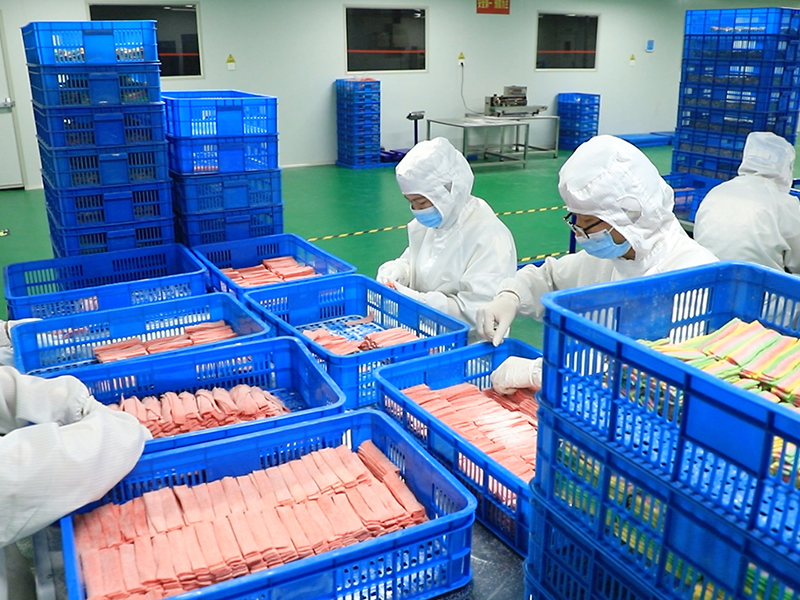
The manufacturing process requires precision, alignment, and moisture control.
1. Half-Sphere Forming
The gummy mass is deposited into molds to create two semi-spherical halves.
2. Filling Addition
Each half receives a measured amount of fruit jam or syrup filling.
3. Sealing & Shaping
The two filled halves are aligned and sealed together to form a complete sphere.
4. Setting & Stabilization
Controlled cooling allows the structure to stabilize while maintaining a smooth outer surface.
5. Conditioning
The gummies are inspected and conditioned to ensure shell integrity and consistent center texture.
6. Packaging
Finished gummy balls are placed into outer shells or containers and sealed automatically for retail-ready packaging.
Moisture balance remains critical throughout the process to preserve both structural strength and the gooey center effect.
Custom 3D Shapes & Mold Development
For brand owners, mold development is one of the most valuable differentiation tools.
Custom filled gummy candy can be produced in:
- Brand logos
- Seasonal shapes (Halloween, Christmas, Easter)
- Country-specific fruit icons
- Mascots or characters
- Exclusive retail SKUs
Custom mold development involves:
- 3D CAD design
- Prototype sampling
- Mold carving
- Production validation
Because molds represent intellectual property, exclusive shapes help brands prevent direct product duplication in their markets.
Private Label Jam Filled Gummy Manufacturing
For importers and private label buyers, the focus extends beyond product design.
A reliable center filled gummy factory should offer:
- Flavor customization
- Filling viscosity control
- Color matching
- Moisture testing
- Packaging development
- Export documentation
- Food safety certifications
Minimum order quantities typically align with efficient production batching, often structured per flavor and per design.
When evaluating a jam filled gummy manufacturer, buyers should consider:
| Capability | Why It Matters |
|---|---|
| Filling Stability | Prevent leakage during shipping |
| Shell Integrity | Maintain structure in warm climates |
| Mold Customization | Market exclusivity |
| Export Experience | Smooth customs clearance |
| Production Capacity | Stable supply for retail programs |
Packaging Options for Center-Filled Gummies
Packaging plays a major role in market positioning.
Popular formats include:
- Clear plastic capsule containers
- 3D rigid shells
- PET jars
- Stand-up pouches
- Seasonal gift boxes
Capsule packaging in particular enhances novelty appeal and supports premium price positioning.
For supermarkets, display-ready trays and mixed carton programs increase turnover efficiency.
FAQ
1. What is jam filled gummy candy?
It is a soft gummy candy with a fruit jam or jelly center that creates a dual-texture eating experience.
2. How are center filled gummies made?
They are produced by depositing a gummy shell, injecting fruit filling, sealing, cooling, and packaging.
3. What is inside liquid filled gummy?
Typically fruit syrup, jam paste, or flavored gel.
4. Can jam filled gummies be customized?
Yes. Shapes, flavors, colors, filling types, and packaging formats can all be customized.
5. What is the MOQ for private label filled gummy candy?
The minimum order quantity is typically 70,000 pieces per color and per flavor. Final MOQ may vary depending on packaging format and customization requirements.
About MPS Candy – A Chinese Gummy Manufacturer
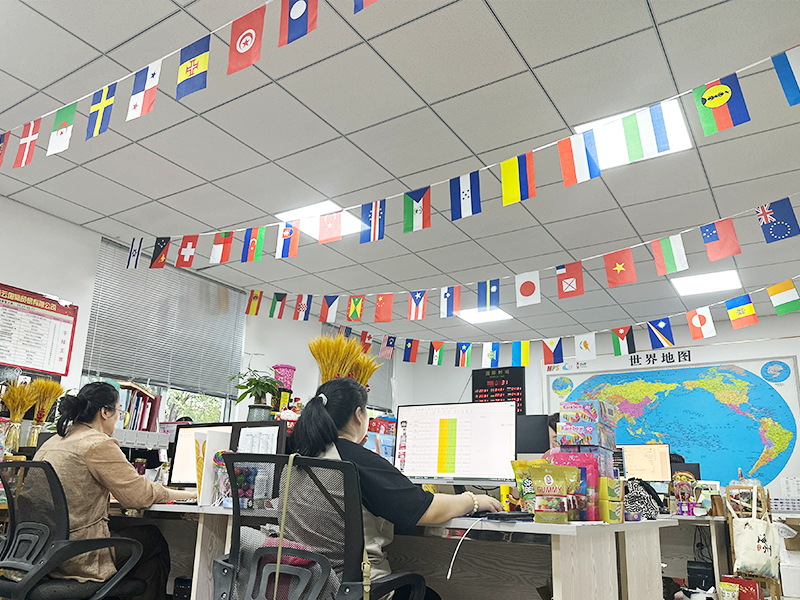
As a professional Chinese candy manufacturer, MPS Candy specializes in innovative gummy formats including jam filled gummies, liquid center candies, novelty 3D shapes, and customized confectionery solutions.
With experience in OEM and private label programs for global distributors and supermarkets, MPS supports:
- Custom mold development
- Fruit jam center formulation
- Capsule packaging design
- Export-ready documentation
- Stable bulk production
By combining manufacturing precision with creative product development, we help brands build differentiated filled gummy programs for competitive markets worldwide.
Conclusion
Jam filled gummy candy represents more than a sweet treat. It is a technical innovation built on dual-texture engineering and precision filling systems.
For consumers, it offers playful, gooey enjoyment.
For retailers and distributors, it provides a high-impact novelty SKU with strong shelf appeal.
For private label brands, it offers customization flexibility and market exclusivity.
As texture innovation continues to shape global confectionery trends, center-filled gummies remain one of the most commercially adaptable and visually engaging formats in modern candy manufacturing.
If you are exploring custom filled gummy candy development, partnering with an experienced manufacturer ensures product stability, export compliance, and long-term supply reliability.
We are MPS Candy, a China-based candy manufacturer specializing in OEM and ODM candy production for global brands, importers, distributors, wholesalers, and retail channels.