Buying an ordinary gummy is relatively easy to understand.
A buyer can compare shape, flavor, pack size and price, request samples and quickly see whether the product fits the market.
Crunchy candy-coated gummies require a little more attention.
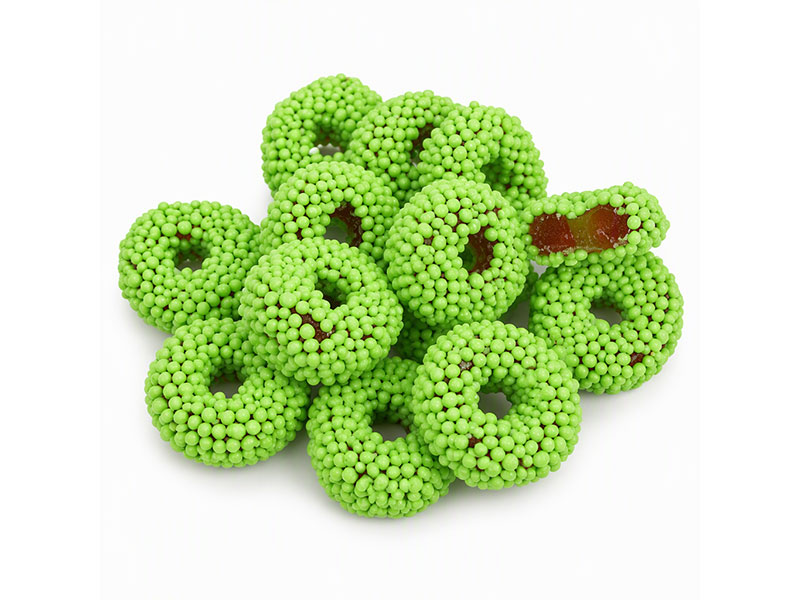
The product combines a chewy gummy center with a crisp outer coating, which means the buyer is not evaluating only flavor or appearance. Texture balance, coating stability, packaging protection and shipping conditions all influence whether the product that arrives in the destination market still feels like the sample that was originally approved.
For importers, distributors, candy brands and retail buyers, the most useful question is therefore not simply:
“What is your price per kilogram?”
A stronger purchasing decision asks:
“Can this product be produced, packed and delivered consistently at the scale my market requires?”
That difference becomes increasingly important once a project moves from a few samples to a commercial container.
Start with the Retail Product You Want to Sell
A wholesale purchase should begin with the intended retail product rather than the factory quotation.
Imagine two buyers asking for crunchy gummy rings.
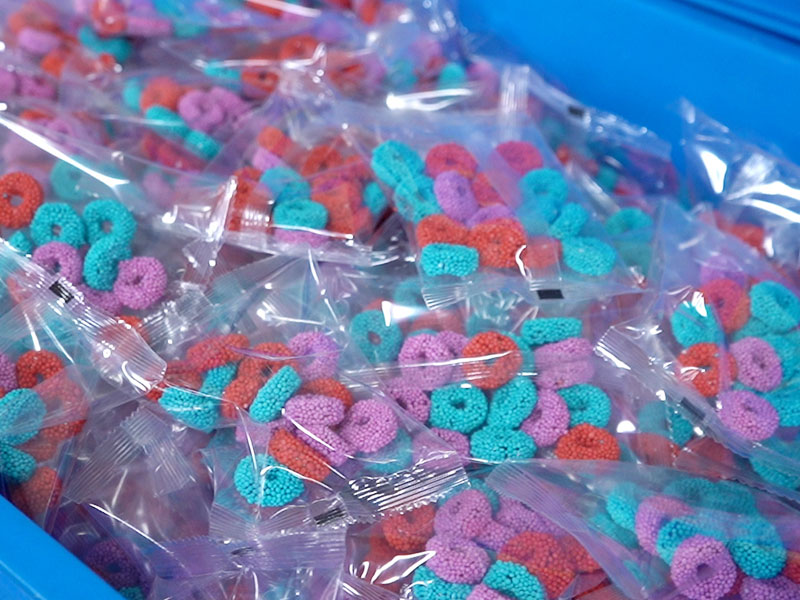
One plans to sell a colorful mixed-fruit pouch through supermarkets.
The other wants a smaller novelty pack for convenience stores.
They may be buying a similar gummy, but they are not really buying the same commercial product.
Pack size will be different.
The number of pieces visible inside the package may be different.
The flavor assortment may be different.
The coating colors may need to support different visual identities.
Carton configuration and target retail pricing may also differ.
That is why a useful buying discussion begins with the market and channel.
A manufacturer can recommend a much more appropriate product when the buyer explains where it will be sold, how it should be positioned and what type of consumer experience is expected.
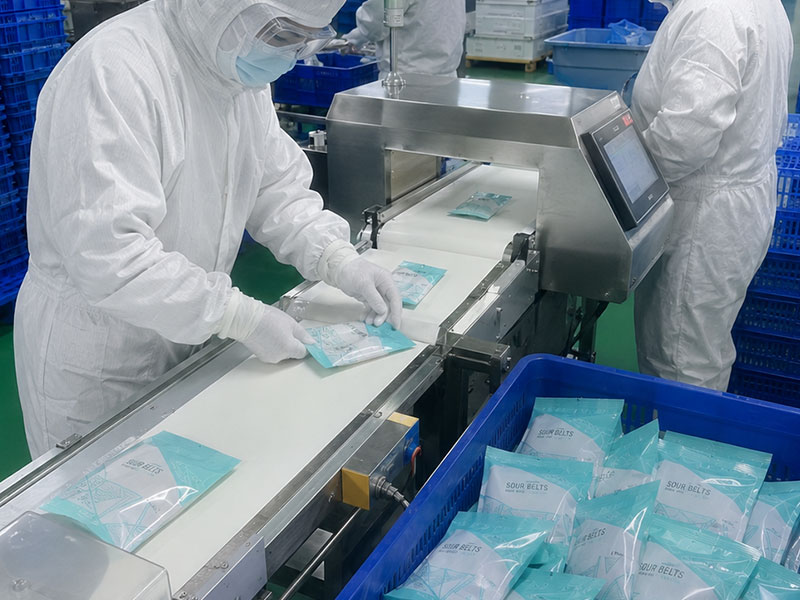
A Sample Should Be Judged Like a Future Retail Product
Samples are important, but tasting one piece and deciding whether it is “good” is not enough.
The buyer should think about how the candy will behave once it becomes a retail product.
Does the coating look attractive across several pieces, rather than only on one selected sample?
Is the crunch noticeable but still balanced with the gummy center?
Does the coating create excessive loose material?
Does the shape remain recognizable after coating?
Do the flavor and color work together?
Most importantly, does the product have something consumers can understand quickly?
A sample can taste pleasant and still be commercially weak if the difference from an ordinary gummy is difficult to see or explain.
For this category, the best sample should make the texture proposition obvious.
Compare the Whole Product, Not Just the Candy Price
Wholesale buyers naturally compare prices.
The problem is that quotations are often not directly comparable.
One supplier may quote bulk candy.
Another may include a printed retail pouch.
One quotation may use an existing mold.
Another may include custom development.
One may be FOB.
Another may appear cheaper but exclude packaging, printing setup or other project costs.
A useful comparison therefore looks at the entire commercial offer.
| What to Compare | Why It Matters |
|---|---|
| Product structure | Confirms whether the center, coating and texture are actually comparable |
| Flavor and coating specification | Different formulas and coatings can change both cost and eating experience |
| MOQ basis | Determines whether MOQ applies by flavor, style, pieces or production batch |
| Packaging included in quote | Bulk candy and finished retail packs are not equivalent offers |
| Trade term | FOB and CIF quotations include different responsibilities and costs |
| Sample vs. production specification | Helps confirm what the final commercial product is expected to match |
| Shipping requirement | Heat-sensitive confectionery may require temperature-controlled transport |
| Documentation | Important for import, quality review and destination-market requirements |
A lower number at the top of a quotation does not necessarily mean a lower landed or commercially usable cost.
The buyer needs to know what that number actually includes.
MOQ Should Influence the SKU Strategy
MOQ is one of the most important issues in a crunchy gummy project because buyers often think in terms of total order quantity, while production may be organized by individual flavor or product combination.
For many candy products, a general reference may be approximately 2–4 metric tons per flavor, depending on the formula, shape, production process and packaging requirements.
But that is not a universal rule for every product.
Piece-counted, individually wrapped, molded or highly customized candies may use different MOQ calculations based on pieces, packaging quantity or production batch.
Certain products may also have their own production-specific MOQ.
The practical consequence is important.
A buyer who wants six flavors should not assume that six flavors can simply share one small total quantity.
Each selected flavor may need to satisfy its applicable production requirement.
This is why three well-chosen flavors can sometimes create a stronger first commercial program than eight low-volume variations.
SKU planning is not only a marketing decision.
It is also a production decision.

A Full Container Does Not Mean One Product
This point is frequently misunderstood.
Meeting a product MOQ does not necessarily mean filling an entire container with that one SKU.
Once the applicable MOQ for each selected item is met, different qualifying flavors and different MPS products can be combined in one container.
For example, a buyer may build a shipment using several candy categories rather than purchasing a complete container of crunchy gummy rings alone.
If required, the shipment can also be consolidated with goods purchased from the buyer’s other suppliers in China.
For freight efficiency, the overall shipment is generally better planned on a full-container basis.
This gives importers and distributors more flexibility when developing an assortment while still respecting individual production requirements.
Packaging Is Part of the Buying Decision
For crunchy gummies, packaging has two jobs.
It has to sell the product.
And it has to help protect the texture.
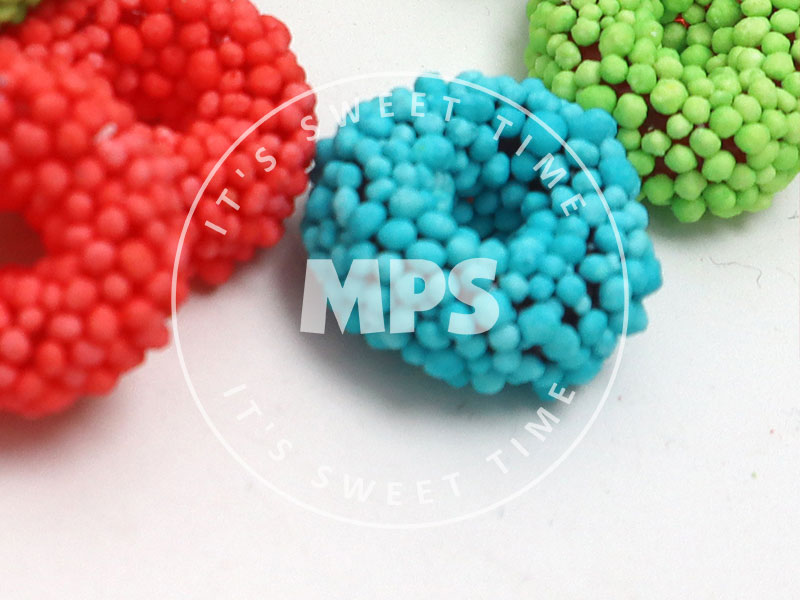
From a retail perspective, the package should make the coating visible enough for the consumer to understand why the candy is different.
That may be achieved through close-up photography, a transparent window or clear texture-oriented messaging.
From a product-protection perspective, the package also needs to consider moisture, heat and physical movement.
A coating that is crisp when it leaves production can lose part of that texture if the product is poorly protected later.
The right package therefore depends on more than branding preference.
A pouch selected for a supermarket program may differ from a smaller impulse pack or a jar intended for specialty candy retail.
The buyer should finalize the packaging after the physical product is sufficiently defined—not before.
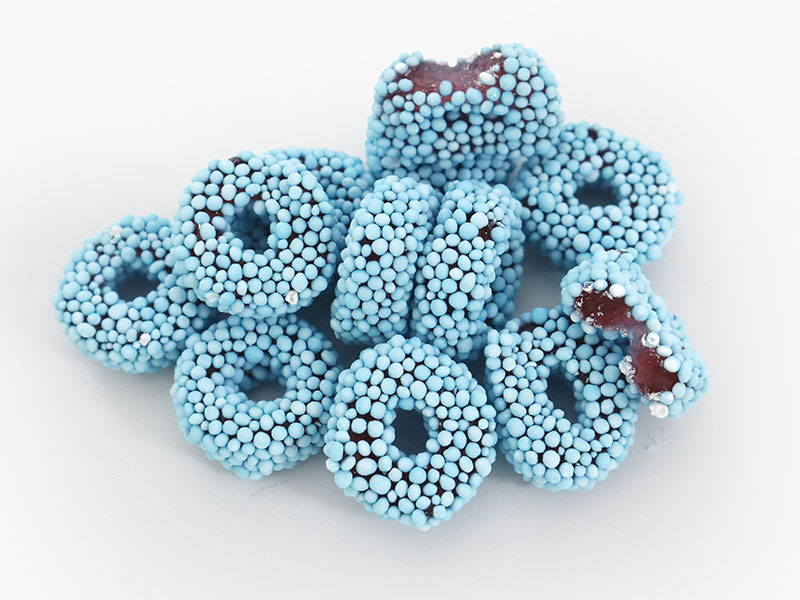
Private Label Buyers Should Decide How Much Customization They Actually Need
There is a large difference between creating branded packaging and developing a completely new candy.
Both may fall under a broader private label or OEM/ODM project, but the amount of development is different.
A relatively straightforward program might begin with an existing crunchy gummy ring and change the flavors, colors, coating direction and retail package.
A deeper project might involve a new mold, more unusual product structure or additional technical development.
Neither approach is automatically better.
The question is whether the additional customization creates commercial value.
For a buyer testing a new category, an existing proven structure can reduce development complexity.
For a retailer planning an exclusive high-volume program, deeper customization may make more sense.
Good procurement is partly about knowing where differentiation matters and where an established solution is sufficient.
Product Photography Should Not Replace Physical Sampling
Crunchy gummies can look extremely attractive in photographs.
The coating creates color, texture and strong close-up imagery.
But photography cannot communicate the complete eating experience.
A product may look heavily coated yet provide very little crunch.
Another may appear slightly less dramatic in the photograph but deliver a much stronger texture contrast.
There can also be differences between edited product photography and the normal appearance of commercial production.
For serious B2B purchasing, physical samples remain important.
Images help shortlist products.
Samples help approve them.
Commercial specifications help reproduce them.
Those are three different stages.
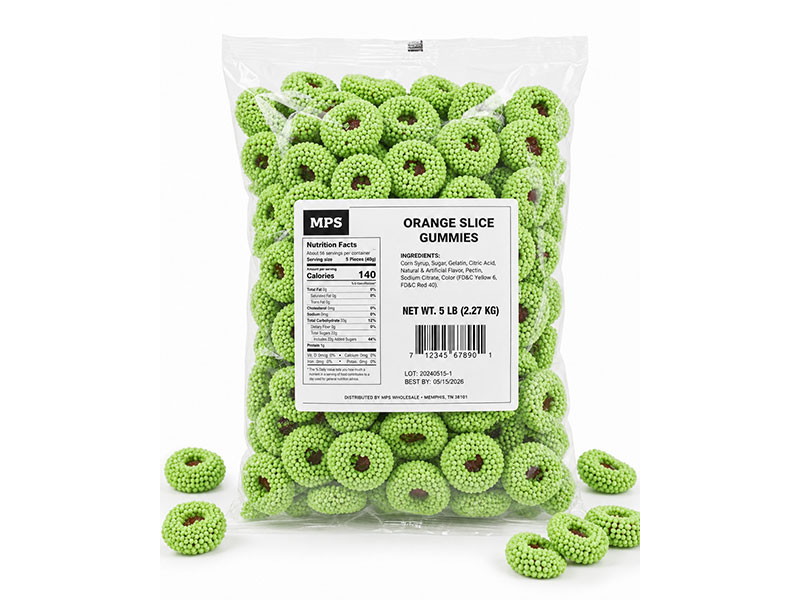
Ask Whether the Sample Can Be Reproduced at Scale
One of the most important questions in confectionery sourcing is easy to overlook:
Can the factory reproduce this when the order becomes much larger?
Development samples can receive more individual attention than mass production.
At commercial scale, coating uniformity, gummy dimensions, color, texture and piece handling need to remain within an acceptable range across much larger quantities.
This is particularly relevant for products combining two very different textures.
Buyers should therefore pay attention not only to whether the factory can create an attractive sample but also to whether the manufacturer understands commercial scale-up.
A successful first sample proves that the idea is possible.
Stable production proves that the product is commercially usable.
Quality Documents Should Match the Destination Market
B2B buyers often ask whether a manufacturer is “certified.”
That question is too broad by itself.
Different customers and markets may require different documentation.
A buyer may need factory food-safety certifications, product specifications, ingredient information, allergen statements, certificates of analysis or other export documents depending on the project.
Some programs may also require Halal, Kosher or other market-specific documentation.
The important point is to discuss these requirements before production.
It is much easier to verify whether the factory and product can meet the intended market requirements at the beginning of a project than after packaging has been printed and production has started.
Private label buyers should also review their destination-market labeling obligations carefully.
The manufacturer’s production capability and the buyer’s regulatory responsibilities need to work together.
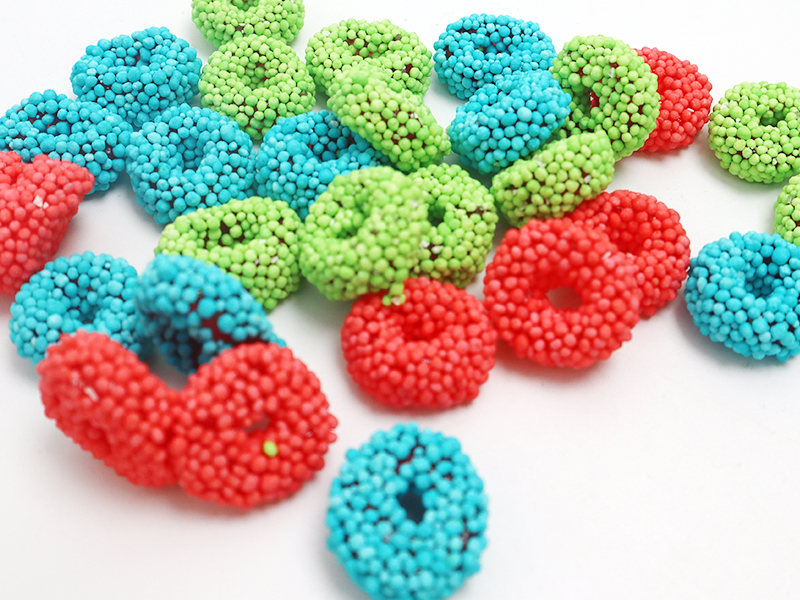
A Great Factory Sample Can Still Be Damaged by Poor Logistics
This is particularly important for gummies.
International confectionery sourcing does not end when the factory finishes production.
The product may still need to travel through ports, containers, warehouses and local distribution.
Heat can affect gummy texture, shape and appearance.
For MPS international projects, gummies, chocolate and other heat-sensitive products must be shipped in reefer containers.
This logistics requirement should be considered while calculating the project—not discovered after the purchase order has already been placed.
A normal container may look cheaper on the freight quotation, but saving transportation cost is not helpful if temperature exposure damages the product.
For heat-sensitive confectionery, product protection is part of procurement economics.
Lead Time Starts Before Mass Production
Buyers sometimes treat production lead time as if it begins the moment they request a quotation.
In practice, a private label project can include several stages before manufacturing begins.
The product may need to be selected or developed.
Samples may need to be reviewed.
Packaging artwork must be finalized.
Printed packaging may need to be produced.
Final specifications and documents must be confirmed.
Only after the necessary approvals are in place can the project move cleanly into commercial production.
For many projects, actual production and preparation can take several weeks, and more customized programs may require additional time.
Seasonal buyers need to plan even further backward.
The important date is not when the factory finishes production.
It is when the product needs to be available in the destination market.
That date should drive the project schedule.

The First Order Should Be Designed with the Reorder in Mind
A first order receives a lot of attention.
But for brands, importers and distributors, the real commercial value usually appears in repeat orders.
That means the first project should create a clear reference for the second.
The approved sample should be meaningful.
The product specification should be clear.
The packaging version should be controlled.
The flavor and coating direction should be reproducible.
This matters particularly for a distinctive texture product.
If customers buy the first shipment because they enjoy the crunchy-chewy experience, the next shipment needs to deliver substantially the same expectation.
Continuity builds the product.
Without continuity, every order becomes another development project.
Should You Buy an Existing Crunchy Gummy or Develop Your Own?
For some buyers, an existing crunchy gummy format is enough.
The opportunity may come mainly from bringing the product into a new market, building stronger packaging or creating a suitable flavor assortment.
For others, a more customized product may create better competitive separation.
A useful way to decide is to ask:
Does the market opportunity depend on owning something more exclusive?
If the answer is no, a proven product structure can offer a more efficient route.
If the answer is yes—and the expected volume supports the investment—custom shape, coating or deeper product development may be worth exploring.
The commercial opportunity should determine the development level, rather than customization being treated as an objective by itself.
Price Matters, but Reorder Reliability Matters More
In a one-time purchase, price can dominate the decision.
In a long-term candy program, consistency becomes more important.
A slightly lower first-order price provides limited value if the second shipment has noticeably different texture, coating or packaging.
For distributors and retail programs, supply reliability matters because the product eventually becomes part of someone else’s assortment.
Retail buyers expect continuity.
Consumers expect the product they liked previously.
A strong supplier relationship therefore depends on more than making the first order cheaply.
It depends on whether the product can become repeat business.
That is ultimately one of the best tests of commercial manufacturing.
Frequently Asked Questions
1. What are crunchy candy-coated gummies?
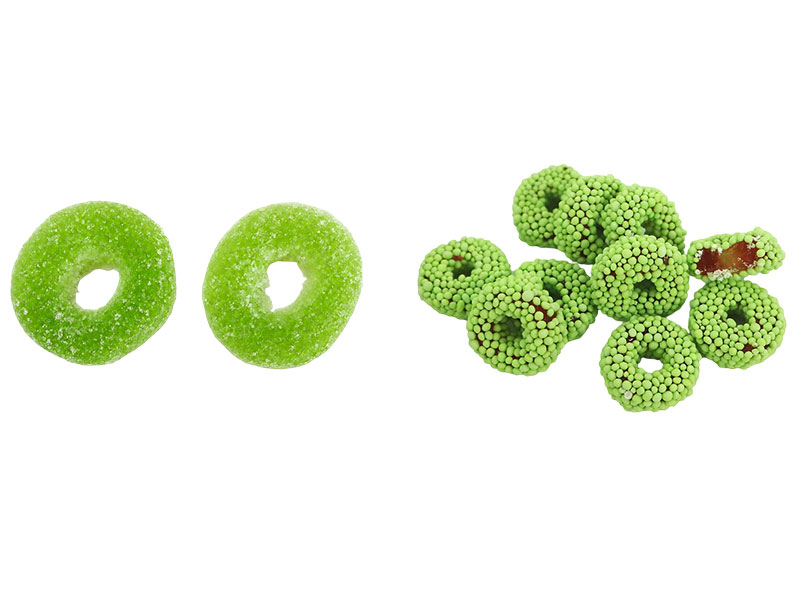
They are gummy candies with a crisp or crunchy outer coating surrounding a soft, chewy gummy center. Unlike freeze-dried gummies, the center remains chewy.
2. Are crunchy gummies available for wholesale B2B orders?
Yes. Crunchy candy-coated gummies can be supplied for commercial B2B projects including brands, importers, distributors and retail programs.
3. What shapes are available?
Current MPS development includes crunchy gummy rings, stars and flat worms. Suitable custom shapes can also be evaluated depending on the project.
4. Can I private label crunchy gummies?
Yes. Suitable private label projects can include branded packaging as well as selected customization of flavor, color, coating and assortment. Deeper OEM/ODM development can also be evaluated.
5. What is the MOQ?
MOQ varies by product and packaging format. For many candy products, approximately 2–4 metric tons per flavor can be used as a general reference. Piece-counted, molded, individually wrapped or highly customized products may use different MOQ calculations.
The exact MOQ should therefore be confirmed according to the selected product.
6. Can several flavors be combined in one container?
Yes. Each selected flavor must first meet its applicable MOQ, but different qualifying flavors and MPS products can then be combined in the same container.
7. Can my goods be combined with products from other Chinese suppliers?
Yes, this can be arranged when appropriate. Buyers may consolidate MPS products with goods from other suppliers in China as part of their container planning.
8. Can I request samples before placing a commercial order?
Yes. Samples are an important part of evaluating flavor, gummy texture, coating, shape and overall product direction before commercial production.
9. Can I use my own retail packaging?
Yes. Private label packaging can be developed using buyer-approved artwork according to the selected packaging structure, printing requirements and applicable labeling needs.
10. What documents are available for B2B buyers?
Depending on the project, relevant factory and product documentation may include food-safety certifications, specifications, ingredient and allergen information, COA and applicable export documentation. Market-specific requirements should be discussed before order confirmation.
11. Do crunchy gummies need refrigerated shipping?
Yes. For MPS international shipments, gummies, chocolate and other heat-sensitive products must be shipped in a reefer container to help protect product quality during transportation.
12. How long does a private label project take?
Timing depends on product customization, sample approval, packaging development and production scheduling. More customized projects normally require more preparation than products using an established formula, shape and packaging structure.
Buying Crunchy Gummies Is Really About Building a Repeatable Product
Wholesale sourcing is often presented as a price comparison.
For a texture-led confectionery product, it is more than that.
The product needs to taste right.
The coating needs to feel right.
The package needs to protect it.
The MOQ needs to fit the SKU strategy.
The shipment needs to protect the product on the way to market.
And once the first order performs well, the manufacturer needs to be able to make it again.
That is the point where a novelty candy stops being an interesting sample and becomes a commercially viable product line.
MPS Candy is a China-based candy manufacturer and exporter supporting crunchy candy-coated gummies, private label production, OEM/ODM development and commercial B2B supply for international brands, importers, distributors and retailers.