
Importing candy from China can look simple from the outside.
Find a manufacturer, request prices, choose several products and arrange shipping.
In reality, the difference between a successful confectionery import program and a difficult one usually appears much earlier—before the purchase order is placed.
The product has to fit the destination market. The manufacturer needs to understand commercial-scale production. MOQ has to work with the planned assortment. Packaging must suit both retail and transportation. Ingredients, labels and documents need to match the importing market. And for heat-sensitive confectionery, logistics can affect the product just as much as production does.
For candy brands, importers, distributors and retail buyers, sourcing from China is therefore not simply about finding the lowest price.
It is about building a supply structure that can work repeatedly.
This guide explains the commercial decisions that matter when importing candy from China for wholesale, private label and retail programs.

Start with the Market, Not with the Factory Catalogue
One of the easiest mistakes in candy sourcing is opening a manufacturer’s catalogue before deciding what the market actually needs.
A factory may offer hundreds of gummies, hard candies, lollipops, marshmallows, bubble gums and chocolates. That variety can make sourcing feel easy, but it can also lead to an unfocused assortment.
A supermarket buyer and a candy distributor may both purchase gummies, but their requirements can be very different.
The supermarket may care about retail-ready packaging, shelf appearance, barcode placement, case configuration and a reliable supply schedule.
A distributor may place greater emphasis on assortment flexibility, competitive landed cost and the ability to combine several products in one shipment.
A candy brand may be more focused on private label packaging, distinctive flavors, custom shapes and long-term product consistency.
Before contacting a Chinese candy manufacturer, it therefore helps to define the intended sales channel, target price level and product role.
The useful question is not:
What candy can you make?
It is:
What type of candy program am I trying to build?
That makes every later discussion—product selection, MOQ, packaging and quotation—more productive.
Manufacturer, Trading Company or Sourcing Company?
When buyers search for a candy supplier in China, they may encounter several types of companies.
Some manufacture the products themselves.
Some primarily trade products from other factories.
Others act as sourcing companies coordinating multiple manufacturers.
These structures are not automatically good or bad. What matters is whether the supplier model fits the project.
For a buyer developing private label products, reviewing formulas, approving packaging and placing repeat commercial orders, direct access to manufacturing information can be particularly valuable.
Questions about production feasibility, ingredients, molds, texture, coating, production schedule or corrective action are easier to manage when the manufacturing side is clearly involved.
At the same time, a supplier with access to several specialized production facilities may provide broader product coverage than a single factory producing only one candy category.
For importers, the important issue is transparency.
You should understand who manufactures the product, who handles the export relationship and who is responsible for communication when something changes.
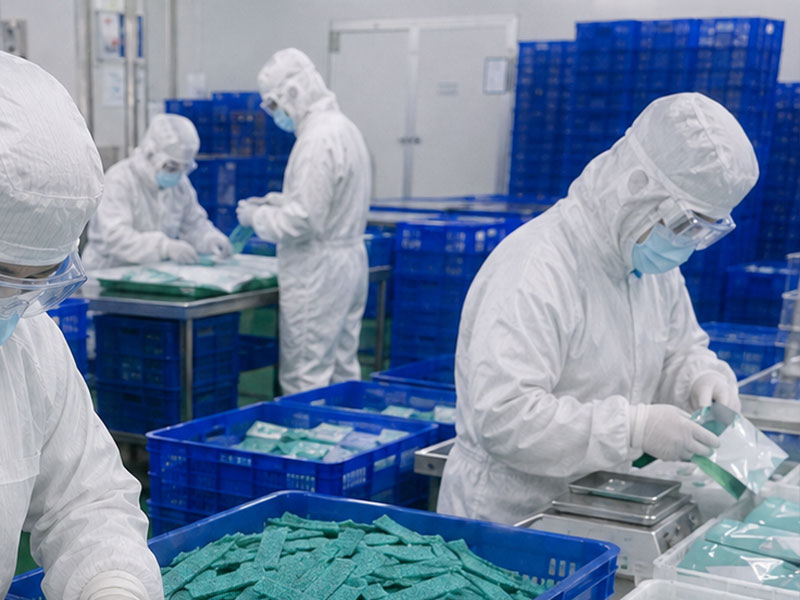
A Large Product Catalogue Is Not the Same as Manufacturing Capability
A website with hundreds of candy pictures may appear impressive.
But product quantity alone does not tell a buyer how well a supplier can manage a commercial project.
The more useful questions relate to repeatability.
Can the product shown in the sample be reproduced during mass production?
Can the same flavor and texture be supplied again six months later?
Can the supplier manage printed packaging?
Can specifications and quality documents be provided?
Can several different candy categories be coordinated within one shipment?
If a product requires customization, can the supplier explain what is commercially feasible rather than simply saying that everything is possible?
For B2B buyers, these questions matter more than the number of products displayed on a website.
A commercial candy supplier is not only supplying candy.
It is supplying repeatability.

Existing Product or Private Label?
Not every import project needs full product development.
In many cases, an existing factory product with appropriate packaging can be the most efficient way to enter a market.
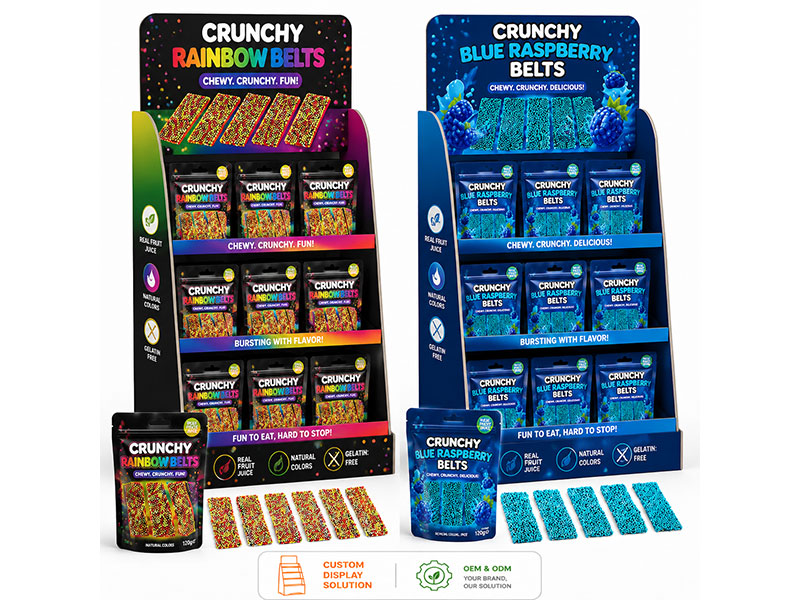
A buyer might select an existing gummy shape, choose from available flavors and develop branded packaging around it.
That reduces development complexity while still allowing the product to appear under the buyer’s own brand.
Other projects need deeper customization.
The buyer may want a particular texture, filling, coating, color combination, mold or packaging structure.
Those projects naturally require more technical evaluation and usually more development time.
The decision should depend on the commercial opportunity.
If an existing product already meets the market need, changing every component simply to make it “custom” may add cost without adding enough consumer value.
If exclusivity is central to the product strategy, deeper OEM or ODM development can make more sense.
The strongest import projects choose the level of customization intentionally.
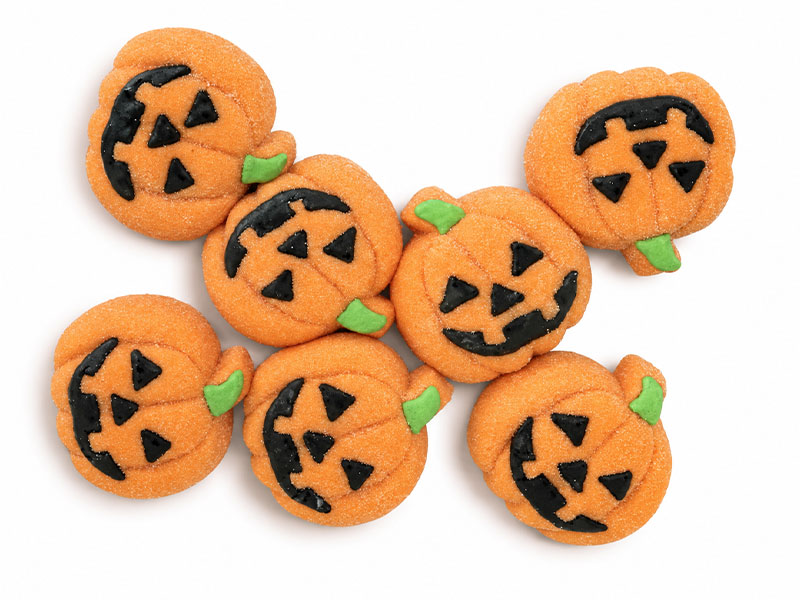
Samples Are for More Than Tasting
A candy sample answers several questions at the same time.
Obviously, the flavor matters.
But a professional buyer should also pay attention to texture, piece size, coating, appearance, individual wrapping and how consistently several pieces look together.
Packaging samples matter as well.
A product may taste excellent but appear too small inside the planned retail pouch.
A gummy may look attractive in a photograph but deform during transportation.
A coating may create too many loose particles.
A hard candy wrapper may look suitable individually but become difficult to read when displayed inside a jar.
The sample should therefore be evaluated as a miniature version of the future commercial product.
For private label projects, sample approval also provides a reference that can later help align expectations for commercial production.
The purpose is not to find one perfect-looking piece.
It is to establish what the finished product is supposed to be.
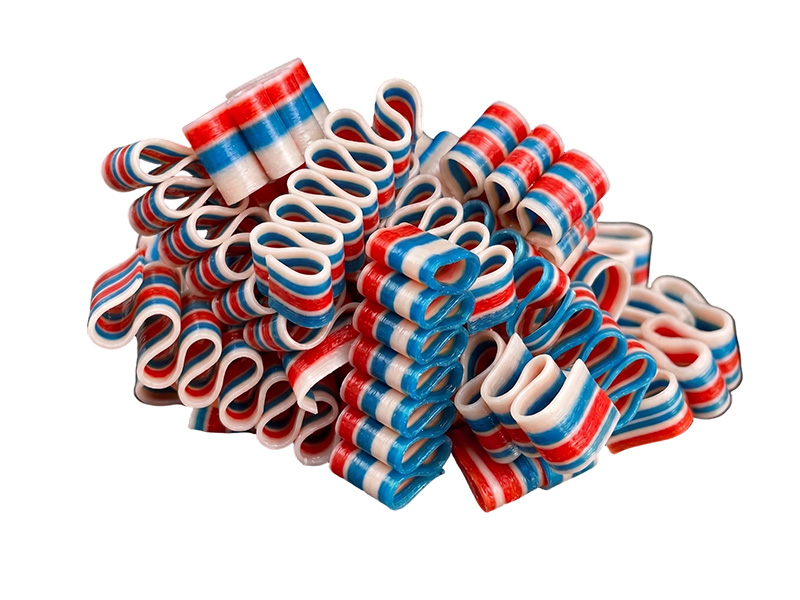
MOQ Is Usually More Complicated Than “How Many Containers?”
MOQ is one of the most misunderstood parts of importing candy from China.
Buyers sometimes ask:
What is your MOQ—one 20-foot container?
But production MOQ and shipping quantity are not the same thing.
For many candy products, the typical MOQ may be approximately 2–4 metric tons per flavor, depending on the formula, shape, production process and packaging requirements.
That means flavors may need to be considered separately.
If a gummy range contains strawberry, apple and watermelon, the production requirement may apply to each selected flavor rather than all three flavors sharing one combined MOQ.
However, 2–4 metric tons per flavor should not be treated as a universal rule for every candy.
Some lollipops, molded candies, individually wrapped products or other piece-counted products may be calculated by pieces, packaging quantity or production batch instead.
Certain specialized products also have their own MOQ structure.
This is why the more accurate question is:
What is the MOQ for this specific product, flavor, style and packaging combination?
One Product MOQ Does Not Mean One Full Container
This distinction gives buyers much more flexibility than they sometimes realize.
Meeting the MOQ for one product does not necessarily mean filling an entire shipping container with that product.
Once applicable production requirements are met, different qualifying products can be combined within the same container.
For example, an importer may purchase gummies, hard candy, lollipops and marshmallows as part of one broader assortment instead of ordering a complete container of only one SKU.
In appropriate situations, cargo can also be consolidated with goods the buyer purchases from other suppliers in China.
For better freight efficiency, however, the total shipment is generally better planned around a full-container load.
This creates an important distinction:
Production MOQ determines whether an item can be manufactured efficiently.
Container planning determines how the total order is shipped efficiently.
Understanding the difference helps buyers build a much more practical assortment.

How a B2B Candy Import Project Fits Together
A commercial candy order usually becomes easier to understand when the project is viewed as one connected system.
| Project Area | What the Buyer Is Really Deciding |
|---|---|
| Product | Which candy, flavor, texture and shape fit the market |
| MOQ | Whether each selected SKU is commercially producible |
| Private Label | How much of the existing product needs to change |
| Packaging | How the product will be protected and presented at retail |
| Compliance | Whether ingredients, labels and documents fit the destination market |
| Quality | What reference and specifications mass production should follow |
| Logistics | How the product will reach the market without unnecessary cost or damage |
| Reorder | Whether the same product can be supplied consistently again |
The important point is that these decisions affect one another.
Adding more flavors affects MOQ.
Changing shape may affect piece weight and packaging.
Changing packaging can affect carton dimensions and freight efficiency.
Changing the destination market may affect labeling and documentation.
A successful import project treats these areas as connected rather than solving them one by one at the end.
Packaging Should Be Discussed Earlier Than Many Buyers Expect
Private label packaging is often treated as the final decorative stage.
In reality, packaging influences both product presentation and supply-chain performance.
Consider a stand-up pouch.
Changing from 100 g to 150 g does more than change the number printed on the front.
The pouch size may change.
The number of candies inside changes.
The carton configuration may change.
Pallet or container utilization can change.
Retail price positioning may also change.
Jars create a different calculation again because rigid packaging usually occupies more shipping volume than flexible pouches.
Display boxes introduce another layer because the retail unit and shipping carton need to work together.
The best packaging decision therefore balances three things:
brand presentation, product protection and logistics efficiency.
Beautiful packaging that dramatically increases freight cost may not be commercially attractive.
Highly efficient packaging that looks weak on a supermarket shelf may not be attractive either.
B2B packaging needs to do both jobs.
Do Not Print Packaging Before the Product Is Stable
This deserves particular attention in custom projects.
Printed packaging can create one of the most expensive mistakes in product development.
Suppose the artwork is completed around an assumed gummy size.
The final sample then turns out to be larger.
The planned pouch contains fewer pieces than expected.
The product photograph no longer represents the finished candy accurately.
Or the ingredient statement changes slightly after the final formula is confirmed.
If thousands of printed bags already exist, a small product change becomes a packaging problem.
For that reason, product development and packaging development can move in parallel, but final printing should wait until the important commercial and product details are stable.
The package should be designed around the actual candy.
Not the other way around.
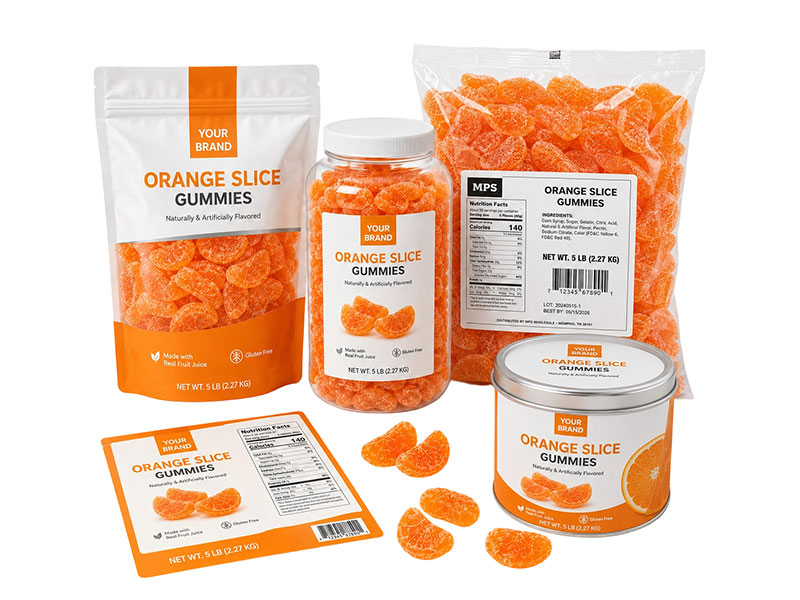
Compliance Begins with the Destination Market
There is no single global “candy import standard.”
The destination market matters.
Ingredient restrictions, allergen declarations, nutrition labeling, language requirements, food registrations, additive rules and product claims can differ between countries.
A package suitable for one market should therefore not automatically be assumed to be suitable for another.
This is especially important in private label projects because the buyer’s own brand appears on the finished product.
The manufacturer can provide product information and relevant supporting documents, but the importer also has responsibilities within the destination market.
A practical approach is to identify regulatory requirements before the final formula and packaging artwork are locked.
This is much more efficient than discovering a labeling or ingredient problem after production is ready to begin.
What Documents Matter in a Candy Import Project?
There is no universal document pack that applies identically to every country and every confectionery product.
The required documents depend on the product and destination.
However, professional B2B projects commonly involve commercial and product information such as a commercial invoice, packing list, product specification, ingredient information, allergen information and relevant quality or inspection documentation.
A Certificate of Analysis may be required depending on the product and buyer.
Food-safety certifications and market-specific certificates such as Halal or Kosher may also be relevant depending on the program.
What matters is not collecting the largest possible folder of certificates.
It is confirming that the documentation required for your actual product and destination market is available and valid.
An importer should therefore discuss documentation before placing the order rather than asking for everything shortly before the vessel departs.

Why the Cheapest Quotation May Not Be the Cheapest Order
Unit price is easy to compare.
Landed cost is harder.
Two factories can quote similar candy at noticeably different prices because the quotations include different things.
Packaging may be included in one price but not another.
Carton specifications may differ.
Piece weight may differ.
Incoterms may differ.
One product may require temperature-controlled shipping.
Another supplier may quote an unusually low unit price while requiring a larger MOQ.
That is why serious buyers should compare quotations on an equivalent basis.
A useful quotation should make the product specification, packaging, quantity and trade term clear enough that buyers understand what they are paying for.
Otherwise, the lowest price can become much less attractive after packaging, freight and handling are added.
FOB and CIF Answer Different Purchasing Needs
For international candy orders, FOB and CIF are common trade structures.
Under an FOB arrangement, the buyer generally has greater control over the main international freight after the seller completes the agreed export-side responsibilities.
This can work well for experienced importers with their own freight forwarders.
CIF can be convenient for buyers who prefer the supplier to quote freight and insurance to the destination port as part of the transaction.
Neither is automatically cheaper or better.
The right choice depends on the buyer’s logistics capability, freight relationships and purchasing structure.
What matters is comparing offers under the same trade term.
A FOB quotation should not be compared directly with a CIF quotation as if the two prices include exactly the same services.
Freight Efficiency Matters More Than Shipping Price Alone
Shipping candy by sea is not only about finding the cheapest freight rate.
Container utilization matters.
A poorly planned order can leave expensive unused space.
Rigid jars may consume much more volume than flexible bags.
Display cartons can improve retail presentation while also increasing dimensional volume.
An assortment containing several product categories may need more careful carton planning than a single-SKU shipment.
This is another reason product, packaging and logistics decisions should not be separated.
For established importers, optimizing the container can sometimes have as much commercial impact as negotiating a slightly lower candy price.
The goal should be to reduce the cost per saleable unit delivered to the destination market, not simply the price per kilogram leaving the factory.

Heat-Sensitive Candy Needs a Different Shipping Conversation
Not every confectionery product reacts to transportation in the same way.
Hard candy is generally different from gummies.
Gummies are different from chocolate.
Temperature exposure can affect shape, texture, appearance and product quality.
For MPS international projects, gummies, chocolate and other heat-sensitive products must be shipped in a reefer container.
This requirement needs to be included in the commercial calculation from the beginning.
Choosing a normal dry container simply because the freight quotation is lower can create a much larger risk if the product is exposed to high temperatures during ocean transportation or port handling.
The factory can manufacture a good product.
Logistics still has to deliver that product in good condition.
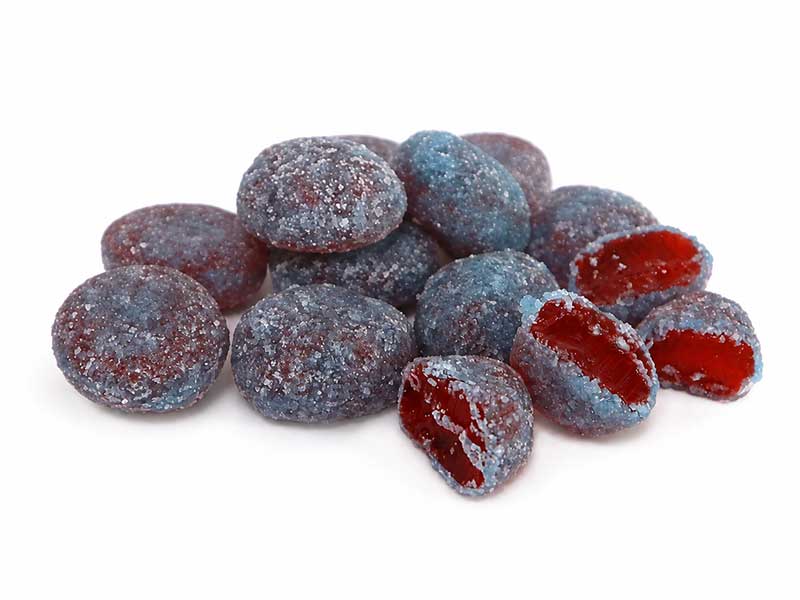
Quality Control Starts Before the Final Inspection
It is easy to think of quality control as something that happens once production is complete.
By then, many of the most important decisions have already been made.
Quality begins with a clear product definition.
If the flavor direction is vague, there is no clear flavor target.
If coating expectations are vague, production cannot reliably match what the buyer imagined.
If packaging specifications are unclear, finished packs may meet factory practice but not buyer expectations.
This is why approved samples, specifications and artwork matter.
They create references.
Final inspection still plays an important role, but it works best when everyone already agrees on what the finished product is supposed to be.
Lead Time Is More Than Production Time
Buyers sometimes ask:
How many days does production take?
But a private label candy project begins before mass production.
There may be product selection, sample preparation, sample delivery, feedback, formula adjustment, packaging design, artwork confirmation, packaging printing and production scheduling before commercial manufacturing begins.
For many MPS projects, the overall production lead time is typically around 4–8 weeks after the required product and packaging approvals, depending on the candy and project complexity.
Highly customized products can require additional development time.
Seasonal programs need even more planning.
A Christmas product that leaves China in December is not a successful Christmas project if the retailer needed it on shelves in October.
The project should therefore be planned backward from the required market arrival date.
Seasonal Candy Should Be Purchased Backward from the Shelf Date
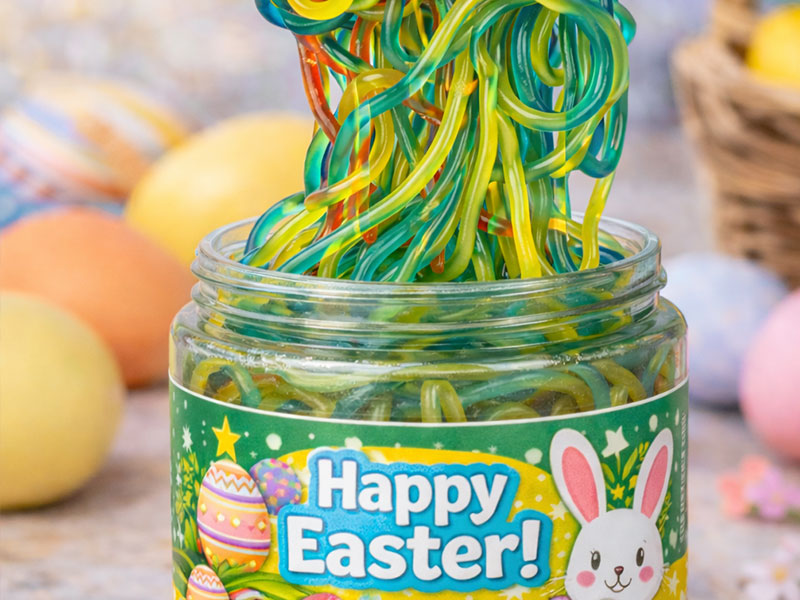
This is especially important for Halloween, Christmas, Valentine’s Day and Easter programs.
The relevant deadline is not:
When can the factory finish production?
It is:
When must the product arrive at the retailer’s distribution center?
From that date, buyers need to work backward through domestic distribution, customs clearance, ocean transit, loading, production, packaging printing, sample approval and product development.
The more customized the project is, the earlier this process should begin.
Seasonal candy has very little tolerance for delay because the commercial value can fall dramatically once the selling period passes.
Frequently Asked Questions
1. Can I import private label candy from China?
Yes. Private label projects can use the buyer’s own brand and packaging and may include suitable customization of flavor, color, shape, coating, assortment and other product characteristics depending on manufacturing feasibility.
2. What is the MOQ when importing candy from China?
MOQ varies by product and packaging format. For many candy products, the typical MOQ is approximately 2–4 metric tons per flavor. Piece-counted, individually wrapped, molded or highly customized products may instead be calculated by pieces, packaging quantity or production batch.
Product-specific requirements should always be confirmed before planning the final assortment.
3. Does each flavor have its own MOQ?
For many products, yes. Different flavors may represent separate production runs and therefore need to meet their own applicable MOQ.
This is why buyers should consider flavor selection together with total commercial volume.
4. Do I have to buy one full container of one candy?
No.
Once each selected product or flavor meets its applicable production MOQ, different qualifying MPS products can be combined in one container.
Where appropriate, the shipment can also be consolidated with goods from the buyer’s other suppliers in China.
For better freight efficiency, the total shipment is generally better arranged on a full-container basis.
5. Can I request samples before importing?
Yes. Samples can be used to evaluate the product before commercial production. Buyers should consider flavor, texture, shape, coating and overall product appearance rather than judging only one characteristic.
Sample and courier arrangements depend on the project.
6. Can I use my own logo and packaging?
Yes. MPS supports private label packaging using buyer-approved branding and artwork, subject to the selected packaging format, printing requirements and applicable labeling requirements.
7. What documents should I request from a Chinese candy supplier?
Requirements depend on the destination market and product. Common B2B documentation may include product specifications, ingredient and allergen information, COA where applicable, relevant food-safety certificates and commercial shipping documents.
The importer should confirm destination-market requirements before production.
8. Which Incoterms are commonly used when importing candy from China?
FOB and CIF are commonly used for MPS export projects.
The better option depends on whether the buyer wants to control international freight directly or prefers freight to the destination port to be included in the supplier’s quotation.
9. Can several candy categories be shipped together?
Yes, provided the applicable MOQ and shipping compatibility requirements are met.
This can allow buyers to build a broader assortment rather than purchasing only one candy category.
10. Do gummies and chocolate require refrigerated shipping?
For MPS international projects, gummies, chocolate and other heat-sensitive products must be shipped in a reefer container to help protect product quality during transportation.
11. How long does a candy import project take?
Timing depends on product selection, customization, sampling, packaging and production scheduling.
For many MPS projects, commercial production is generally around 4–8 weeks after the necessary approvals, while deeper customization may require additional development time.
International transit and customs clearance need to be planned separately.
12. Is MPS Candy a wholesaler or a manufacturer?
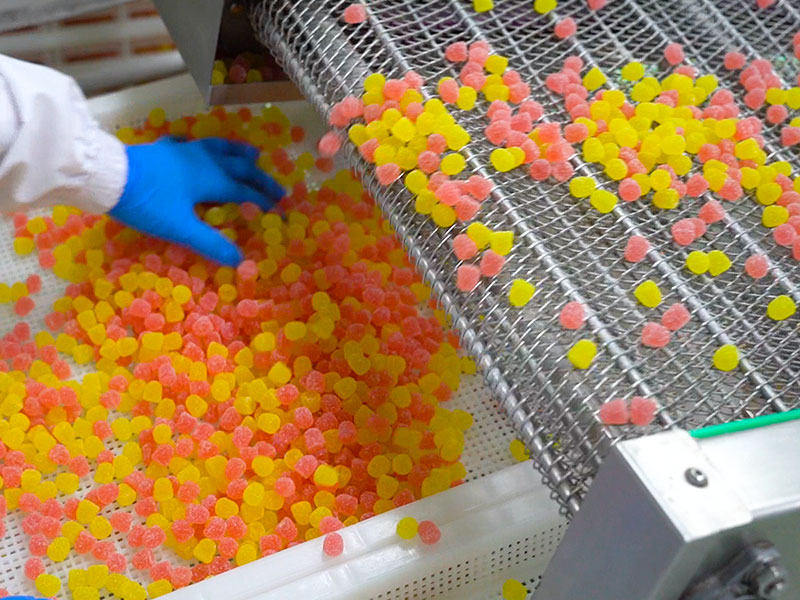
MPS Candy is positioned as a China-based candy manufacturer and exporter, supporting commercial-scale B2B production, private label and OEM/ODM projects for international brands, importers, distributors, wholesalers and retail buyers.
Looking for a Candy Manufacturing Partner in China?
Importing candy successfully is not only about receiving the first container.
The stronger goal is to create a product, packaging and supply structure that can support repeat orders as the business grows.
MPS Candy supports international B2B buyers with commercial candy manufacturing, private label packaging, OEM/ODM production and export coordination across multiple confectionery categories.
If you are planning a candy import program, the most useful starting information is your target market, product category, expected quantity, packaging format and intended launch schedule.