Sour belts have been a familiar candy format for years. Their appeal is easy to understand: a flat, chewy strip, bright fruit colors and a strong sweet-and-sour flavor.
A rainbow crunchy-bead sour belt takes that familiar format and changes the first bite.
Instead of relying only on fine sugar or sour powder, the surface is covered with small, colorful crunchy candy beads. The result is a more noticeable contrast between the crisp exterior and the soft, chewy sour belt underneath.
For consumers, the difference is immediate.
For retailers, importers and candy brands, however, the more important question is not simply what to call the product. It is whether that difference in texture and appearance gives shoppers a clear reason to notice, try and repurchase it.
That is what makes this format interesting from a B2B product-development perspective.
What Is a Rainbow Crunchy-Bead Sour Belt?
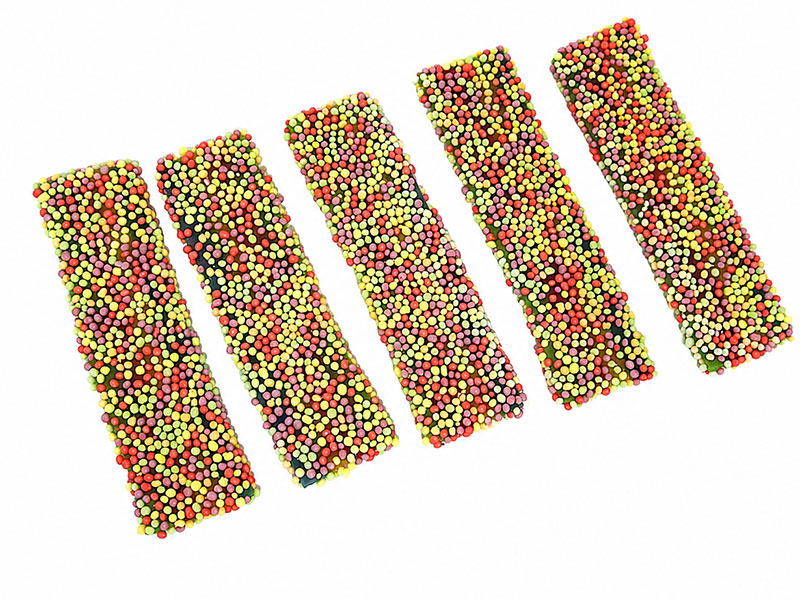
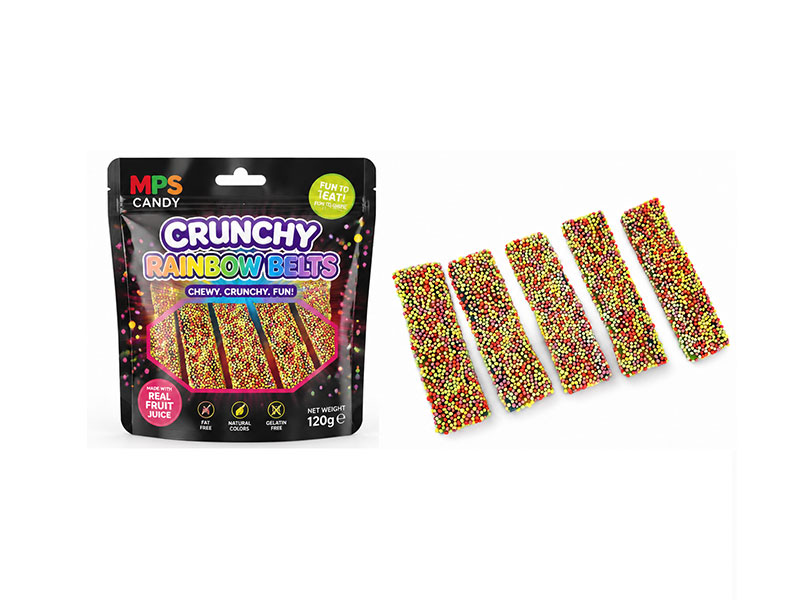
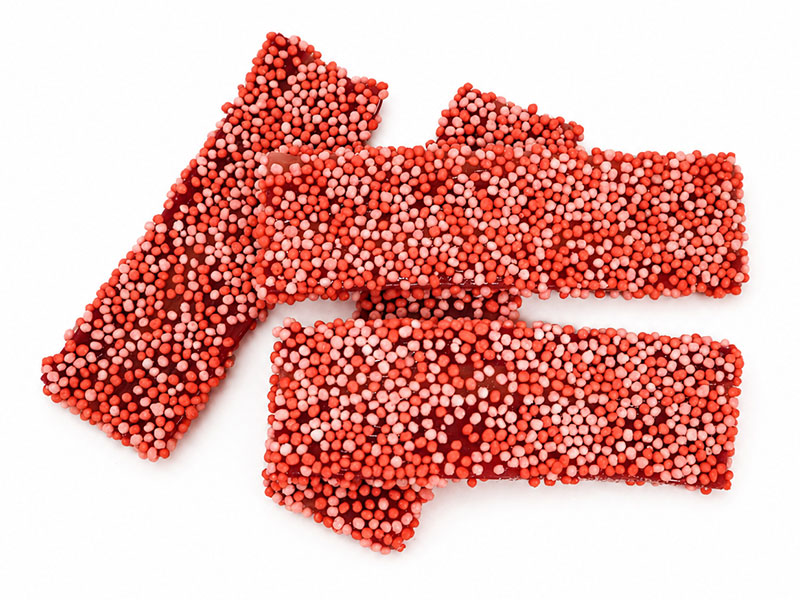
A rainbow crunchy-bead sour belt is a flat, chewy sour candy strip coated with small, colorful candy beads that create an additional crunchy layer.
It may also be described as:
- Crunchy sour belt candy
- Candy-bead-coated sour belts
- Crunchy gummy belts
- Rainbow crunchy gummy strips
Regardless of the name, the defining feature is the same:
a crisp outer bite combined with a chewy sour-candy center.
This makes it different from a conventional sour belt, where fine sugar or sour powder mainly adds sweetness, acidity and surface texture.
With crunchy-bead sour belts, the coating becomes a much more important part of the eating experience.
The consumer does not experience only sweet and sour.
They experience:
crunch → chew → sour fruit flavor.
That sequence gives the product a stronger sensory identity than a standard belt that differs only by color or flavor.
How Is It Different from a Traditional Sour Belt?
Traditional sour belts usually have a relatively uniform structure.
The candy itself provides the chewy texture, while the surface sugar or sour powder gives an immediate burst of sweetness and acidity.
The coating is usually fine enough that the consumer still experiences the product mainly as a chewy candy.
A crunchy-bead belt changes this relationship.
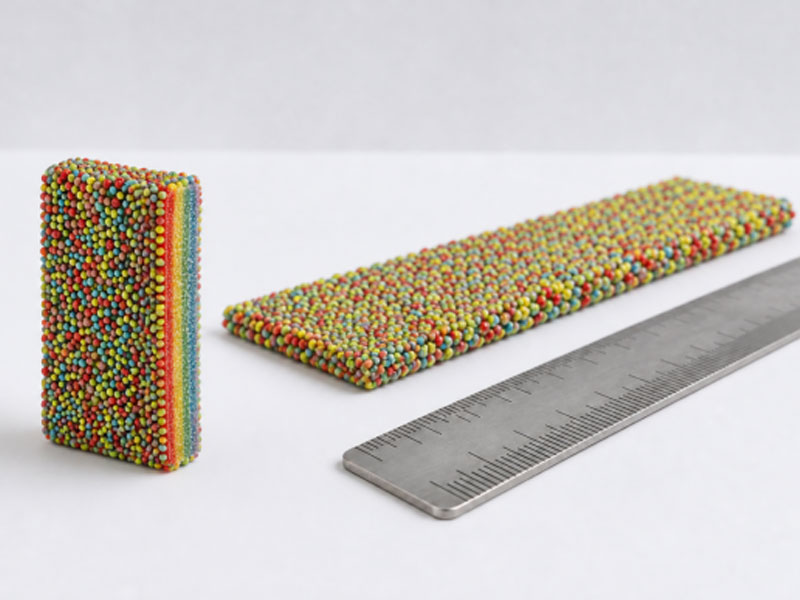
The larger candy particles create a separate textural layer before the teeth reach the softer belt underneath. This makes the outside and inside feel more distinct from each other.
The difference can also be seen before the product is eaten.
Fine sour sugar gives a belt a powdered or crystalline appearance. Colorful candy beads make the surface look more dimensional and visually complex.
This distinction is useful in retail because the product can still sit within the familiar sour-candy category while looking noticeably different from conventional sour strips.
It is therefore not necessary to teach consumers an entirely new candy format.
They already understand the sour belt.
The innovation comes from changing how that familiar product looks and feels.
| Candy format | Outer coating | Eating experience | Visual identity |
|---|---|---|---|
| Standard sour belt | Fine sugar or sour crystals | Mainly chewy | Familiar striped belt |
| Crunchy-bead sour belt | Colorful crisp candy beads | Crunchy, then chewy | Bold and highly textured |
The Candy Beads Are More Than Decoration
It is easy to look at the product and assume that the colorful beads are simply an ornamental coating.
From a manufacturing perspective, that is not the case.
The bead layer affects three important parts of the product at the same time:
appearance, texture and stability.
The amount of bead coverage influences how strongly the product communicates its crunchy character. Too little coverage may make the difference from a conventional sour belt difficult to notice.
Too much coating can create a different problem. Excessive loose beads may collect inside the package, increase product loss or create an untidy retail appearance.
Particle size also changes the bite.
Smaller particles provide a lighter crunch. Larger pieces create a stronger texture contrast but may require different adhesion and packaging considerations.
This means the product cannot simply be developed by producing a standard sour belt and adding as many colorful beads as possible.
The belt and coating have to work as one product.
Why Moisture Is Important
One of the most important technical questions with this type of candy is moisture.
A chewy sour belt naturally contains moisture. The crunchy coating needs to remain comparatively dry to maintain its crisp texture.
When two components with different moisture characteristics are placed together, they can influence each other over time.
If moisture moves from the chewy center into the outer coating, the candy beads may gradually become softer.
If the belt loses too much moisture, the center may become firmer than intended.
Humidity from the surrounding environment can create another problem. Poor protection may lead to stickiness, coating softening or products sticking together inside the package.
This is why packaging is not something that should be selected only after the product has been developed.
The candy formula, coating and packaging barrier need to be considered together.
For international buyers, this becomes even more important because the product may spend weeks in production, warehousing and sea transportation before it reaches a retail shelf.
A sample that tastes excellent immediately after production still needs to perform under realistic storage and shipping conditions.
Why the Belt Structure Works Well with a Crunchy Coating
The flat sour-belt format offers several advantages for this type of product.
First, it provides a large visible surface area.
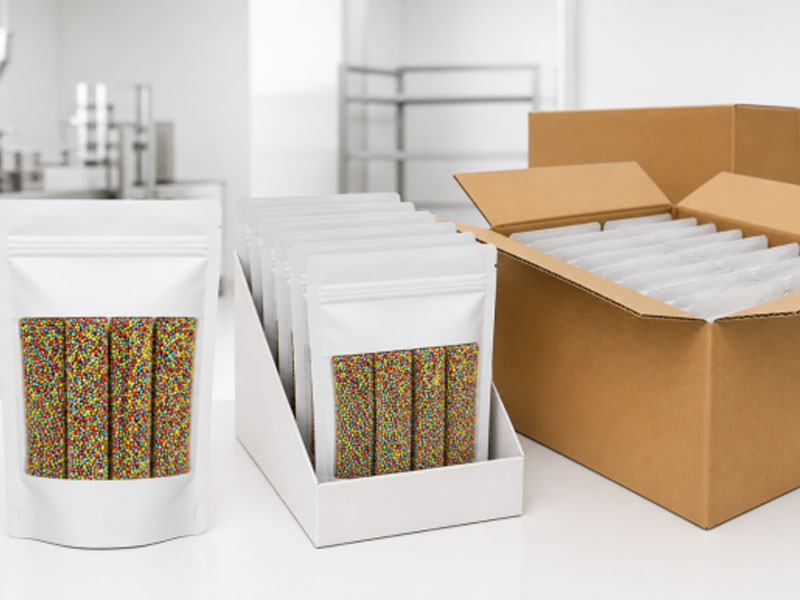
Compared with a small round gummy, a belt exposes more coating to the consumer. This makes the colorful beads easier to see through transparent packaging or product windows.
Second, the long strip creates a gradual eating experience.
The consumer does not have to eat the entire piece at once. Each bite repeats the contrast between the crunchy surface and chewy center.
Third, the familiar sour-belt shape reduces the risk of making the product too unfamiliar.
The format is recognizable, but the surface tells consumers that this is not an ordinary sour belt.
That balance between familiar format and new texture is one of the strongest commercial advantages of the product.
Why This Format Can Be Interesting for Retail Buyers
Retail buyers usually do not need another product simply because it looks unusual.
A new SKU needs to perform a commercial role.
Rainbow crunchy-bead sour belts can potentially do this in several ways.
1. They add differentiation without leaving the sour-candy category
A retailer can introduce a visibly different product while still targeting customers who already buy sour belts, gummy strips and chewy sour candy.
This is different from introducing a completely new candy format that may require more explanation.
2. They create a simple product story
Good retail products are often easy to explain.
For this format, the main message can be communicated in a few words:
Crunchy outside. Chewy and sour inside.
That message can work on packaging, retail listings, product videos and sales presentations.
3. They offer more than flavor differentiation
Many sour-candy ranges rely on another fruit flavor or another level of sourness to create a new SKU.
A crunchy-bead belt introduces texture as an additional point of difference.
This gives buyers another way to build a product range.
A brand may offer a traditional sour belt as its core item and a crunchy-bead version as a more distinctive or novelty-oriented extension.
Why May Retail Buyers Consider This Format?
1. It creates visible shelf differentiation
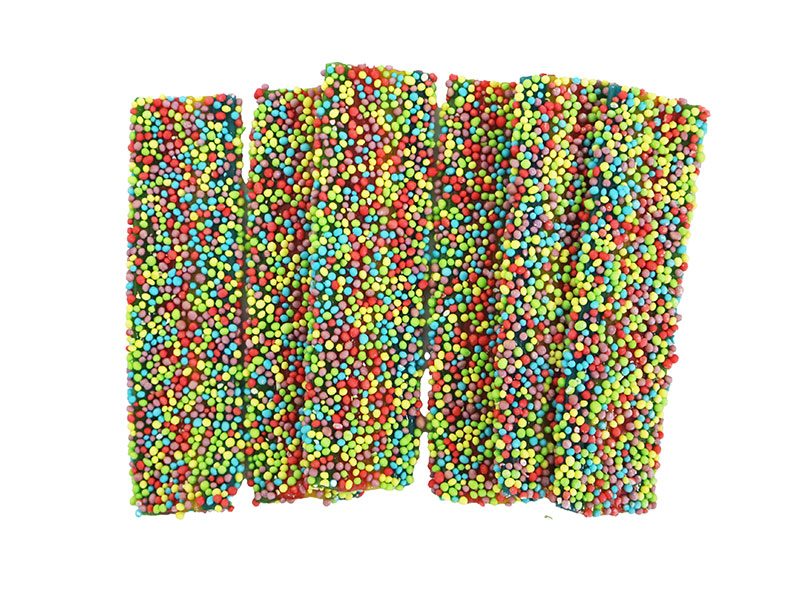
The bright bead coating gives the product a different silhouette from conventional sour strips. This can help buyers add variety without moving completely outside the familiar sour-candy category.
Shelf visibility alone does not guarantee sell-through. Buyers should still validate the pack design, retail price, consumer response and repeat-purchase potential in their own market.
2. It offers a layered texture story
Many sour candies compete mainly through flavor intensity. A crunchy-bead belt adds a second product dimension: texture.
- Crunchy outside, chewy inside
- Sweet, sour and crisp in one bite
- A new texture for sour-candy fans
All claims should match the final approved recipe and sensory test results.
3. It can support multiple product concepts
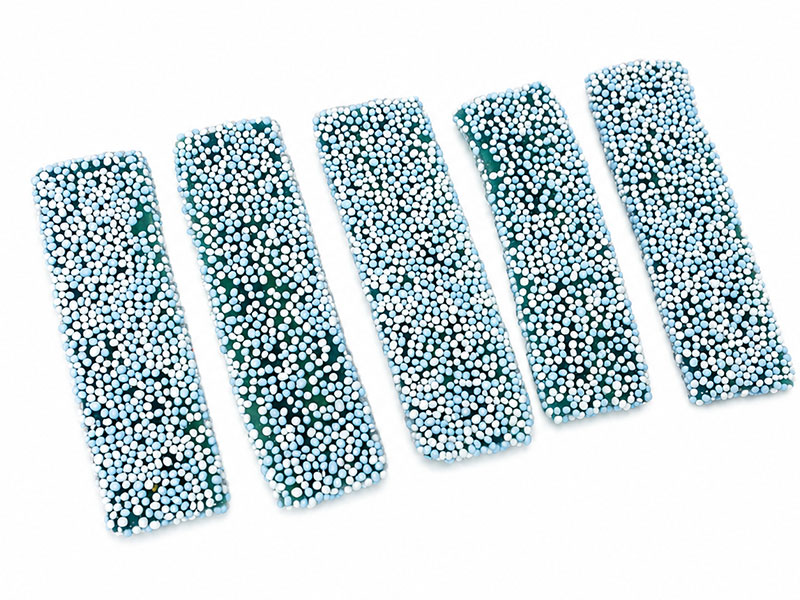
- Belt colors and bead-color combinations
- Fruit flavors and sourness levels
- Belt widths, lengths and portion sizes
- Single-serve, sharing or bulk formats
- Branded, white-label or private-label packaging
- Counter displays and shelf-ready cases
Every option remains subject to manufacturing feasibility and destination-market compliance review.
How Different Sales Channels May Use the Product
The same candy can perform differently depending on where and how it is sold.
1. Supermarkets
For supermarket programs, the product can work as part of a sour-candy or novelty-gummy range.
Retail buyers will usually focus on package weight, shelf presentation, case configuration and the ability to maintain consistent supply.
A family or sharing pouch may be suitable when the product is positioned alongside other sour belts and gummies.
2. Convenience Stores
Convenience stores rely heavily on impulse purchasing.
A smaller package, strong color contrast and clearly visible product can help shoppers understand the product quickly.
The “crunchy outside, chewy inside” message is particularly useful here because it communicates the point of difference without a long explanation.
3. Candy Stores
Specialty candy shops may use the product in retail pouches, jars or bulk displays.
The bright coating and unusual texture make it especially suitable for stores that rely on visually distinctive assortments.
4. E-Commerce
Online buyers cannot taste the product before purchasing.
Visual communication therefore becomes more important.
Close-up photography, product cross-sections and short videos can show the bead coating and chewy center and help explain why the product is different from an ordinary sour belt.
For online retail, the package must also withstand parcel handling after the initial international shipment.
Private Label Development
For private label buyers, crunchy-bead sour belts provide several levels of customization.
The most efficient route is usually to begin with a proven belt structure and coating process, then adjust commercially suitable elements such as:
- Flavor
- Sourness
- Belt color
- Bead colors
- Belt dimensions
- Package weight
- Retail packaging
- Brand artwork
A buyer seeking stronger differentiation may also discuss more specialized product combinations.
However, more customization does not automatically produce a better commercial product.
Every additional change can affect production stability, MOQ, sampling time, packaging requirements and final cost.
For example, developing six different belt colors and six different bead combinations may look attractive in a presentation, but each variation still needs to make sense at commercial production volume.
A strong private label program therefore begins by deciding which differences are important to consumers and which variations simply add complexity.
MPS Candy as a Manufacturer and Export Partner
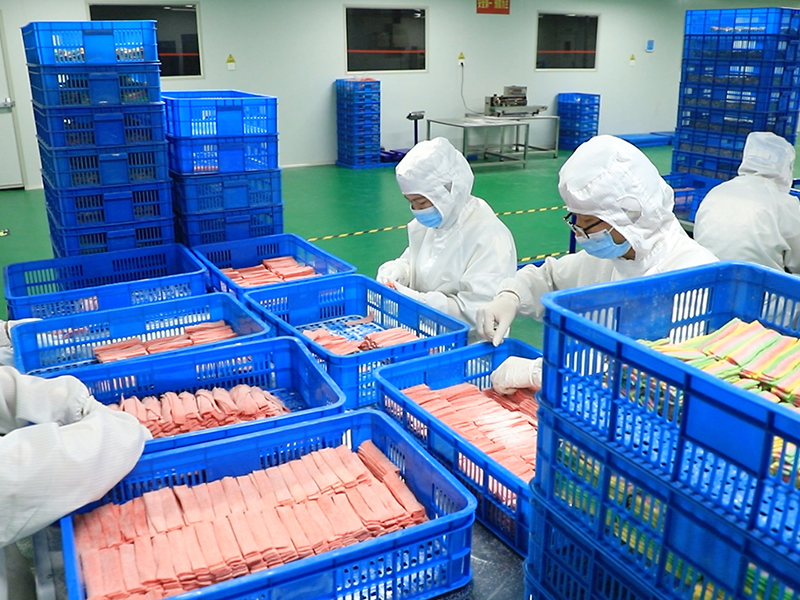
MPS Candy is a China-based candy manufacturer and exporter supporting commercial B2B production for candy brands, importers, distributors, wholesalers, supermarket groups, convenience store chains and established e-commerce companies.
Our sour-candy manufacturing capabilities include conventional sour belts as well as more differentiated formats such as crunchy-bead-coated sour belts.
For qualified projects, we can evaluate customization involving flavor, color, sourness, product dimensions, coating and private label packaging.
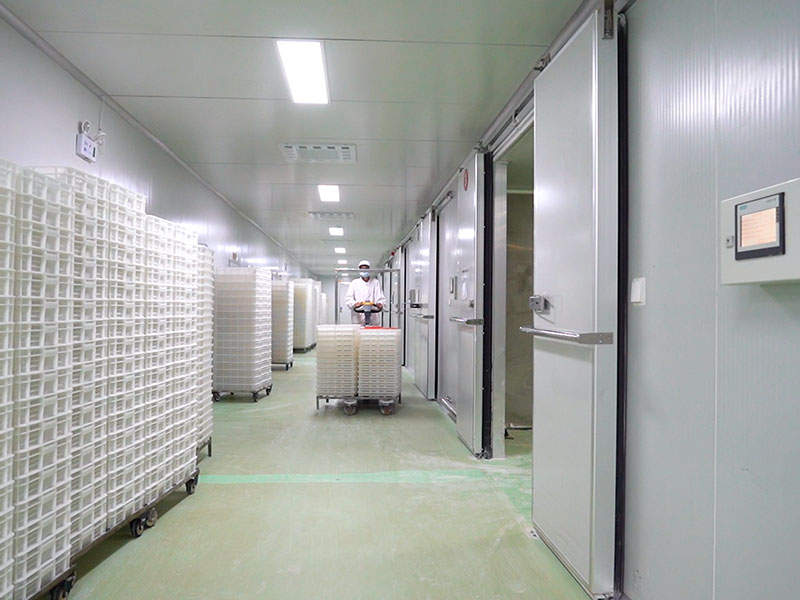
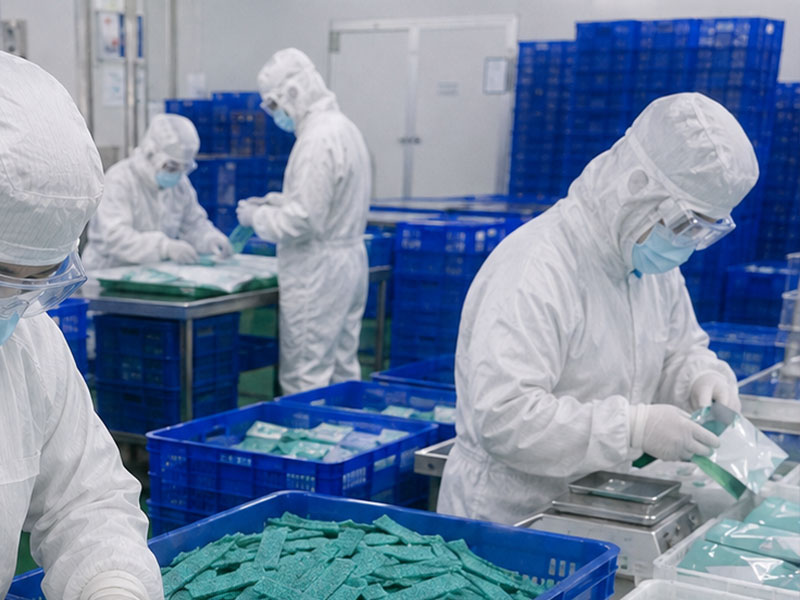
We also support product sampling, packaging confirmation, commercial-scale production and international export coordination.
For sour-belt projects, production MOQ is evaluated according to the specific color, flavor, style and packaging requirements. Different qualifying candy products can be combined as part of a broader container program, with the total purchase arranged on a full-container basis for international shipping.
The goal is not simply to produce a visually interesting sample.
It is to develop a product that can move from sample approval to stable production, packaging, shipping and repeat retail supply.
Frequently Asked Questions
1. What is a crunchy-bead sour belt?
It is a chewy sour candy belt coated with larger crunchy candy particles rather than only fine sugar or sour powder. The coating creates a more noticeable contrast between the crisp exterior and chewy center.
2. Is it the same as a traditional rainbow sour belt?
No. A traditional rainbow sour belt normally relies on fine sugar or sour powder. A crunchy-bead version uses a larger, more textural candy coating to create an additional crunchy eating experience.
3. Is it a gummy candy?
It belongs to the broader chewy confectionery category and may be marketed as a gummy belt or sour belt depending on the formula and destination market. The final product description and labeling should match the approved recipe and local requirements.
4. Can the flavor and sourness be customized?
Yes, suitable flavors, sourness levels and color combinations can be evaluated according to the product formula and production requirements.
5. Can the bead colors be customized?
Yes. Color combinations can be developed for different flavors, brand identities or seasonal programs, subject to commercial production requirements.
6. Can this product be made for private label?
Yes. MPS Candy supports private label and OEM/ODM development for qualified commercial projects, including product and packaging customization.
7. What is the MOQ?
MOQ depends on the selected product specification, flavor, color, coating and packaging. For sour-belt production, the MOQ is normally evaluated per flavor, color and style. Contact us with your project requirements for confirmation.
9. Can different candy products be combined in one shipment?
Yes. Different qualifying products may be combined, with the total purchase arranged on a full-container basis for more efficient international shipping.
10. What information should I provide for a quotation?
Please provide your destination country, target sales channel, preferred product size, flavor, sourness, packaging format, expected quantity and target delivery date.
Develop a Crunchy-Bead Sour Belt with MPS Candy
A rainbow crunchy-bead sour belt is more than a conventional sour belt with extra decoration.
Its commercial value comes from the interaction between three things:
a familiar chewy sour-candy format, a clearly different crunchy texture and strong visual shelf appeal.
To turn that concept into a successful B2B product, the belt, coating, packaging and shipping requirements need to be developed as one system.
If you are an importer, distributor, candy brand or retail buyer developing a crunchy sour-belt product, send us your target market, flavor direction, packaging requirements and expected order volume.
MPS Candy can evaluate the product requirements and recommend a suitable route for sampling, private label development, commercial production and export.
MPS Candy is a China-based candy manufacturer and exporter specializing in OEM/ODM confectionery development, private label production and large-volume international supply.