A buyer asks for three gummy flavors.
The total order is six metric tons.
From a purchasing perspective, the calculation seems simple: six tons is a substantial quantity, so why should each flavor have its own minimum order quantity?
From a manufacturing perspective, however, six tons of one flavor and six tons divided across several flavors are not the same production order.
Changing strawberry to apple is not simply a matter of changing the name on the carton. Depending on the product, it may require a separate formula preparation, flavor system, color adjustment, production setup, quality check and packaging arrangement.
That is why candy manufacturers often discuss MOQ by flavor, color, style or production batch, rather than looking only at the buyer’s total order quantity.
Understanding this difference helps importers, distributors, brands and retail buyers plan assortments more realistically—and often more efficiently.
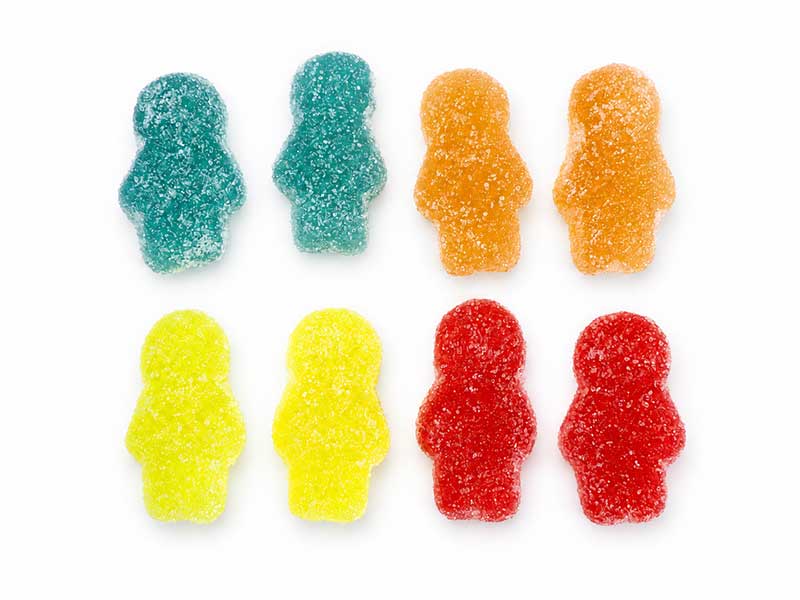
MOQ Is a Production Question Before It Is a Sales Question
MOQ stands for minimum order quantity, but the term can be misleading.
Buyers naturally view MOQ from the purchasing side:
How much do I need to buy?
Factories view it from another angle:
How much of this specific product can we reasonably produce in one commercial production run?
That difference explains much of the confusion around candy MOQ.
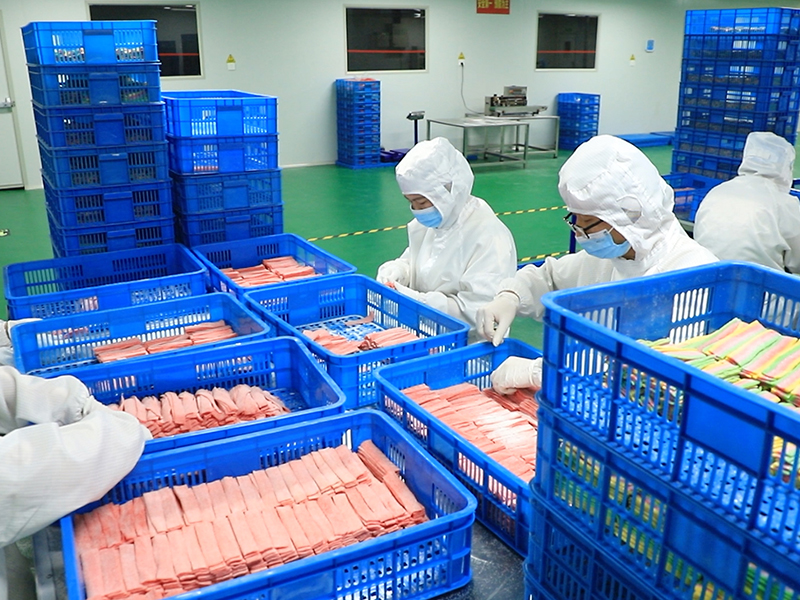
A production line requires preparation before finished candy begins coming off the line. Ingredients need to be prepared. Equipment needs to be configured. Product conditions need to reach the correct range. Packaging materials must be ready. Production and quality teams need to follow the approved specification.
If the factory produces only a very small quantity before changing to another flavor or product, those fixed production activities are spread across fewer saleable units.
At some point, the production run becomes commercially inefficient.
MOQ is therefore not simply a number placed on a quotation.
It is closely connected with how the product is actually manufactured.
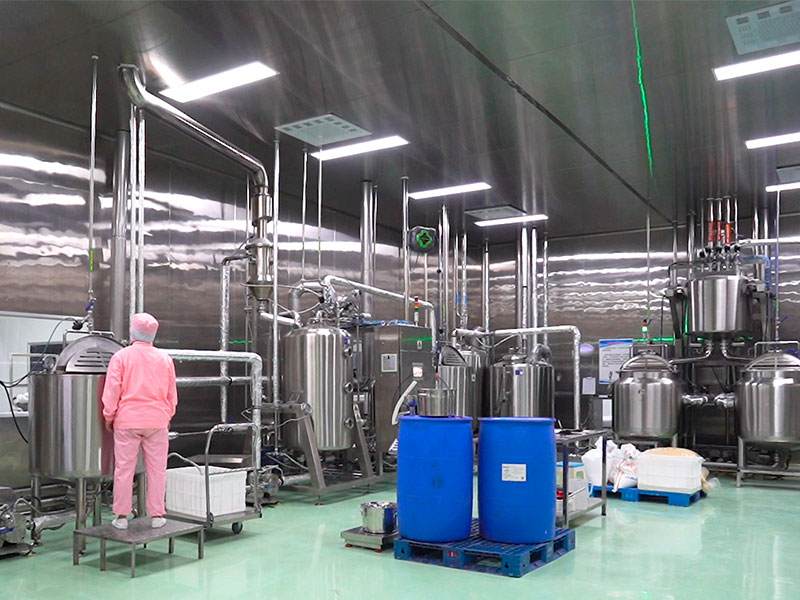
Why One Flavor Can Mean One Production Run
Imagine a buyer wants the same gummy shape in strawberry, apple and watermelon.
Visually, the products may look almost identical.
But internally they are three different SKUs.
The strawberry version may use one flavor system and one color combination.
Apple may require another.
Watermelon may require another balance again.
Depending on the product, changing flavors can involve changing or preparing ingredients, adjusting color, restarting part of the production process and confirming that the new batch matches the intended specification.
That means:
2 tons strawberry + 2 tons apple + 2 tons watermelon
is not necessarily equivalent to:
6 tons strawberry.
The total weight is the same.
The number of production runs is not.
This is the main reason buyers should be careful when asking whether several small flavor quantities can simply be combined to reach one MOQ.
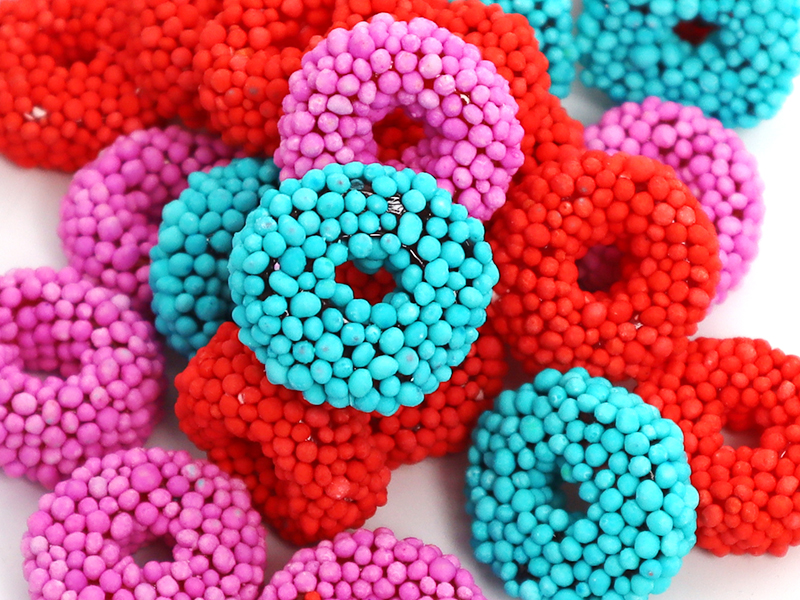
Total Order Quantity and Production MOQ Are Different Numbers
This distinction is especially important in international candy sourcing.
A buyer may be planning a 20-foot or 40-foot container and naturally think about the total quantity required to fill that container.
The factory is thinking about something different.
It is asking whether each selected product can be manufactured efficiently.
Those are two separate calculations.
| Concept | What It Means | Example |
|---|---|---|
| Production MOQ | Minimum efficient quantity for a specific product, flavor or production combination | 2-4 metric tons of one qualifying flavor |
| Total Order Quantity | Total quantity purchased across all selected products | 18 metric tons across several candy categories |
| Container Quantity | Total cargo arranged for international shipment | Multiple qualifying SKUs combined in one container |
| Packaging MOQ | Minimum quantity required for certain custom packaging materials | Printed pouches, wrappers, boxes or labels may have their own minimum |
| Production Batch MOQ | MOQ determined by how the line or product is manufactured rather than only by weight | Certain molded, individually wrapped or piece-counted candies |
Understanding these differences makes candy sourcing much easier.
A buyer can have a large total order and still have individual SKUs that are too small for commercial production.
At the same time, a buyer does not necessarily need to fill an entire container with one candy.
Why 2–4 Metric Tons per Flavor Is Only a General Reference
For many candy products, approximately 2–4 metric tons per flavor can be a useful general MOQ reference.
But it should never be treated as a universal rule for every candy category.
Candy manufacturing covers very different production systems.
Gummies, hard candies, chewy candies, lollipops, individually wrapped pieces, molded products and highly customized novelty candies may all be produced and packed differently.
Some products are naturally managed by weight.
Others are more practical to calculate by:
pieces, packaging quantity, style, mold or production batch.
For example, a lollipop project involving a particular piece weight, wrapper, stick, flavor and display-box configuration may be easier to manage commercially by piece quantity than by metric tons.
A highly customized molded candy may have another production requirement because the mold and product structure affect the batch.
This is why experienced buyers usually ask for the MOQ of the specific product configuration, rather than assuming one MOQ applies across an entire supplier catalogue.
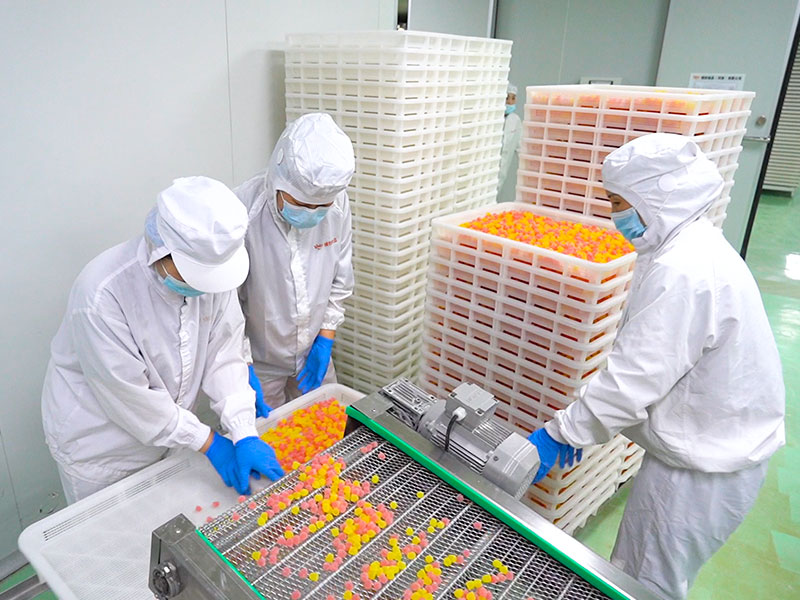
Flavor Is Not Always the Only Variable That Creates a New MOQ
Flavor receives most of the attention because it is easy to understand.
But other variables can also separate production.
Color may matter.
A particular shape may matter.
A different coating may matter.
Individual wrapping may matter.
A custom mold may matter.
Packaging can matter significantly.
Suppose a buyer wants the same gummy in one flavor but three different colors for three retail programs.
From the buyer’s perspective, the candy formula is almost the same.
From the production side, however, each color may require its own manufacturing arrangement.
Likewise, using the same candy in three different printed retail bags may create additional packaging minimums even when the candy itself is identical.
This is why the most accurate MOQ conversation normally happens only after the basic product structure is clear.
Packaging Can Create a Second MOQ
Sometimes the candy itself is not the limiting factor.
The package is.
A factory may be able to manufacture the candy efficiently, but a custom printed pouch, individual wrapper, display box or other packaging material may have its own supplier minimum.
This creates two different questions:
Can we produce this quantity of candy?
and:
Can we economically produce this quantity of custom packaging?
For private label projects, both need to work.
Imagine that the candy production quantity is acceptable, but the buyer wants five different package designs for five markets.
The physical candy may remain unchanged, yet the packaging order is now divided into five smaller printed runs.
That can change packaging cost, printing feasibility and total project economics.
For this reason, SKU planning should include packaging from the beginning rather than treating packaging as something that will be solved after the candy is produced.
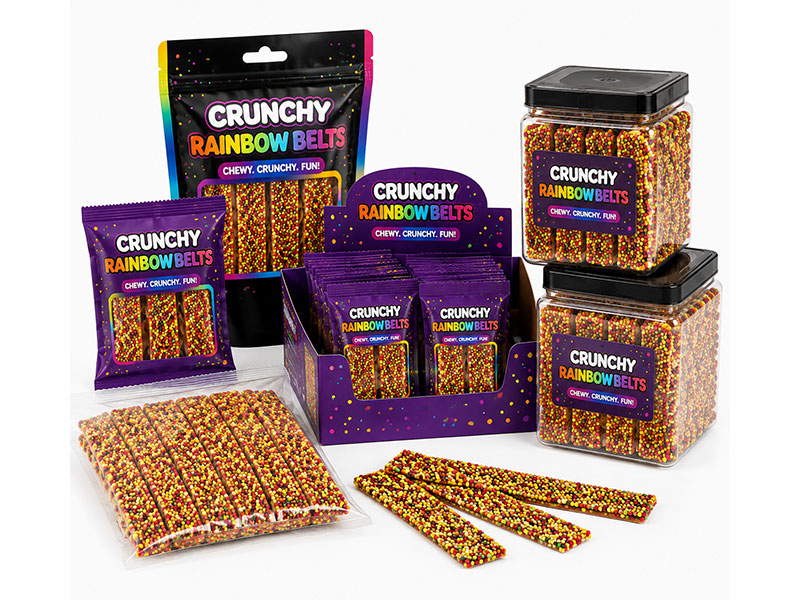
Too Many Flavors Can Make a Good Product Plan Commercially Difficult
Variety is attractive.
When developing a new candy range, it is easy to imagine strawberry, grape, watermelon, mango, apple, peach, cola and blue raspberry all launching together.
From a marketing perspective, more flavors seem to offer more choice.
From a manufacturing perspective, each additional flavor can create another production requirement.
That is why a focused range is often stronger for the first commercial order.
Instead of launching eight flavors with limited volume behind each one, a buyer may begin with three or four flavors that are most relevant to the target market.
The next order can then expand based on actual sales.
This approach does more than simplify production.
It also gives each SKU enough commercial weight to justify packaging, inventory, marketing and distribution.
A product range should be designed around what can sell repeatedly—not around the maximum number of options a factory can technically produce.
Why a Manufacturer May Reject a Small Flavor Split Even When the Total Order Is Large
This situation can frustrate buyers.
Imagine a customer plans to purchase 20 metric tons in total.
That sounds like a substantial order.
But the buyer wants to divide it into ten flavors at two tons each, several packaging designs and multiple product formats.
Depending on the product, some of those combinations may fall below their individual commercial production requirements.
From the buyer’s perspective:
We are ordering 20 tons.
From the factory’s perspective:
We are being asked to manage many separate small production programs.
Both views can be correct.
The solution is usually not arguing about whether the total order is “large enough.”
A better approach is to restructure the assortment.
Some flavors may receive more volume.
Others may be postponed to the second order.
Several SKUs may share the same packaging structure.
Existing molds may be used instead of developing new ones immediately.
MOQ planning works best when it becomes part of product strategy rather than a negotiation that happens after the assortment is already fixed.

MOQ Does Not Mean One SKU Must Fill One Container
This is probably the most important point for many importers.
A production MOQ and a container MOQ are not the same thing.
If one gummy flavor meets its applicable production MOQ, the buyer does not necessarily have to fill the rest of the container with that same gummy.
Different qualifying flavors and different MPS products can be combined in one container.
For example, a commercial shipment might contain several qualifying products from categories such as gummies, hard candy, lollipops, chewy candy or marshmallows.
The exact combination depends on product compatibility, volume, weight and shipping requirements.
If needed, cargo can also be consolidated with goods purchased from the buyer’s other suppliers in China.
This allows importers and distributors to build broader assortments without treating every SKU as a separate container project.
For better freight efficiency, however, the overall shipment is generally better planned on a full-container basis.
The practical structure is therefore:
Meet the production MOQ for each selected item first, then optimize the total container.
That is very different from:
Buy one full container of every SKU.
Mixed Containers Work Best When Planned from the Beginning
Mixed-container purchasing can be very useful, but it should not be treated as a last-minute loading exercise.
Different products occupy different amounts of space.
A heavy bulk candy behaves differently from lightweight marshmallows.
Flexible pouches use container space differently from jars.
Display boxes can increase carton volume.
Temperature-sensitive products may also have different shipping requirements from products that tolerate normal ambient transport more easily.
For that reason, buyers should think about container planning while choosing products and packaging.
A well-planned mixed container can improve assortment flexibility and freight efficiency.
A poorly planned one may leave unused space or create incompatible shipping requirements.
Container optimization is therefore part of purchasing strategy, not only freight forwarding.

MOQ Should Influence Which Flavors Launch First
This is where MOQ becomes a useful planning tool rather than simply a restriction.
Suppose a distributor believes strawberry, watermelon and blue raspberry will generate the strongest sales.
Those three flavors can become the launch range.
Grape and mango may be held for a later extension.
This gives the first order more concentration.
Sales data from the launch can then guide the next production run.
Perhaps watermelon becomes the strongest SKU and deserves more volume.
Perhaps grape is added because retailers request it.
The product range evolves based on evidence rather than launching every possible option at once.
In this sense, MOQ can actually encourage better assortment discipline.
The Same Logic Applies to Custom Shapes
A brand may want rings, stars, worms, hearts and several proprietary shapes in the same launch.
Each one looks exciting in a product presentation.
But every shape may affect production, piece weight, coating, packing and mold requirements.
A stronger launch strategy may use one established shape across several flavors first.
Once the product proves demand, a second shape can become a genuine line extension.
The additional shape then has a reason to exist.
This is usually commercially stronger than creating many low-volume shapes simultaneously simply because customization is available.
How MPS Approaches Candy MOQ
At MPS, MOQ varies by product and packaging format.
For many candy products, the typical MOQ is approximately 2–4 metric tons per flavor.
For piece-counted, individually wrapped, molded or highly customized products, MOQ may instead be calculated by pieces, packaging quantity or production batch.
Each selected flavor, color or style may have its own MOQ depending on the product.
Different qualifying flavors and MPS products can be combined in one container.
If needed, the shipment can also be consolidated with goods from the buyer’s other suppliers in China.
For better freight efficiency, the overall shipment is generally planned on a full-container basis.
This approach separates two questions that buyers sometimes combine:
What quantity does the factory need to manufacture the product efficiently?
and:
How should the buyer combine products to ship the total order efficiently?
Once those two questions are treated separately, MOQ becomes much easier to understand.
Frequently Asked Questions
1. Why is candy MOQ often calculated per flavor?
Different flavors may require separate ingredient preparation, color adjustment, production setup and quality confirmation. For many products, each flavor therefore represents its own commercial production run rather than one combined quantity.
2. Is 2–4 metric tons per flavor the MOQ for every MPS candy?
No. For many candy products, approximately 2–4 metric tons per flavor is a useful general reference, but MOQ varies by product and packaging format.
Piece-counted, individually wrapped, molded or highly customized products may instead be calculated by pieces, packaging quantity or production batch.
3. Can three flavors share one 2–4 ton MOQ?
Usually, buyers should not assume this.
If MOQ applies per flavor, each selected flavor needs to meet its own applicable production requirement.
The exact MOQ should be confirmed for the selected product before the assortment is finalized.
4. Is MOQ calculated by product, flavor, color or style?
It depends on the candy.
Some products are mainly calculated by flavor. Others may have separate requirements by color, style, piece count, packaging quantity or production batch.
That is why product-specific MOQ confirmation is more accurate than applying one universal rule.
5. Do I need to buy a full container of one flavor?
No.
Once each selected flavor or product meets its applicable production MOQ, different qualifying flavors and MPS products can be combined in the same container.
6. Can I combine gummies, hard candy and lollipops in one container?
Potentially yes, provided each product meets its applicable MOQ and the products are suitable for the same shipping arrangement.
Container planning should consider weight, volume, packaging and transportation requirements.
7. Can MPS consolidate my candy with goods from another supplier in China?
Yes, this can be discussed where appropriate.
If a buyer purchases other goods from suppliers in China, shipment consolidation may be arranged depending on the logistics plan.
8. Does custom packaging have its own MOQ?
It can. Printed pouches, individual wrappers, boxes and other packaging materials may have supplier-specific minimum production quantities that are separate from the candy manufacturing MOQ.
This should be reviewed during private label planning.
9. Does a custom mold affect MOQ?
It may. A new mold or highly customized product can introduce additional development and production requirements, so the final MOQ should be confirmed after the product structure is evaluated.
10. Why can I receive a small sample but not place an equally small commercial order?
Sample quantities are prepared for product evaluation and do not represent normal commercial production conditions.
Mass production needs to run efficiently through the factory’s production and packaging systems, which is why commercial MOQ is normally much higher than sample quantity.
11. Can MOQ become lower for repeat orders?
The applicable MOQ depends primarily on the product and production requirements rather than whether the customer is new or existing.
However, repeat projects can often become operationally easier because the approved product, packaging and specifications are already established.
12. How should I plan several flavors for my first order?
Start with the flavors most relevant to your market and expected sales volume rather than selecting every available option.
A focused initial assortment can make MOQ, packaging, inventory and container planning easier while leaving additional flavors available for later expansion.
MOQ Makes More Sense When You Look at the Production Run
Candy MOQ can seem restrictive when it is viewed only as a purchasing number.
It becomes much easier to understand when it is viewed as a manufacturing number.
Each flavor, color, shape, coating or packaging combination can affect how the factory needs to produce the order.
That is why a large total purchase does not automatically mean every individual SKU can be manufactured in a very small quantity.
At the same time, meeting individual production MOQs does not mean buyers need to purchase one container of every SKU.
The more effective approach is to separate production planning from container planning.
First, build commercially viable products and flavors.
Then combine those qualifying products into a shipment that makes sense for the business.
For importers, distributors, brands and retail buyers, understanding that distinction makes it much easier to build a candy assortment that works both in the factory and in the market.
MPS Candy is a China-based candy manufacturer and exporter supporting commercial B2B production, private label, OEM/ODM development, mixed-product container planning and international export for brands, importers, distributors, wholesalers and retail buyers.