Receiving a candy sample is one of the most important moments in a private label or OEM/ODM project. It is the first time the buyer can evaluate the product as something physical rather than as a specification, photograph or development concept.
However, approving a sample should involve more than deciding whether the candy tastes good.
A commercial buyer is ultimately purchasing thousands or millions of pieces, not the handful of carefully prepared pieces inside a sample package. The approved sample therefore needs to become a reliable reference for future production. Flavor, texture, size, shape, coating, filling and packaging all need to be understood clearly enough that the manufacturer can reproduce the same product direction at commercial scale.
This does not mean every piece in mass production will look mathematically identical to the sample. Candy is a manufactured food product, and controlled variation is normal. The goal of sample approval is to define which characteristics are commercially important and which small variations are acceptable.
A well-managed sample stage can prevent expensive changes later, especially after packaging has been printed or mass production has begun.
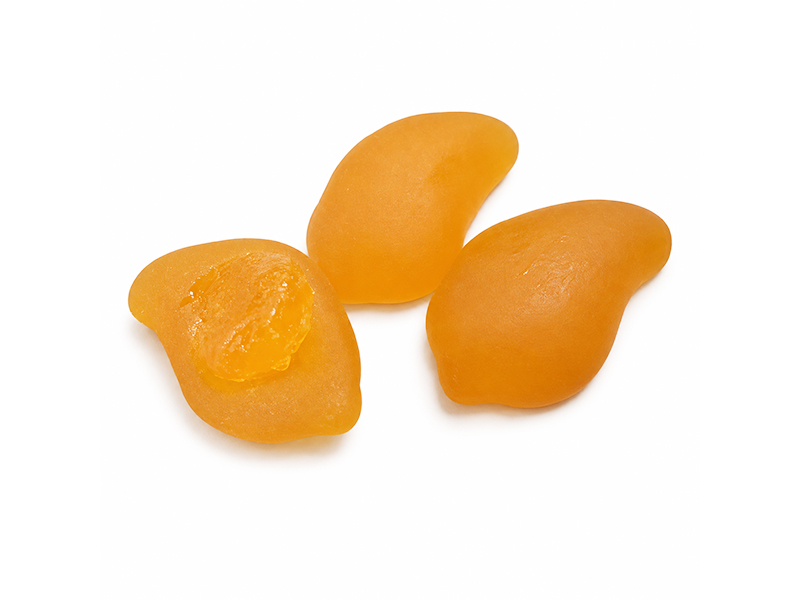
A Sample Should Define the Product, Not Just Confirm That It Tastes Good
The first reaction to a candy sample is usually sensory. Buyers naturally ask whether the flavor is enjoyable and whether the product looks attractive.
That is necessary, but it is only the beginning.
A good commercial sample should help define the complete product experience. For a gummy, that may include softness, elasticity, chew and surface feel. For a filled candy, the balance between shell and center matters. For a crunchy-coated gummy, the contrast between the outer coating and chewy center becomes part of the core product identity. For hard candy, flavor release over time may be more important than the first few seconds of tasting.
The buyer therefore needs to evaluate the sample in the context of the product’s intended role.
A novelty product may rely heavily on shape or texture. A supermarket fruit gummy may need broader consumer appeal and repeatability. A private label product designed for a specific retailer may also need to fit a target pack size, price point and shelf presentation.
The question is not simply whether the sample is pleasant. The more useful question is whether the sample represents a product that can work commercially in the intended market.
Flavor Feedback Needs to Be Specific Enough to Guide Development
Flavor is one of the most subjective parts of product development, which is why vague feedback can easily create unnecessary sample rounds.
A comment such as “make the flavor stronger” can mean several things. The buyer may want more aroma, greater sweetness, stronger acidity or a flavor that lasts longer during chewing. Those are different technical directions.
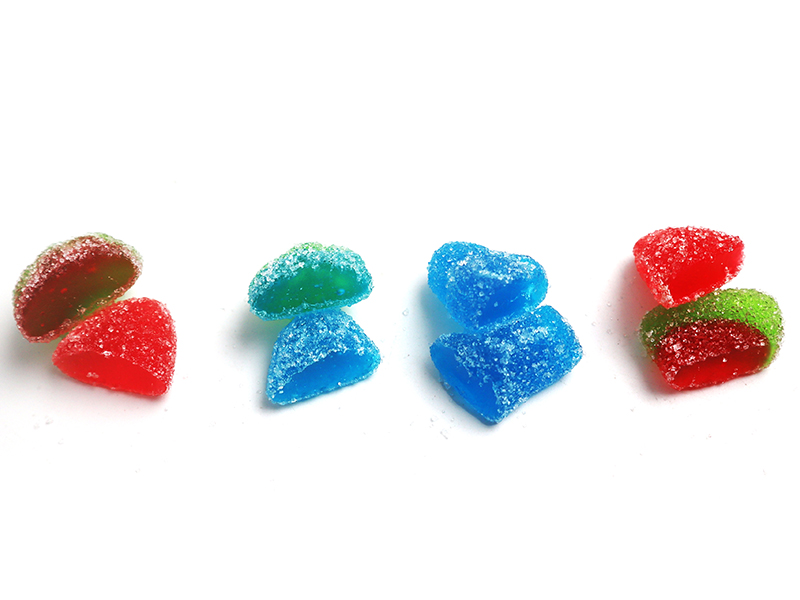
More useful feedback describes the eating experience itself. For example, a buyer might explain that the strawberry aroma is acceptable but the flavor disappears too quickly, or that the apple flavor is strong enough but needs slightly more acidity. In another case, the outer sour coating may be so dominant that the fruit flavor in the center becomes difficult to notice.
This level of feedback does not require technical food-science language. It simply reduces ambiguity.
The objective is to help both buyer and manufacturer understand the same sensory target before the product moves into commercial production.
Texture Should Be Treated as a Core Product Specification
Texture is often harder to describe than flavor.
Terms such as soft, chewy, elastic, firm or sticky can mean different things to different people. A gummy may feel soft during the first bite but still provide significant resistance during chewing. Another may feel firm initially but break down quickly.
This makes physical samples particularly valuable when texture is central to the product.
If the buyer already has a preferred texture direction, a physical reference can sometimes communicate the expectation more effectively than written descriptions alone. The manufacturer can then evaluate how close that texture can be achieved while still using an appropriate formula and production process.
For private label projects, texture should not be treated as a minor adjustment. It influences the entire consumer experience and may also affect molding, coating, filling, packaging and transportation performance.
A sample that looks correct but has the wrong texture is not ready for commercial approval.
Piece Size Influences More Than Appearance
The size and weight of an individual candy can affect almost every stage of the project.
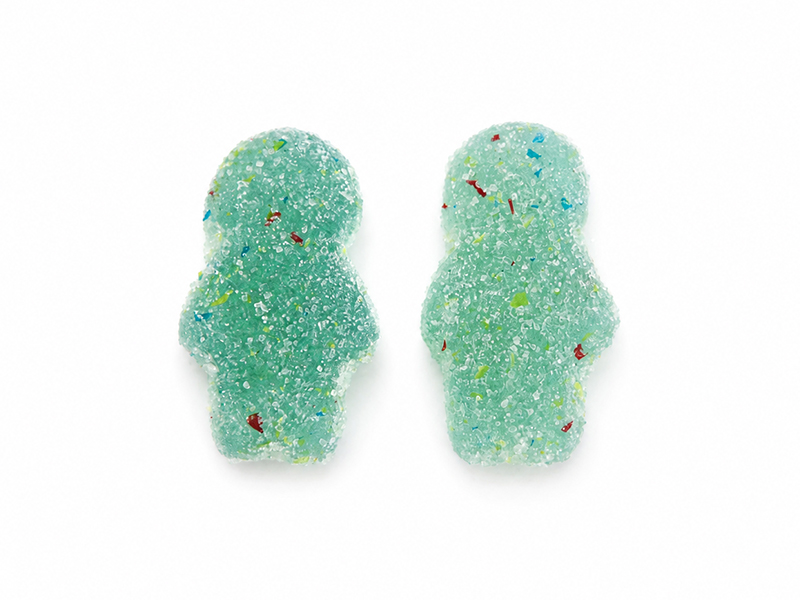
A larger gummy may create a stronger novelty effect but reduce the number of pieces inside the retail pouch. A smaller gummy may provide more pieces at the same net weight but create a different eating experience. Piece size can also influence coating coverage, filling ratio, product handling and packaging dimensions.
For example, if one gummy weighs approximately 5 g, a 100 g retail pack may contain around twenty pieces. If the finished piece is closer to 10 g, the same pack may contain only around ten.
The net weight has not changed, but the perceived value and product presentation have.
This is why piece size should be reviewed before final retail packaging dimensions are locked. Buyers should evaluate the physical candy together with the proposed pack size rather than treating those decisions separately.
Shape Must Be Judged After It Becomes Real Candy
Custom candy shapes often look very different in a design file compared with the final manufactured product.
Fine details can soften during molding. Thin sections may be fragile. Sharp corners can lose definition. Coatings may partially cover small surface details. Filled products may also need sufficient outer structure to contain the center reliably.
For this reason, the most important shape approval happens with the physical product rather than the drawing.
The buyer should consider whether the final candy still communicates the intended concept after molding, coating and normal handling. A highly detailed design that becomes difficult to recognize after production may need to be simplified.
That does not reduce the value of the custom shape. It improves the likelihood that the design will survive commercial manufacturing.
Filled Candy Should Be Approved for Balance, Not Maximum Filling
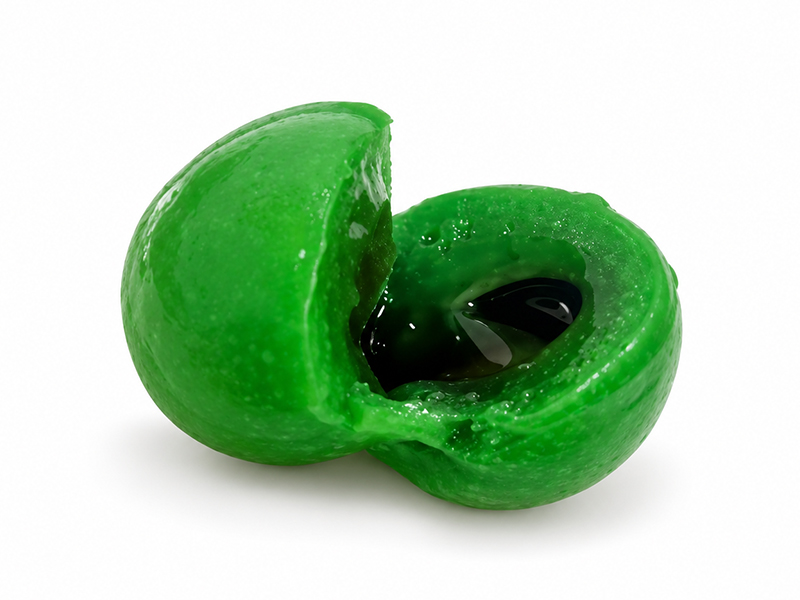
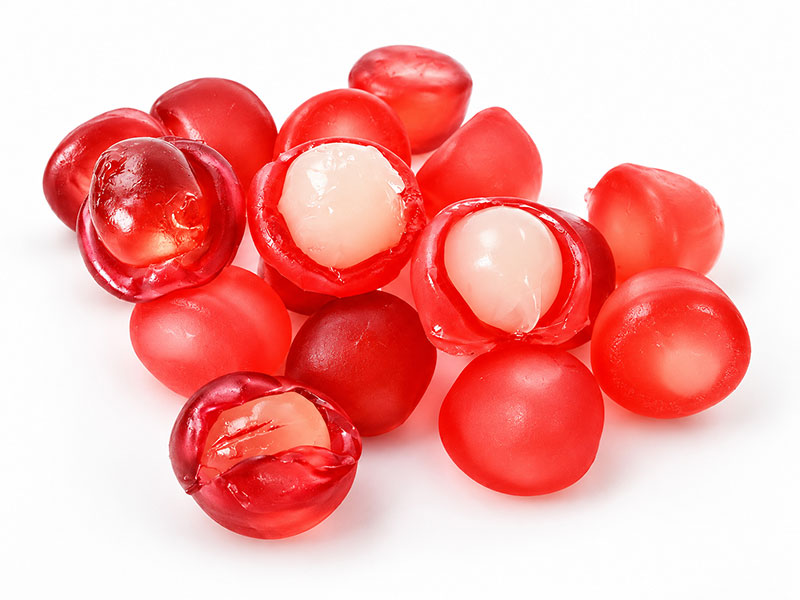
Filled gummies and filled hard candies are visually attractive, especially when photographed after cutting the product open. This can create pressure to maximize the amount of filling.
However, more filling is not automatically better.
The outer candy still needs enough structure to survive production, packaging and transportation. The filling should also complement rather than overwhelm the shell flavor and texture.
A very high filling ratio may create an impressive photograph while producing a weaker eating experience or a less stable product.
The correct target is therefore not the maximum possible amount of filling. It is the amount that creates the intended contrast while keeping the complete candy commercially reliable.
Sample approval should focus on this balance.
Coating Should Be Evaluated Visually and Sensory-Wise
Coatings influence both appearance and eating experience.
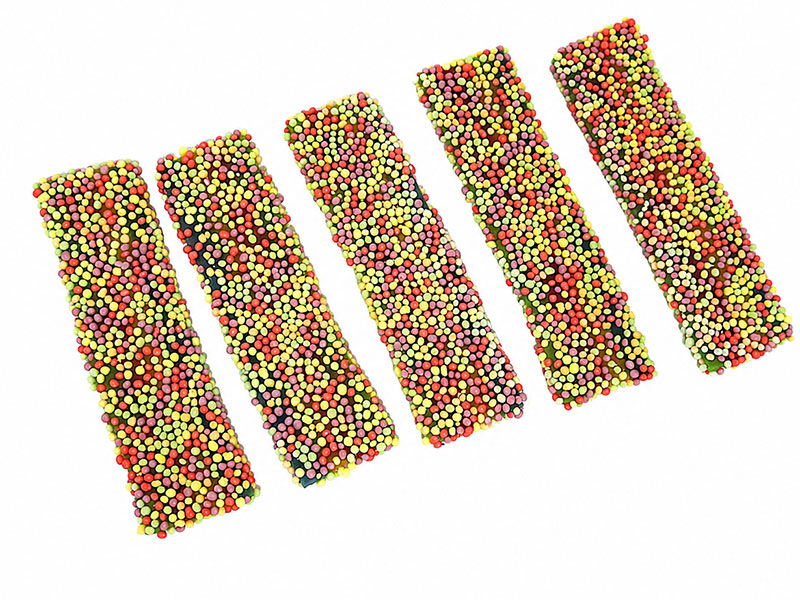
Sugar coatings alter sweetness. Sour coatings affect acidity. Crunchy coatings change texture. Decorative particles can strongly influence color and visual identity.
Because of this, coating should not be approved only from photographs.
A very heavy coating may create a strong visual effect but overpower the gummy underneath. A lighter coating may provide better eating balance but fail to communicate the product’s novelty clearly enough.
For crunchy candy-coated gummies, for example, the coating needs to produce a noticeable first crunch while still allowing the consumer to experience the soft or chewy center.
The approved sample should therefore reflect the correct relationship between outside and inside rather than maximizing one component.
Product Approval and Packaging Approval Should Eventually Meet
Candy and packaging can be developed in parallel, but they should not remain separate projects for too long.
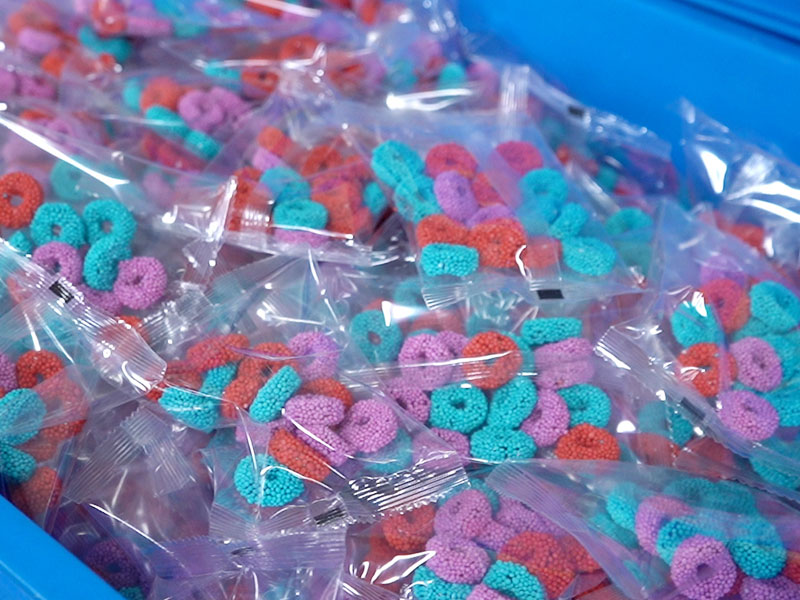
The physical candy determines how much product fits into a pouch, how many pieces appear at the target net weight and how full the package looks. A change in piece size can alter the number of candies per pack. A change in coating can affect product volume. A new filling may alter the ingredient declaration.
This is why final packaging dimensions and printing should not be locked while the product is still changing significantly.
Artwork development can begin earlier, but final print approval should wait until the information affecting the package is sufficiently stable.
Otherwise, a small product adjustment can become an expensive packaging problem.
What Should Be Defined After Sample Approval?
The purpose of sample approval is to convert subjective feedback into a commercial reference that production and quality teams can follow.
| Buyer Approval | What the Commercial Project Needs to Define |
|---|---|
| The flavor is right | Final flavor direction or approved product reference |
| The texture feels right | Expected texture and acceptable production range |
| The size looks right | Approximate piece weight and dimensions |
| The coating works | Coating direction and acceptable visual coverage |
| The filling is good | Approved filling balance and product structure |
| The package looks right | Final net weight, package dimensions and artwork |
| The assortment is approved | Final flavors, colors and SKU configuration |
The goal is not to create unnecessary paperwork.
It is to make sure the product can be reproduced consistently when the project moves from development into commercial manufacturing.
Why Mass Production May Not Look Exactly Like a Development Sample
A small development sample and a commercial production run do not always behave identically.
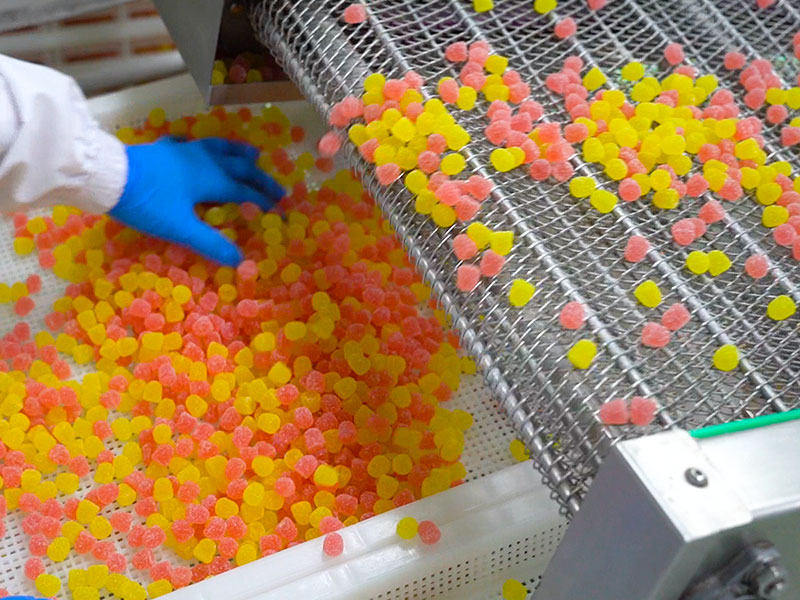
At commercial scale, larger batches move through actual production equipment under continuous conditions. Heating, cooling, molding, coating and packaging all operate differently from a small development setup.
The manufacturer is still expected to reproduce the approved product direction, but minor technical adjustments may sometimes be necessary to improve production stability.
This is one of the reasons sample approval should focus on the product characteristics that matter most.
If a technical adjustment changes the consumer experience or retail positioning materially, the buyer should review it.
If the adjustment simply allows the product to run more consistently while preserving the approved flavor, texture and appearance, it may be part of normal scale-up.
Commercial Sampling Should Consider Manufacturing Feasibility from the Beginning
An impressive sample has limited value if it cannot be produced reliably at commercial scale.
This is why the manufacturer’s development team needs to consider production feasibility during sampling rather than after approval.
A custom shape needs to release from the mold reliably. A filled candy needs to maintain sufficient structure. A coating should remain reasonably consistent during normal production. A wrapper needs to run correctly on the intended packing equipment. The finished product also needs to fit the proposed retail format.
These considerations are not separate from product development.
They are part of it.
A commercially useful sample should represent a product that can eventually become a repeat order.

Expected Order Quantity Matters During Development
Approximate commercial quantity should be discussed early because it helps determine whether the proposed product structure makes sense.
A project intended for repeated container-scale purchasing may justify a different level of mold development, formula work or packaging investment than a very small promotional program.
Quantity is therefore not requested only to calculate price.
It also helps the manufacturer understand what type of production approach is appropriate.
This is especially important for custom molds, unusual fillings, specialized coatings and dedicated retail packaging.
A product may be technically possible but commercially inefficient at the buyer’s intended volume. Identifying that early is much better than discovering it after several sample rounds.
Destination-Market Requirements Should Be Considered Before Final Approval
A product is not commercially ready simply because the physical sample tastes good.
The destination market may have specific ingredient, allergen, labeling or documentation requirements.
Private label projects should therefore consider regulatory requirements before the final formula and packaging are locked.
If Halal or Kosher certification is required, that should be discussed early. If the destination market has specific rules concerning ingredients, nutrition information or labeling, those requirements may influence the final product and package.
The physical candy, commercial documentation and retail label ultimately need to describe the same product.
Treating those areas separately increases the risk of late-stage changes.
Do Not Develop More Flavors Than the Commercial Plan Can Support
Sampling can become inefficient when product development expands faster than the purchasing plan.
A buyer may initially request six or eight flavors because variety looks attractive. However, each flavor still needs enough commercial volume to justify production.
For many candy products, MOQ is handled separately by flavor.
This means there is little benefit in spending time perfecting eight flavors if the first order can realistically support only three or four.
A focused initial assortment often moves into production more efficiently and creates cleaner market feedback.
Additional flavors can then become meaningful line extensions after the buyer understands which products are actually performing well.
When Is the Product Ready for Mass Production?
A product is ready to move toward commercial production when the buyer and manufacturer share a sufficiently clear understanding of what the finished candy is expected to be.
The buyer should be comfortable with the flavor, texture, appearance and intended retail format. The manufacturer should be comfortable that the product can be produced using a commercially viable and repeatable process.
At this stage, the project moves away from experimentation and toward production control.
The main question changes from:
What should this product become?
to:
How do we reproduce this approved product consistently?
That transition is the real purpose of sample approval.
Repeat Orders Are the Real Test of Good Sample Approval
The first order proves that a product can be manufactured.
The second and third orders prove whether the product was defined clearly enough to be repeated.
If sample approval was vague, later batches may create disagreement because the buyer and factory remember the intended product differently.
If the important characteristics were clearly understood, repeat production becomes much easier.
The manufacturer already knows the required flavor and texture direction, product size, coating or filling characteristics and current packaging version.
That continuity is essential for brands and distributors building long-term product lines.
Good sample approval therefore does more than protect the first order.
It creates the foundation for repeat business.
Frequently Asked Questions
1. Can I request candy samples before placing a bulk order?
Yes. Samples can be arranged depending on the product and development requirements. They allow buyers to evaluate flavor, texture, size, shape, filling, coating and overall product direction before commercial production.
Sample preparation and courier costs are generally borne by the buyer. Applicable sample charges may be credited toward a confirmed bulk order depending on the project.
2. Does an approved sample mean every mass-produced piece will look identical?
No. Candy is a manufactured food product, so reasonable variation can occur between individual pieces.
Commercial production should remain within the approved product direction and agreed quality range rather than attempting to reproduce every piece identically.
3. What should I evaluate when approving a gummy sample?
Buyers should consider flavor, sweetness or acidity, texture, color, shape, approximate piece size and any filling or coating.
The gummy should also be evaluated in relation to the planned retail format and net weight.
4. Can I approve a candy sample using photos or video?
Photos and videos are useful for reviewing appearance, color, shape and packaging direction, but they cannot communicate flavor or texture accurately.
Physical samples are generally more useful when the eating experience is important.
5. Can MPS develop candy based on a reference sample?
MPS can evaluate a reference product, physical sample or product concept and discuss a suitable development direction.
Manufacturing feasibility, ingredients, commercial volume and intellectual-property considerations still need to be reviewed. The objective is to develop a commercially suitable product rather than reproduce protected branding or product appearance.
6. How many sample rounds are usually needed?
There is no fixed number.
A product based on an existing formula may require minimal adjustment, while a new mold, filling, coating or formula can require additional development rounds.
Each sample round should ideally resolve specific product decisions.
7. Should the candy be approved before packaging is finalized?
Product and packaging development can proceed in parallel, but important physical product characteristics should be sufficiently stable before final package dimensions and printing are confirmed.
8. What is the MOQ after sample approval?
MOQ varies by product and packaging format.
For many candy products, approximately 2–4 metric tons per flavor can be used as a general reference. Piece-counted, individually wrapped, molded or highly customized products may use different MOQ calculations.
9. Does each approved flavor have its own MOQ?
For many products, yes.
Different flavors may require separate production runs, so each selected flavor may need to meet its applicable MOQ.
10. Can several approved products be combined in one container?
Yes. Once each selected product meets its applicable production requirement, different qualifying MPS products can be combined in the same container.
11. How long does mass production take after approval?
For many MPS projects, normal production is generally around 4–8 weeks after the product, packaging, commercial terms and payment arrangements are confirmed.
More complex customization may require additional time.
12. Do gummies require refrigerated shipping?
For MPS international projects, gummies, chocolate and other heat-sensitive products must be shipped in a reefer container to help protect product quality during international transportation.
Sample Approval Defines What the Buyer Is Actually Purchasing
A candy sample is more than something to taste before placing an order.
It is the first physical reference for a product that may later be manufactured in commercial quantities and reordered repeatedly.
Good sample approval therefore needs to establish more than whether the candy is enjoyable. It should clarify the flavor, texture, piece size, shape, coating or filling, retail format and other characteristics that define the product.
The clearer those expectations become before commercial production, the easier it is for the factory to reproduce the intended product consistently.
That is ultimately what B2B sample approval is for: turning a product idea into a repeatable manufacturing standard.
MPS Candy is a China-based candy manufacturer and exporter supporting commercial B2B candy production, OEM/ODM development, private label projects and international export for brands, importers, distributors, wholesalers and retail buyers.
Have a Candy Sample or Product Idea to Evaluate?
Send MPS your reference sample or product concept, target market, preferred flavor and texture, expected commercial quantity and intended retail format.
We can evaluate manufacturing feasibility and help determine the appropriate next development step before mass production.